Bayer and bp have forged a major long-term alliance to scale production of camelina — a fast-emerging oilseed crop seen as critical to the future of sustainable aviation fuel and renewable diesel markets.
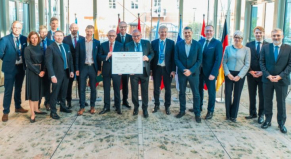
The partnership will commercialize camelina under Bayer’s newgold brand across North America, combining bp’s refining and fuel expertise with Bayer’s seed technology and extensive farmer network.
The companies are betting big on booming demand for lower-carbon fuels, with the biodiesel, renewable diesel (RD) and sustainable aviation fuel (SAF) market projected to nearly triple to 40 billion gallons by 2040.
“This alliance will help us to connect the value chain necessary to bring camelina to market and provides our farmer customers greater market certainty as they consider camelina on their farm,” said Frank Terhorst, head of strategy and sustainability for Bayer’s Crop Science division.
“We are utilizing our industry leading breeding program to enhance the crop, and its untapped potential globally to help meet the needs of this growing market. We see this as a win for our customers and their farms, as it creates potential new revenue streams, but also a win for the renewable fuels market.”
bp said the deal strengthens its push into lower-carbon energy while building a new agricultural supply chain around camelina.
“This collaboration represents bp at its best. Working with trusted partners with complementary capabilities to develop products customers want and need, while delivering value for our shareholders,” said Philipp Schoelzel, senior vice president biofuels growth at bp.
The announcement follows Bayer’s January 2025 acquisition of camelina assets, a move that accelerated the company’s ambitions in the renewable fuels sector.
Bayer has already rolled out newgold camelina in the Northern Plains of the United States and parts of Southern Saskatchewan and Alberta in Canada, while testing both long- and short-season crop varieties ahead of a full-scale launch.
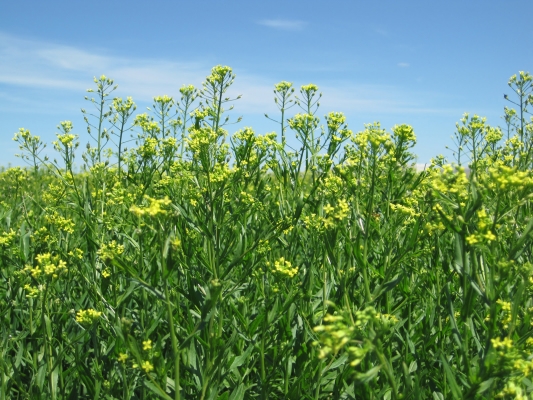
Camelina is attracting growing interest because of its low carbon intensity and adaptability. The crop can be grown in spring or winter, requires fewer inputs than traditional oilseeds, and is drought tolerant and winter hardy. Its pod shatter resistance and ability to grow on idle, fallow, or marginal land also allow farmers to avoid direct competition with food crops.
Bayer says the crop is being positioned as a “profit multiplier” for growers — capable of generating income between planting seasons, improving crop rotation strategies, and making underutilized acreage productive.
The companies argue camelina could become a key feedstock for decarbonizing transportation sectors where electrification remains difficult, including aviation, shipping, rail and heavy-duty equipment.
As pressure mounts on industries to cut emissions, Bayer and bp are wagering that camelina could become one of the next major building blocks of the global low-carbon fuel economy.