India has called on BRICS nations to deepen cooperation on energy storage and critical minerals as it races to secure the supply chains needed to power its clean-energy transition.
The India Energy Storage Alliance (IESA) submitted a set of unified recommendations to the Government of India following a virtual event organised by the Ministry of Power (MoP), where it was tasked with technical coordination. Officials and industry representatives from Brazil, Russia and the United Arab Emirates participated in the discussions.
The recommendations focus on strengthening cross-border collaboration in advanced energy storage, building resilient domestic supply chains and ensuring reliable access to critical minerals—key requirements for meeting India’s ambitious renewable-energy targets.
India’s clean industrial investment pipeline has surged to an estimated US$433 billion, putting the country among the world’s top three centres for clean industrial development. The pipeline now covers 65 projects across four sectors and 11 states, with investments accelerating in green hydrogen, clean fuels, chemicals and low-carbon manufacturing.
The pipeline has expanded by 30% in just six months, reflecting rising investment and a stronger policy push centred on energy security.
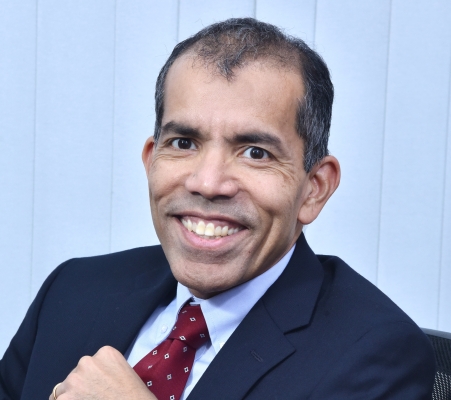
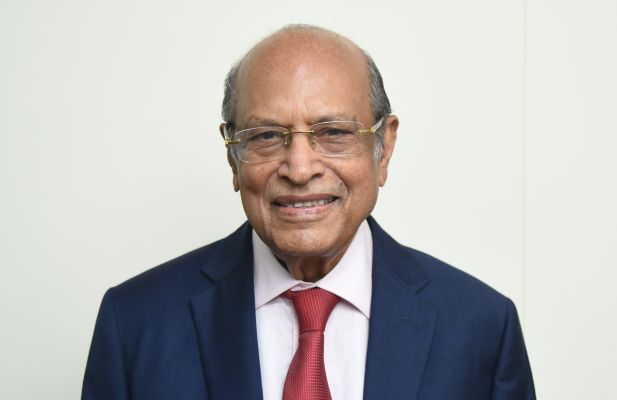
Debmalya Sen, President of IESA, emphasised, “Energy storage is now essential for both grid flexibility and resilience as renewable integration rises. No single technology can meet all system needs; diverse solutions and strong BRICS collaboration across value chains, manufacturing, and innovation are critical.”
India’s energy-storage project pipeline has now crossed 100 GW, alongside a growing wave of gigafactory announcements and research-and-development investments. Green ammonia accounts for the largest share of new projects, while sustainable aviation fuel, green methanol and low-carbon aluminium are also gaining traction.
But a major vulnerability remains: India continues to rely heavily on imports for critical minerals and key components.
A government official said, “India’s energy storage pipeline has crossed 100 GW, with around 10 GW commissioned. Yet, we remain highly import-dependent for minerals and key components. Expanding PLI support to recycling and advanced chemistries, and dedicated allocations for stationary storage, are vital for building a resilient domestic value chain.”
The push comes as state incentives, proposed gigafactories and increased R&D activity drive the next phase of India’s energy-storage market. The developments could create jobs, bring down costs and strengthen India’s position in the global clean-energy economy—but only if access to minerals and critical inputs is secured.
Brazil also underscored the need to build the entire supply chain, from mining to battery manufacturing.
José Jesus Lima Neto, Infrastructure Analyst, Ministry of Mines and Energy (MME), Brazil, noted, “Clean-energy technologies require substantially higher mineral inputs than conventional energy systems. The growth of downstream battery manufacturing depends on secure upstream supply and midstream processing, where BRICS countries collectively hold significant resource advantages.”
Brazil’s planned capacity-reserve auction for battery projects, which includes national-content requirements, is expected to provide another boost to domestic battery manufacturing and related supply chains.
The UAE, meanwhile, highlighted the growing importance of storage as renewable-energy systems expand.
Shuvendu Kumar Bose, Energy Expert, Ministry of Energy and Infrastructure, UAE, observed, “The key challenge is increasingly linked to transmission economics rather than renewable variability alone. Co-locating storage can improve dispatchability, flatten tariffs, and reduce overall system costs, while also raising critical regulatory questions on tariff design and cost allocation. Our large-scale solar-plus-battery projects reflect this new focus.”
IESA is pushing BRICS members to move beyond broad cooperation and tackle practical barriers to deployment. Its recommendations include mutual recognition of test reports, harmonised measurement protocols and coordinated pilot projects aimed at unlocking the potential of distributed energy storage.
Yuri Vlasov, Founder and CEO, Watts Battery, Russia, stated, “System adequacy and local network reliability can diverge, with localised outages occurring even when the broader grid remains adequate. Building-level storage addressed network constraints more cost-effectively and rapidly than conventional grid reinforcement. Harmonised standards and joint pilots for distributed storage are the way forward.”
Experts from India’s TERI and Brazil’s Electric Sector Studies Group (GESEL/UFRJ) highlighted the growing role of long-duration energy storage, while experts from the UAE and Russia stressed the need for stronger regulation and standardised techno-economic assessments.
With IESA coordinating the technical effort, the BRICS initiative is now focused on turning cooperation into concrete action through knowledge sharing, joint demonstration projects and harmonised standards.
For India, the message is clear: building renewable capacity is no longer enough. Securing the minerals, technology and storage systems needed to make that capacity reliable is becoming an equally urgent strategic priority.