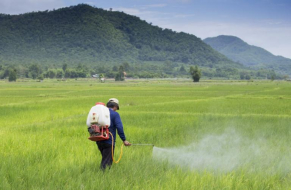
With kharif sowing already covering more than 119 lakh hectares, the El Niño conversation is no longer theoretical—it is now unfolding on the ground, according to CropLife India, the apex body representing crop protection companies.
“With kharif sowing already past 119 lakh hectares, the El Niño question is moving from forecast to field. What matters now is how well farmers are supported as crops are sown, emerge and establish under uncertain rainfall," said Durgesh Chandra, Secretary General, CropLife India.
"IMD has placed seasonal rainfall at 90% of the long period average and the Centre has identified 315 districts vulnerable to weak monsoon conditions, 111 of them high priority with low irrigation cover. In such districts, delayed or uneven rain can weaken crop establishment and leave a shorter window to detect pest and disease pressure before it affects yield.”
The industry body said the scientific understanding of climate-linked pest dynamics is still evolving, but evidence from recent research highlights the risks of compounding climate stress.
“The wider science on this is still developing. El Niño is the warm phase of the ENSO cycle, and a 2025 Nature Food study of Asian rice systems found that ENSO-related yield losses in China were partly associated with higher pest and disease occurrence, including migratory pests carried from mainland Southeast Asia into China on ENSO-driven wind patterns. The specific pathway it describes belongs to that region, and the study is not a forecast for Indian fields," he said.
Even so, CropLife India said the broader lesson is clear: climate stress and pest pressure cannot be treated in isolation in monsoon-dependent agriculture.
"However, its wider value is the principle it points to, that in monsoon-dependent farming, climate stress and pest risk are best anticipated together rather than treated as separate problems.
"District plans can reflect this through regular field scouting, crop-stage advisories, pest surveillance and clear guidance on Economic Threshold Levels, so that crop protection is used judiciously with all safety measures," the Secretary General said.