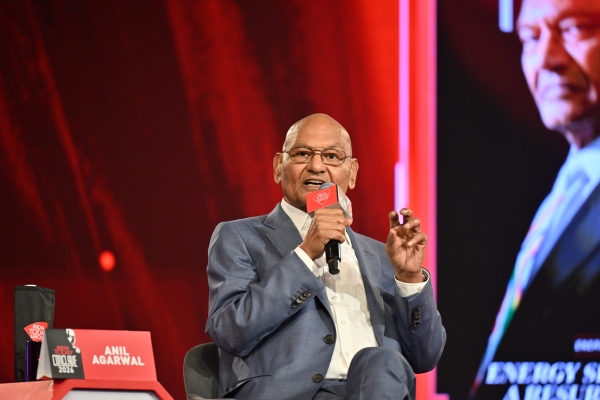
Vedanta Chairman Anil Agarwal has urged India to accelerate domestic exploration and production of natural resources, warning that the country’s heavy dependence on imports threatens energy and mineral security.
Speaking at an industry conclave, Agarwal highlighted the stark reality: “India currently imports nearly 90% of its oil, about 95% of its copper and almost 99.5% of its gold,” despite having some of the world’s richest untapped reserves. “Our geology is among the richest in the world and has the potential to significantly strengthen India’s energy and mineral security.”
Agarwal stressed that India’s public sector enterprises and resource companies “have the capacity to increase production several times if supported by enabling policies and faster approvals.” He added that several underperforming government assets could dramatically increase output with the right investment, management, and policy support.
Drawing on Vedanta’s own track record, he said: “Production in several assets including Hindustan Zinc and Bharat Aluminium Company increased five to ten times after privatisation and professional management,” demonstrating the untapped potential within India’s resource sector.
Vedanta acquired Hindustan Zinc and BALCO under a privatisation programme that was never fully completed, with the government still holding 26% and 49% stakes respectively. Over the last decade, Vedanta has contributed ₹4.5 lakh crore to the government exchequer.
On reforms, Agarwal urged simplification and greater trust-based governance. “Excessive regulatory intervention often delays projects and discourages risk-taking,” he said. “India should move towards self-certification instead of lengthy approvals and clearances, where the government sets the rulebook and entrepreneurs comply strictly, subject to audit.”
Against the backdrop of global tensions in West Asia and potential disruptions around the Strait of Hormuz, Agarwal highlighted the strategic importance of domestic production. “India must rapidly scale up exploration of oil, gas, coal, strategic metals and critical minerals to safeguard energy security and reduce long-term vulnerability to global supply shocks,” he said.
Agarwal also flagged India’s growing energy needs: “Energy demand is expected to double in the coming years, making it imperative for the country to diversify and strengthen its domestic energy ecosystem.”
He warned that unlocking India’s resource reserves could deliver major economic benefits. “Opening up India’s resource sectors could significantly boost economic growth,” he said.
“It would lead to large-scale job creation, higher government revenues and reduced import dependence.” Agarwal emphasized that natural resources have historically contributed some of the highest revenues to government exchequers globally, playing a key role in nation-building.
Concluding, he called for strong collaboration between government, industry, and global investors to mobilize capital. “India remains one of the most attractive destinations globally for long-term investments in natural resources and energy infrastructure,” he said.