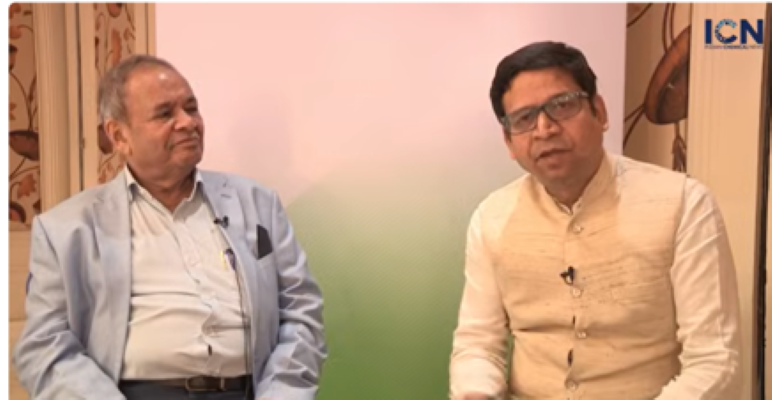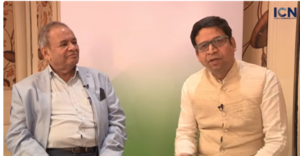
UFlex’s fully integrated value chain—from films to engineering—ensures our chemistry solutions are expertly tested and optimized for real-world packaging performance
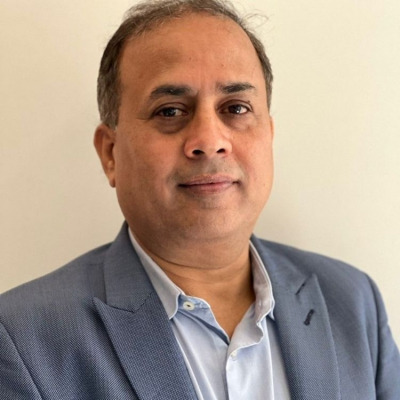
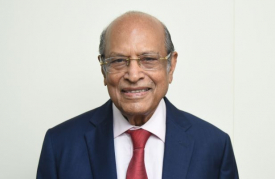
Desh Deepak Misra, Joint President, UFlex Chemicals Business
What is the current operational profile of UFlex Chemicals business and what is your expansion plan?
UFlex Ltd. Chemicals Business has evolved into a comprehensive, innovation-driven solutions provider catering to flexible packaging, printing inks, coatings, adhesives, and specialty polymer segments. Today our portfolio includes liquid inks, UV inks, water-based systems, specialty coatings, solvent-less adhesives, and advanced chemical intermediates serving both domestic and international markets.
Our manufacturing infrastructure is supported by dedicated R&D, application laboratories, integrated production systems, and stringent quality management practices that enable us to cater to diverse industry requirements across FMCG, pharmaceuticals, food & beverage, personal care, and industrial packaging sectors.
Going forward, we are pursuing an aggressive expansion roadmap focused on three strategic pillars — sustainable product innovation, global market expansion, and advanced manufacturing excellence. We are actively scaling capacities for water-based inks, solvent-less adhesives, specialty coatings, and environmentally responsible chemistries while strengthening our export footprint across key international markets.
Simultaneously, we continue to invest in automation, process digitalization, supply chain resilience, and customer-focused technical service capabilities to build a future-ready and globally competitive chemicals business.
How would you explain performance of UFlex Chemicals business in 2025 and expectations from 2026?
2025 has been a resilient and progressive year for chemicals business despite ongoing macroeconomic uncertainties, geopolitical disruptions, and volatile raw material trends globally. We witnessed healthy demand across sustainable packaging consumables, particularly in water-based systems, specialty coatings, and high-performance adhesive solutions. A major contributor to our growth has been our customer-centric innovation approach, where we work closely with converters, packaging companies, and global brands to develop customized, regulation-compliant, and commercially viable solutions. Our focus is on quality, consistency, technical responsiveness, and supply reliability has further strengthened long-term customer relationships across markets.
For 2026, we remain highly optimistic and growth-oriented. We expect accelerated momentum driven by increasing global preference for sustainable packaging chemistries, rising adoption of eco-friendly ink systems, expansion in value-added specialty products, and stronger export demand from emerging and developed markets alike. Exports and international specialty business are expected to remain among fastest-growing segments within chemicals portfolio as multinational brands increasingly seek reliable, innovation-led, and globally compliant partners.
UFlex is globally recognized as a flexible packaging titan. How does chemicals business specifically leverage vertical integration to maintain a competitive advantage over standalone ink and adhesive manufacturers?
One of our strongest competitive advantages lies in our deeply integrated business ecosystem. Unlike standalone manufacturers, UFlex operates across the entire flexible packaging value chain; including films, packaging, inks, adhesives, coatings, and engineering solutions. This integration enables us to develop chemistry solutions that are tested, validated, and optimized for real-time packaging performance under actual production conditions. It significantly reduces product development cycles, improves compatibility across substrates and applications, and accelerates commercialization timelines.
Our integrated model also provides deeper market intelligence, operational flexibility, and stronger supply chain control, allowing us to deliver globally consistent quality, commercially competitive solutions, and faster technical support to customers across regions. Additionally, this ecosystem allows closer collaboration between packaging, converting and chemical teams, resulting in highly practical and performance-driven innovations for the market.
Given extensive footprint spanning more than 140 countries, which international markets are currently presenting strongest demand for specialty chemicals, coatings, and ink binders?
We are witnessing strong demand growth across the Middle East, Africa, Latin America, Southeast Asia, and select European markets. These regions are rapidly transitioning toward high-performance and sustainable packaging solutions, creating substantial opportunities for specialty chemicals, advanced coatings, and environmentally responsible consumables.
The pharmaceutical, food packaging, and personal care sectors in particular are driving increased demand for compliant coatings, low-migration inks, and solvent-less adhesive systems. At the same time, multinational brands are increasingly seeking globally reliable partners capable of delivering consistent quality, technical expertise, sustainability-focused innovation, and uninterrupted supply continuity.
What are the latest milestones achieved by R&D department in developing water-based inks, water-based blister coatings, and solvent-less adhesives?
Innovation remains central to our long-term growth strategy. Under our “Smart Chemistry” philosophy, our R&D teams continue to develop environmentally responsible solutions that combine sustainability with high performance and operational efficiency.
We have significantly advanced our portfolio of water-based inks with improved printability, color strength, adhesion, rub resistance, and reduced VOC emissions. These systems are increasingly being adopted across flexible packaging applications where sustainability and compliance requirements are becoming more stringent. In the pharmaceutical packaging segment, our water-based blister coatings are gaining strong industry acceptance due to their compliance performance, barrier properties, and environmentally responsible profile.
Similarly, our solvent-less adhesive technologies are being optimized for faster curing, enhanced bond strength, lower residual migration, and improved converter productivity.
We are also focusing on developing next-generation chemistries that support recyclable-ready packaging structures and evolving circular economy objectives. Increasingly, our R&D model is becoming more collaborative and agile, enabling faster commercialization cycles and closer co-development partnerships with customers.
How is UFlex restructuring its manufacturing processes to make sustainable packaging consumables cost-effective?
At UFlex Chemicals, we strongly believe sustainability can scale only when it becomes commercially viable and operationally efficient. Accordingly, we are continuously redesigning our manufacturing ecosystem through process optimization, energy-efficient operations, backward integration, and smart automation initiatives.
We are increasingly adopting resource-efficient technologies, reducing solvent dependency, optimizing batch cycles, improving material utilization, and minimizing process wastage across manufacturing facilities. Digital manufacturing tools and real-time process monitoring are also helping improve consistency, productivity, and energy efficiency. Our focus is not only on reducing environmental footprint of sustainable chemistries but also on lowering their total cost of ownership for customers without compromising performance.
Additionally, we will work closely with customers to engineer solutions that improve converter efficiencies, reduce downtime, and enhance productivity, thereby creating value across the packaging ecosystem.
With initiatives like deployment of Zero Liquid Discharge (ZLD) technology at major plants, how is UFlex setting a benchmark for environmental accountability on the shop floor?
Environmental stewardship remains a core operational philosophy at UFlex Chemicals. The deployment of ZLD systems across major manufacturing locations reflects our long-term commitment to responsible manufacturing and resource conservation. These initiatives help minimize water wastage, recover reusable resources and significantly reduce environmental discharge. Alongside ZLD implementation, we continue to invest in emission control systems, waste reduction programs, renewable energy integration, safe chemical handling practices, and improved process sustainability.
Our approach to sustainability extends beyond regulatory compliance. We are focused on building globally benchmarked manufacturing ecosystems that combine environmental responsibility, operational efficiency, employee safety, and long-term business sustainability.
Sustainability at UFlex Chemicals is increasingly becoming a strategic foundation for product development, manufacturing excellence, and future growth.
How is UFlex Chemicals scaling up production of water-based inks and solvent-less adhesives to meet global standards?
The global packaging industry is undergoing a decisive transition toward safer, low-emission, and more sustainable chemistries. In response, we are significantly expanding capacities for water-based inks, solvent-less adhesives, and specialty sustainable consumables across our manufacturing facilities.
Simultaneously, we are strengthening technical collaborations, enhancing process infrastructure, and expanding R&D capabilities to ensure our products align with evolving international standards related to VOC reduction, migration compliance, food safety, recyclability, and environmental performance. We are also investing in advanced manufacturing systems and quality assurance practices to ensure globally consistent performance and scalable supply capabilities for multinational customers.
Our objective is to support global brands with future-ready packaging chemistries that successfully balance sustainability, regulatory compliance, productivity and commercial viability.
UFlex Chemicals has consistently strengthened its IP portfolio, such as its unique, eco-friendly epoxy ester resin manufacturing processes. How do these proprietary technologies alter performance metrics for end-user flexible packaging?
Our innovation strategy is strongly supported by proprietary technologies, process innovations, and specialized formulations that enhance both packaging performance and sustainability outcomes. Developments such as eco-friendly epoxy ester resin systems help improve adhesion, flexibility, print durability, chemical resistance and overall packaging integrity while simultaneously reducing environmental impact.
These proprietary advancements enable better machinability, improved processing efficiencies, enhanced shelf appeal and stronger product protection for end users. They also help converters and brand owners meet increasingly stringent sustainability and regulatory requirements without compromising packaging aesthetics or functionality. Our focus remains on creating differentiated chemistries that deliver measurable value across the entire packaging supply chain.
How is the Chemicals Division leveraging digitalization and automation to optimize its manufacturing workflows and reduce carbon footprint?
Digital transformation is becoming increasingly integral to our manufacturing and operational strategy. We are implementing advanced automation systems, real-time process monitoring, predictive maintenance tools, and data-driven manufacturing controls across facilities to improve productivity and operational efficiency. These technologies help optimize energy consumption, reduce process variability, improve batch consistency, minimize wastage, and enhance overall equipment performance.
Additionally, digitalization enables more efficient inventory planning, production scheduling, and supply chain coordination, contributing to lower carbon intensity across operations.
We are also leveraging analytics-driven manufacturing insights to support faster decision-making, improve quality assurance, and strengthen supply reliability for customers globally. Our long-term objective is to build smart manufacturing ecosystems that integrate productivity, sustainability, agility, and operational resilience.
Looking toward at the end of the decade, what major disruptive shifts do you foresee in packaging chemistry?
Over the next decade, we foresee major shifts toward water-based and bio-based chemistries, recyclable-ready packaging systems, low-carbon manufacturing, digital printing technologies, smart coatings, advanced barrier solutions, and high-performance mono-material structures. There will also be increasing emphasis on supply chain localization, traceability, carbon footprint reduction, and regulatory transparency across packaging consumables.
Brands will increasingly require packaging chemistries that combine compliance, sustainability, operational efficiency, premium aesthetics, and circular economy compatibility. Companies that invest early in sustainable innovation, agile manufacturing, and collaborative product development will be best positioned for long-term growth.
UFlex Chemicals has scaled its operations with dedicated R&D cells for individual product groups. How does this structural focus foster agility and internal innovation among your scientific teams?
Our dedicated R&D structure allows highly specialized teams to focus deeply on specific product categories, technologies and application requirements. This significantly enhances technical expertise, accelerates innovation cycles and improves responsiveness to evolving market demands. The decentralized model improves organizational agility by enabling faster decision-making, rapid prototyping and accelerated commercialization of new products. It also promotes stronger cross-functional collaboration between scientists, application engineers, production teams and customer-facing technical personnel.
Increasingly, we are adopting collaborative innovation models with customers, allowing co-development of customized solutions aligned with emerging packaging regulations, sustainability objectives and operational requirements. This agile innovation ecosystem enables us to remain highly responsive, market-oriented and future-focused in an increasingly dynamic global packaging environment.
The specialty chemicals market is highly competitive. What makes UFlex Chemicals the definitive partner of choice for Fortune 500 FMCG brands compared to local or global alternatives?
What differentiates UFlex Chemicals is our ability to combine scale, innovation, integration, sustainability, quality and customer-centricity within a single ecosystem. Global FMCG brands increasingly value partners who can provide globally consistent quality, technical expertise, regulatory compliance, dependable supply continuity and customized innovation at scale. Our integrated packaging background gives us a unique understanding of real-world application challenges, enabling us to develop solutions that are both commercially practical and performance-driven.
We increasingly position ourselves as solution-development partners rather than conventional product suppliers. Our technical and R&D teams work closely with converters and brand owners to optimize packaging performance, sustainability outcomes and operational efficiency.
Additionally, our strong export capabilities, agile innovation ecosystem, responsive technical support and sustainability-focused product portfolio position us as a long-term strategic partner for leading global brands.
Subscribe to our newsletter & stay updated.