Deepak Group's vision of having a state-of-the-art integrated Chemical and Petrochemical complex is shaping up sustainably, in planned phase -by-phase structuring

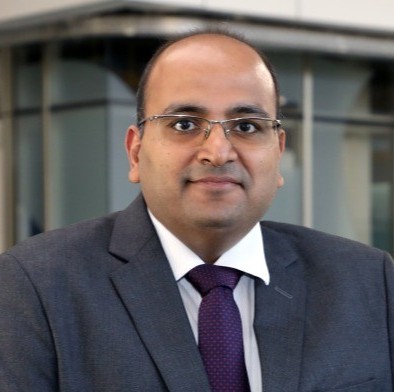
Maulik D Mehta, Deputy Managing Director, Deepak Nitrite
Deepak Nitrite's revenue and profitability numbers for FY 2025-26? What were the key operational and market factors that enabled growth despite continued global uncertainty in the chemicals sector?
Manufacturing and Business operations are engulfed in clouds of volatility world-wide, sparked by various geopolitical friction and embargo of tariffs. In this daily changing scenario, Deepak Nitrite Limited (DNL) stays resilient to the challenges. We have remarkably posted a consolidated revenue of ~ Rs. 7,950 crores and PBT of ~ Rs. 770 crore for the year ended 2025-26. Our long-term vision and targets remain unfettered, thanks to making calculated, intelligent gearshifts backed with acumen and analysis Deepak Nitrite is renowned and trusted for.
We foresee severe disruption in crude linked supply chains, pricing pressure and geopolitical events to have become a new normal as we chart our way ahead. Volume stability, favourable pricing trends, plant fungibility by pivoting towards products, customers and markets showcasing better demand has supported the overall momentum. Process enhancements, cost efficiencies and deeper integration of supply chains have helped sustain the trajectory and competitiveness across segments.
Phenolics segment played a critical role in supporting Q4 FY26 revenue. Do you also see stabilization in phenol and acetone pricing after prolonged downcycle?
The Phenolics business delivered robust performance backed by strong pricing gains along with volume stability despite geopolitical conflict in the Middle East. Our foresight backed with strategic planning has helped to record improved EBIT margins by 20 per cent during Q4. Phenol’s performance was supported by stable plant operations, and recovery in downstream demand from polymer and industrial applications. We have strategically entered into long term supply agreements and have a world-scale operations facility for us to deliver best quality at a competitive price.
The company has announced a massive investment pipeline in Polycarbonate Resins, Phenol, Acetone, and IPA. Capex plans for FY 2026-27? What strategic opportunity do you see in advanced materials, and how will these investments reshape the company’s growth trajectory over the next decade?
Deepak Group's vision of having a state-of-the-art integrated Chemical and Petrochemical complex is shaping up sustainably, in planned phase -by-phase structuring. Our FY26–FY28 capex strategy is focused on building a fully integrated advanced materials platform through major investments in Phenol, Acetone, IPA, and Polycarbonate (PC) resins. The company has announced investments of over ?11,000 crore, including India’s first large-scale PC resin ecosystem, targeting strong import-substitution opportunities. These advanced materials are seeing rising demand from EVs, electronics, medical devices, and infrastructure sectors. By integrating the entire value chain, Deepak aims to improve margin stability, reduce dependence on imports, and strengthen global competitiveness. Over the next decade, these investments are expected to shift the company toward higher-value specialty materials and create a long-term manufacturing moat.
Deepak Nitrite is positioning itself as one of the world’s largest single-location producers of phenol and acetone. How does this scale advantage strengthen Deepak Nitrite’s competitiveness against global chemical majors?
We see ourselves as our customer’s ‘Partner-of-Choice’ banking on our cutting-edge technological excellence and decades of domain expertise. Deepak Nitrite’s scale in Phenol and Acetone strengthens its competitiveness by driving significant cost efficiencies, operational integration, and supply reliability. Being among the world’s largest single-location producers enables economies of scale in procurement, manufacturing, logistics, and energy utilization, helping the company maintain competitive margins even during cyclical downturns. The integrated setup also provides feedstock security for downstream products like IPA, BPA, and polycarbonate resins, creating a strong value-chain advantage.
Additionally, large-scale domestic manufacturing reduces India’s dependence on imports and positions Deepak as a strategic global supplier amid the China+1 diversification trend. This scale, combined with backward and forward integration, enhances Deepak Nitrite’s ability to compete with global chemical majors over the long term.
Deepak Nitrite has consistently emphasized backward and forward integration. How has this integrated business model helped the company navigate volatile global chemical cycles and pricing pressures?
Driven by Responsible Chemistry, Deepak Nitrite’s integrated business model has played a critical role in reducing the impact of volatile chemical cycles and pricing pressures.
Backward integration improves feedstock security and lowers dependence on external suppliers, while forward integration into value-added products helps capture higher margins across the value chain. This diversification across intermediates, phenolics, solvents, and advanced materials reduces reliance on any single product cycle. The integrated structure also improves operational efficiencies, cost competitiveness, and resilience during global demand slowdowns.
As a result, Deepak Nitrite has been able to maintain relatively stable profitability and strengthen its market position despite fluctuations in global chemical prices. Deepak’s deepened integration continues to provide a competitive edge through an increased raw material self-sufficiency and reduced supply chain vulnerability.
Deepak’s long-term growth remains anchored in value chain integration and specialty chemical expansion. A steady progress of Deepak’s multipurpose agrochemical intermediates and MIBK, MIBC projects, which are scheduled for commissioning in Q2 FY27. Deepak’s and India's first fully integrated polycarbonate facility execution is on track.
Deepak Group's Rs. 8,500 crore polycarbonate resin initiative is among the largest investments in India’s specialty materials sector. What are the key milestones and commercialization timelines investors should watch for?
In a unique sync of European technology with Indian manufacturing excellence, Deepak Group is on track to achieve India's first fully integrated polycarbonate facility in Dahej, Gujarat. For this project, Deepak has entered into a strategic long-term agreement with Praxair India to establish a dedicated onsite HyCO plant at our Dahej facility.
Under this ‘Build-Own-Operate’ model, Praxair India will manage the dedicated on-site infrastructure, allowing us to maintain a sharp focus on the polycarbonate resin project, significantly enhancing execution visibility and reducing upfront investment and supply chain resilience. Plant dismantling at Stade, Germany is progressing with shipments already underway to India. Commissioning is targeted in 2028.
The company recently inaugurated DRDC 2.0 in Vadodara to strengthen innovation capabilities. Which emerging chemistries or application areas are expected to drive the next wave of product innovation?
Our state-of-the-art Deepak R&D Centre (DRDC) at Manjusar, Near Vadodara is expected to drive the next wave of innovation across advanced materials, sustainable chemistry, polymers, petrochemicals, and high-performance specialty chemicals.
Public disclosures indicate a strong focus on polycarbonate resins, downstream phenolics, process intensification, and environmentally sustainable chemistries aligned with sectors such as EVs, electronics, medical devices, infrastructure, and renewable energy.
The new R&D centre is also equipped with polymer labs, pilot plants, pressure reactor setups, and AI-driven research tools, which will accelerate development of next-generation materials and scalable manufacturing processes. Additionally, Deepak Nitrite has highlighted multidisciplinary research capabilities aimed at creating differentiated products with improved performance, cost efficiency, and lower environmental impact.
Overall, DRDC 2.0 is positioned as a strategic innovation hub to support Deepak’s transition from a commodity chemical manufacturer to an advanced materials and technology-driven company.
Specialty fluorochemicals are becoming a focus area globally due to applications in electronics, EVs, and advanced materials. What is Deepak Nitrite’s long-term strategy in this segment?
Deepak Nitrite’s long-term strategy in specialty fluorochemicals is centred on building a high-value fluorination platform that supports advanced applications across agrochemicals, pharmaceuticals, semiconductors, EV batteries, and electronic materials.
The company has already commissioned a dedicated fluorination block at Dahej and begun production of intermediates such as Benzo Trifluoride (BTF), strengthening backward integration and reducing import dependence. Management has indicated that fluorochemicals represent a strategic diversification into complex, high-margin chemistries aligned with global demand trends in sustainable mobility and advanced materials. Overall, the strategy is to gradually move up the value chain into differentiated fluorinated products with strong global growth potential.
The company has invested heavily in nitric acid and nitration capabilities. How important are these upstream integrations in supporting downstream specialty chemicals and performance materials businesses?
Deepak Nitrite’s investments in nitric acid and nitration capabilities provide critical backward integration for a wide range of downstream specialty chemicals, performance materials, dyes, pigments, pharma intermediates, and agrochemical products. These upstream assets improve feedstock security, reduce dependence on external suppliers, and enhance cost competitiveness, especially during periods of raw material volatility. The integrated nitration chain also enables tighter control over quality, process efficiency, and supply reliability, which are crucial for high-performance and value-added applications.
Additionally, strong nitration capabilities create a scalable platform for developing new specialty molecules and support Deepak Nitrite’s long-term transition toward advanced materials and differentiated chemistries.
Deepak Nitrite has expanded into new platforms such as fluorination and photochlorination for agrochemical and pharma intermediates. What kind of customer demand are you witnessing in these high-value chemistries?
We believe in offering ‘Make in India for India and the World’ our efforts to champion high value chemistries that offer trustable and viable import substitution options to our valued customers. The fluorination and photochlorination facilities provide seamless backward integration of existing agrochemical and pharma intermediates for the group and establishment of these facilities shall ensure tapping niche chemical markets and ensuring highest level of customer satisfaction.
The company has spoken about renewable energy transition initiatives already benefiting operations. Presently, what portion of electricity consumption comes from renewable energy and what's the future roadmap?
Deepak Group cares for the People and the Planet equally. Our sustainable operations and Community Social Responsibility projects have environmental care and conservation at the core. Deepak Nitrite is moving towards a 60 -70 per cent renewable energy mix, integrating principles of green chemistry to deliver safer, and more sustainable products by leveraging both short term and long-term energy solutions. Benefits from short term contracts have started accruing while benefits from long term contracts are expected in next fiscal year
Deepak Nitrite’s R&D investments appear to be accelerating alongside Capex expansion. How do you balance investments between large-scale manufacturing capacity and innovation-led specialty products?
Deepak group largely focusses on Verbund styled facilities where large scale manufacturing capacities will eventually cater to innovation led facilities which will create opportunities of import substitution and value addition within the group leading to market expansion within the country.
With the commissioning of the nitric acid plant at Nandesari, what new opportunities open up in terms of supply chain security, value addition, and specialty applications?
The commissioning of the nitric acid plant at Nandesari significantly strengthens our supply chain security by ensuring reliable in-house availability of a critical raw material and reducing dependence on external sourcing for key nitration chemistry products. It improves cost competitiveness, operational efficiency, and planning flexibility across downstream operations. The integration also enables greater value addition through expansion into high-value specialty and performance chemicals. With improved control over quality and production, we can better cater to advanced applications across pharma, agrochemicals, and performance materials. Strategically, the plant supports our long-term vision of deeper backward integration and import substitution while enhancing manufacturing resilience and scalability.
Deepak Nitrite has signed multiple MoUs with the Gujarat government involving investments of nearly Rs. 14,000 crore. What role will Gujarat play in the company’s next phase of expansion and manufacturing scale-up?
Gujarat is expected to become a key hub for our downstream integration, export-oriented manufacturing, and innovation-led expansion initiatives. The state’s strong policy support, logistics advantages, and skilled industrial base also help improve execution efficiency and global competitiveness. Overall, Gujarat will remain a strategic manufacturing and growth engine for Deepak Nitrite’s long-term expansion roadmap.
How is Deepak Nitrite leveraging AI, automation, and digital manufacturing technologies across operations?
Deepak Nitrite is progressively integrating AI, automation, SAP-led digital systems, and smart manufacturing technologies to improve operational efficiency, safety, reliability, and decision-making across its businesses.
The company leverages advanced process control systems, digital monitoring, predictive maintenance, and data-driven manufacturing practices to optimize production and resource utilization. SAP platforms play a key role in integrating procurement, supply chain, finance, inventory, and manufacturing operations, enabling better visibility, planning, and execution across large-scale facilities. DRDC 2.0 has also been equipped with AI-enabled research and analytical capabilities to accelerate product development and process innovation.
As Deepak expands into advanced materials and integrated chemical platforms, digital manufacturing and enterprise technologies are expected to become critical enablers of scalability, agility, and global competitiveness.
Subscribe to our newsletter & stay updated.