DCPC is strategizing the best path forward for CCUS
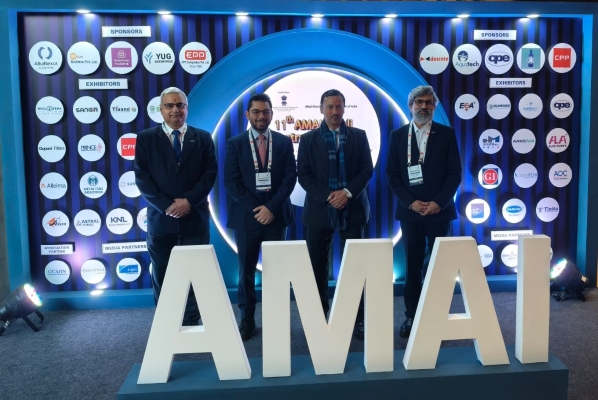
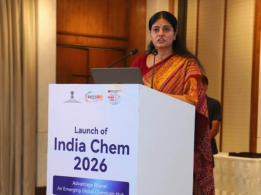
Inaugurating the 11th Annual Alkali Industry Conference, Deepankar Aron, Joint Secretary - Chemicals, Department of Chemicals & Petrochemicals (DCPC), Government of India said, "The Budget 2026 had an unprecedented announcement for the industry of three chemical parks announced by the Finance Minister. This will be set up in a challenge mode and all the states would be bidding and we are very close to finalising the contours of this scheme. The allocation of Rs. 600 crore as announced by the government for the coming financial year and considering it would be for a five year period i.e. Rs. 3,000 crore for three chemical parks i.e. Rs. 1,000 crore per park. This will benefit the chemical sector from the states which are coming up with these parks."
"The other major announcement pertaining to the chemical sector is government decided to set up an investment fund close to Rs. 90,500 crore. For Carbon Capture Utilisation and Storage (CCUS) for five hard to abate sectors - Chemicals, Petrochemicals, Cement, Steel, and Power, the total outlay is Rs. 39,500 crore. We are right now in the process of brainstorming as to what would be the best way to go forward for CCUS. I would request this forum as Chlor-Alkali is at the centre where power consumes around 55% of the total cost," added Aron.
Speaking in the inaugural session of Annual Alkali Conference 2026, Aditya Shriram, President, Alkali Manufacturers Association of India (AMAI) and Dy. Managing Director, DCM Shriram Ltd. said, "This conference comes at a very significant moment for our industry. We are living through a phase where change is no longer incremental—it is structural. The challenges before us are unprecedented but so are the opportunities."
I believe this conference is precisely about learning, unlearning, and relearning together, Shriram added.
"While our industry is undergoing transformative change, the external environment has also shifted dramatically in recent years. The year 2026 is likely to see continued economic and geopolitical realignments, redefining supply chains, energy choices, and trade flows. In such an environment, agility is no longer a competitive advantage—it is a survival skill," Shriram opined.
"The Indian chemical industry landscape is witnessing rapid change, with ambitious plans for capacity augmentation in the coming years. The galloping growth—particularly in caustic soda and PVC capacities—will undoubtedly alter industry dynamics. As capacity additions outpace near-term demand growth, market discipline, exports, and operational excellence will become even more critical," Shriram said.
Indian caustic capacities are likely to reach 67 lakh MTPA this financial year, with exports accounting for about 9% of capacity. As equilibrium shifts, expanding our export footprint will not be optional—it will be essential. Soda ash capacities are expected to touch 47 lakh MTPA, broadly keeping pace with demand. With a conducive policy and business environment, India’s soda ash industry can become a strong contributor to overall chemical sector growth. PVC expansions will be another major inflection point. PVC capacity, currently at 16.4 lakh MTPA, is expected to increase by over 150% to 41.2 lakh MTPA in the next couple of years, with two major plants coming on stream using divergent technologies.
The theme of this year’s conference—“Shaping the Future: Markets, Technology and Sustainability”—captures the three pillars that will define our next decade, added Shriram.
Sebastian Eckardt, Regional Practice Director for Prosperity in the South Asia Region, World Bank and Dr. Richard Charlesworth, Executive Director and Global Head of Industry Processes & Cost Analytics, S&P Global Energy delivered their keynote address at the conference.
Subscribe to our newsletter & stay updated.