A new global study highlights that mastering both technical expertise and soft skills is crucial to driving the energy transition, with innovation hinging on professionals who can navigate complex challenges.
The 2025 edition of the study by Fondazione MAIRE – ETS, the research arm of Italian technology and engineering group MAIRE, conducted in collaboration with global market research firm IPSOS, underscores that technical knowledge in renewable energy and sustainable technologies must be paired with soft skills like problem-solving, adaptability, and critical thinking.
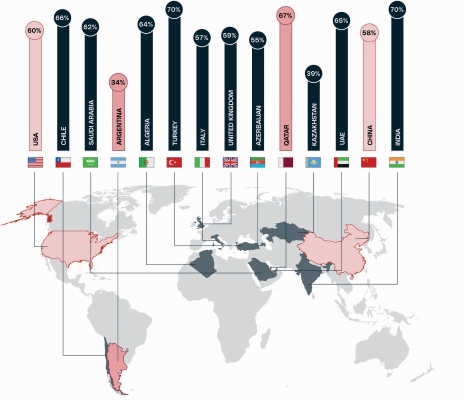
The study, titled “Climate goals: winning the challenge of climate goals through the creation of skills and competences worldwide. Addendum 2: focus Qatar – Argentina”, expands its global panel to over 2,300 interviews across 14 countries and four continents, now including Qatar and Argentina. Other nations covered include Saudi Arabia, UAE, India, China, Azerbaijan, Kazakhstan, Turkey, USA, Chile, Italy, UK, and Algeria.
India leads in awareness, with 63% of respondents highly familiar with the energy transition, while Kazakhstan lags at 29%, and Argentina at 36%.
Energy transition is a top priority for 70% in India and Turkey, and 67% in Qatar, versus just 34% in Argentina.
Commitment levels follow a similar trend, highest in India (71%) and Saudi Arabia (62%), lowest in Kazakhstan (15%) and Argentina (23%).
The study also identifies region-specific challenges: raising awareness in Algeria and China, engaging private companies in Chile, and stakeholder involvement in China and India. Infrastructure development is prioritized in UAE, Kazakhstan, and the USA; Azerbaijan focuses on professional training; Qatar fears job losses in traditional sectors.
Countries also differ in expectations: Kazakhstan worries transition costs may outweigh benefits, while Saudi Arabia anticipates short-term gains.
Across the board, there is a growing need for education and training, with urgency highest in China and Chile. Globally, demand is rising for technical skills—environmental impact analysis in Azerbaijan, renewable energy expertise in Algeria, alternative materials knowledge in Algeria, Qatar, China, and the USA—paired with soft skills like creativity, critical thinking, and problem-solving. Workforce adequacy varies, with Kazakhstan struggling and China and India adequately staffed.
Fabrizio Di Amato, Chairman of MAIRE and Fondazione MAIRE, emphasized: “The energy transition is an irreversible journey: its benefits, both environmental and economic, are globally recognized, and will outweigh or balance the costs for 13 out of 14 countries over the short term and for 100% of the panel countries over the long term.
"Success depends on the strategic alignment of vision, policy, innovation, and – above all – human capital. Investing in new technical and soft skills for climate goals and circularity is essential for shaping the future competitiveness of nations. Emerging countries recognize the need for increasing the availability of energy transition professionals: here is where we see the greater dynamism that is reshaping geo-economy worldwide.”