Emirates Biotech has officially joined the CIRCLE consortium, a flagship initiative backed by the Circular Bio-based Europe Joint Undertaking (CBE JU) under the EU’s Horizon Europe programme.
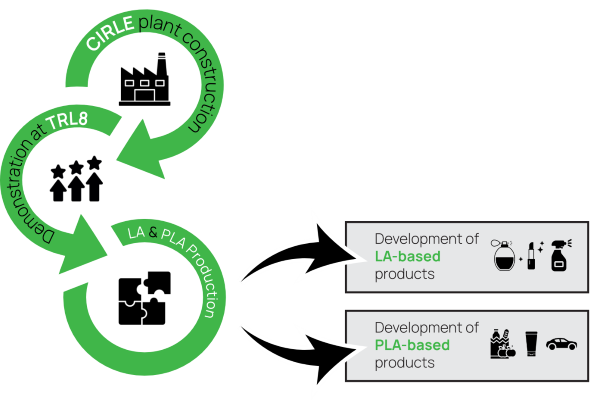
The four-year project, funded with €27 million, unites 17 partners across the full value chain to build the first industrial biorefinery capable of converting organic food waste into high-value bio-based chemicals, including polylactic acid (PLA).
Within the consortium, Emirates Biotech will spearhead the polymerisation of lactic acid derived from food waste, producing high-purity PLA for evaluation and application development by other partners. The project also plans to deliver various PLA grades for sectors including automotive, cosmetics, and food packaging, demonstrating how lactic acid and PLA can be produced directly from food waste in waste management facilities—reducing the carbon footprint of materials production.
“Proving that we can derive high-performance biopolymers directly from food waste is a major step forward for the industry,” said François de Bie, Chief Commercial Officer at Emirates Biotech.
“Demand for sustainable materials is growing quickly in sectors like automotive and cosmetics. Our role in the CIRCLE project is to convert polymer-grade lactic acid produced by our partners into commercial-grade PLA that meets those standards and can be used in existing manufacturing processes.”
The CIRCLE consortium is coordinated by TripleW and includes industry heavyweights such as Volkswagen, FrieslandCampina, Davines, Sulzer, and Sulapac. The collaboration spans waste management companies, chemical technology providers, and global consumer brands.
The project has already hit a milestone: in September 2025, the world’s first lab-scale PLA made entirely from food waste was produced. Emirates Biotech’s involvement is expected to accelerate the move from breakthrough research to industrial-scale production, in line with the commissioning of its 80ktpa PLA plant in 2028.
For Emirates Biotech, the partnership reinforces its long-term vision: making sustainable materials not a compromise, but the obvious commercial choice.