Viridor is calling for sweeping policy changes across the EU and UK, warning that current market conditions are failing to support the scale of investment needed to expand advanced plastics recycling.
The company says the sector is facing a widening gap between ambition and economic reality, as weak demand for recycled materials and persistently cheap virgin plastics continue to undermine investment confidence.
Advanced plastics recycling—capable of processing hard-to-recycle waste that cannot be handled by conventional mechanical systems—plays a critical role in the circular economy. It can convert contaminated or complex plastics back into usable material, including for food and medical-grade applications, helping to reduce landfill, export dependence and reliance on new fossil-based plastics.
Since acquiring the Quantafuel platform, Viridor reports strong operational performance at its Skive facility in Denmark. At the Skive Plastics-to-Liquids plant, the company says it has achieved dry yields of 70–75%, supported by improved operations, higher line availability and increased utilisation. It also highlights successful processing of contaminated household plastics at scale.
However, Viridor warns that broader market conditions are moving in the opposite direction. Across the EU and UK, recycled plastics are under sustained price pressure, with virgin materials consistently undercutting recycled alternatives. At the same time, it argues that policy frameworks are not yet providing the certainty or enforcement needed to unlock long-term capital investment.
The company is now urging regulators to act decisively. Its proposals include stronger measures to ensure European plastic waste is processed within Europe, enforceable recycled-content mandates with clear timelines toward 2030, and harmonised end-of-waste rules for chemically recycled plastics across the EU and UK.
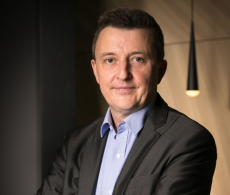
Lee Hodder, Managing Director, Carbon Capture and Circular Solutions at Viridor, said: "Advanced plastics recycling matters. It tackles a problem most people don’t see, but that everyone lives with.
“A significant share of plastic can’t be recycled through conventional methods. Instead, it is sent for energy recovery, sent to landfill, or exported overseas, increasing emissions and reinforcing reliance on making new plastic from fossil fuels.
“We are extremely proud of the operational advances made across Quantafuel and the progress made. The team has been extremely dedicated, operated the Skive plant at high standards and always found solutions to keep improving the technology to where it is today. The technology works. At Skive, we have achieved yields of up to 75%, far beyond the 30% many expected in the early days."
But the problem is the broader business reality. "Waste and recycling markets are shaped by policy: when governments create clear, stable incentives and properly enforced rules, markets respond and investment follows. When they don’t, the system defaults to the cheapest option available. Today, that is making new plastic from virgin feedstock.
“That is why Viridor is calling for essential policy changes to make advanced plastics recycling investable. It is also why, after careful consideration, we are proposing to cease our European chemical recycling operations," he added.
Despite the proposed exit from its European chemical recycling operations, Viridor said there will be no impact on the day-to-day work of Resource Denmark’s mechanical recycling and decarbonisation business, which it says continues to perform and scale.