A groundbreaking collaboration between circular diaper company Woosh, polyolefin solutions leader Borouge International, and chemical recycling specialist BlueAlp has achieved what many considered impossible.
The achievement: turning plastics recovered from used baby diapers into feedstock for new polymer production.
The milestone marks the first time a closed-loop recycling system for diaper plastics has been demonstrated at industrial scale in Europe, offering a viable solution for one of the continent’s largest and most difficult-to-recycle waste streams.
Disposable baby diapers have long symbolized the shortcomings of the linear economy. Typically used once before being sent to landfill or incineration, they contain valuable polyolefin-based nonwovens and films that are rarely recovered.
According to estimates by Cabrera and Garcia (2019), the EU-28 generated 6.73 million metric tons of disposable baby diaper waste in 2017 alone, underscoring the scale of the challenge.
The new breakthrough builds on Woosh’s closed-loop diaper ecosystem. The Belgium-based company developed the Woosh give-back diaper, designed specifically for recycling. Woosh supplies the diapers to childcare facilities and households, then collects them after use, creating a dedicated and traceable waste stream.
Working closely with Woosh, Borouge International and BlueAlp established the quality standards required for the recovered plastics to be processed through BlueAlp’s advanced chemical recycling technology. Woosh subsequently optimized its proprietary mechanical separation process to produce plastic fractions that met those specifications.
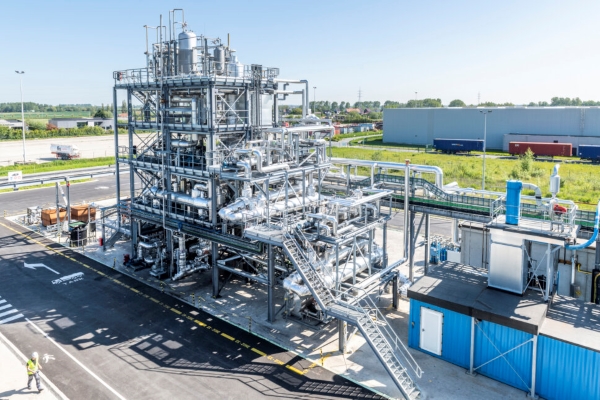
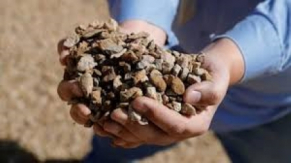
The resulting material was processed at BlueAlp’s commercial recycling plant in Oostende, Belgium. Using pyrolysis technology, the recovered plastics were converted into pyrolysis oil — a liquid hydrocarbon feedstock suitable for the production of new polymers.
The pyrolysis oil is ISCC PLUS-certified and meets the quality requirements for manufacturing new polymer products, including materials that could ultimately be used in diaper production.
“Chemically recycling the plastic from used diapers is anything but straightforward. It requires careful pre-processing to meet the specifications of the pyrolysis process,” says Peter Voortmans, Borealis Vice President Marketing Consumer Products.
“Together with Woosh and BlueAlp, we’ve been able to solve this challenge, showing what’s possible when teams work closely together with a shared goal.”
The achievement represents more than a technical success. It signals the emergence of a new circular model for the hygiene sector, where absorbent hygiene products can be collected, processed and transformed into valuable resources rather than discarded as waste.
Woosh is already expanding the system. More than 30,000 children use the company’s give-back diaper program every day across Belgium. Its diaper recycling facility, launched in 2025, processes thousands of metric tons of used diapers annually, with planned expansion into France and the Netherlands expected to significantly increase volumes available for recycling.
“We have spent years building the collection network and the technology to make this possible,” says Jeff Stubbe, CEO Woosh.
“To see the plastic we recover from used diapers validated as feedstock for new polymer production, and potentially for new diapers in the future, is exactly what we set out to achieve. This is what closing the loop actually looks like.”
BlueAlp believes the project demonstrates the potential of chemical recycling to tackle waste streams that conventional recycling technologies cannot effectively manage.
“This is a fundamental example of what we want to achieve at scale with BlueAlp” says Valentijn de Neve, CEO, BlueAlp.
“It’s fantastic to see that, together, we can address difficult-to-recycle waste streams that cannot be effectively managed through mechanical recycling, enabling them to be chemically recycled and returned to demanding applications such as diapers in the healthcare and hygiene sector.”
As Europe seeks solutions to reduce waste and increase resource recovery, the project provides a powerful proof of concept.
By combining dedicated collection systems, advanced sorting technology and chemical recycling, the partners have demonstrated that even one of the most challenging consumer waste streams can be brought back into the production cycle.
For an industry long associated with single-use disposal, the message is clear: the circular diaper economy is no longer a theory—it is operating at industrial scale.