In a major push toward India’s green manufacturing future, Balrampur Chini Mills Limited (BCML), in partnership with the Lucknow Cantonment Board, launched the Bioyug Green Command 2026, a flagship platform aimed at accelerating adoption of bioplastics across sectors.
The initiative, unveiled on World Environment Day, was launched in the presence of Defence Minister Rajnath Singh, who underscored the strategic importance of sustainable materials for India’s environmental and economic security.
Describing the effort as part of a broader national transformation, he said: "this is a highly effective step linked to India's future, to generations to come, and—in a sense—to our national security."
The event marked the formal rollout of a structured collaboration between BCML’s Bioyug initiative and the Lucknow Cantonment Board, backed by a recently signed MoU and the company’s first institutional order for compostable PLA-based products. The goal: replace conventional plastics with biodegradable alternatives and build a scalable domestic bioplastics ecosystem rooted in agriculture.
A large exhibition showcased India’s emerging bioplastics value chain, followed by panel discussions, policy dialogues, and recognition of ITI girl students involved in skills development programmes linked to Bioyug’s 3D printing initiative in Uttar Pradesh.
The initiative also highlighted a women-focused training project under the “Building Skills. Transforming Futures – Balrampur Bioyug Bioplastic 3D Printing Project,” designed to equip young women with manufacturing skills using PLA-based materials and open pathways into new-age industries.
BCML leadership framed the initiative as both environmental and economic transformation.
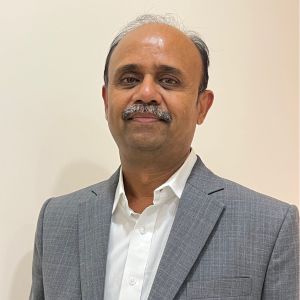
Chairman & Managing Director Vivek Saraogi said: "India stands at a defining moment in its sustainability journey, where economic growth and environmental responsibility must advance hand in hand. The transition from conventional materials to sustainable alternatives is not merely an environmental imperative but an opportunity to build new industries, strengthen domestic manufacturing, and create long-term value for society.
"Through Bioyug Green Command 2026, we are bringing together government, industry, institutions and communities to accelerate this transition and demonstrate how innovation-led solutions can contribute meaningfully to a cleaner, greener and more self-reliant India."
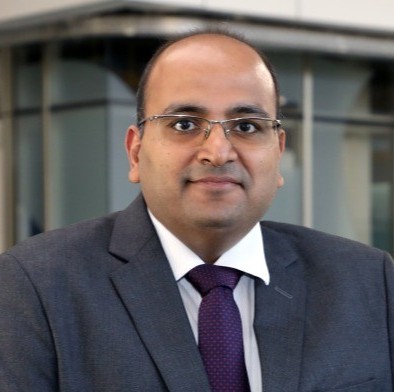
Executive Director Avantika Saraogi echoed the economic case for bioplastics, stating: "The transition to biomaterials is not merely an environmental imperative—it is an economic opportunity. It is about empowering farmers, creating new industries, and strengthening an Atmanirbhar Bharat.
"The last century belonged to oil and petrochemicals; the next can belong to farmers and fields. The materials of the future will not only be mined from beneath the earth but cultivated above it, through the power of agriculture."
Two high-level panels anchored the day’s discussions. The first focused on scaling Uttar Pradesh’s bioplastics value chain from policy to production, while the second examined applications of sustainable materials in defence logistics and operations.
Bringing together more than 2,000 participants from government, industry, defence, academia and civil society, Bioyug Green Command 2026 positioned itself as a major coordination platform for India’s circular economy ambitions.
The event closed on a strong message of industrial transition and sustainability, with organisers describing bioplastics as central to India’s next phase of green growth and self-reliance.
In his address, Shri Rajnath Singh also warned of the environmental cost of modern consumption, citing scientific findings on microplastics and urging urgent systemic change. He said: "This is the price we pay for our modern lifestyle. We drink bottled water and eat from plastic containers; with every breath we take and every step we walk, we are ingesting plastic."
He further emphasized the scale of the challenge, adding: "We are not telling a horror story here; these are scientific facts supported by new research emerging daily."
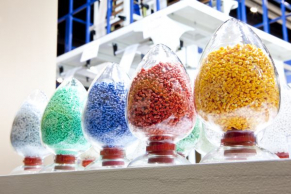
Positioning bioplastics as a strategic alternative, he highlighted PLA as a biodegradable material derived from sugarcane that can decompose within months and reduce dependency on fossil-fuel-based plastics.
He also linked the transition to broader economic resilience, noting that domestic bio-based production could reduce import dependence and strengthen India’s supply chain security in an increasingly volatile global environment.