Our silicon-graphite composite anode is a natural evolution of graphite anode for the next generation of EVs, defence drones & power tools that need more energy density

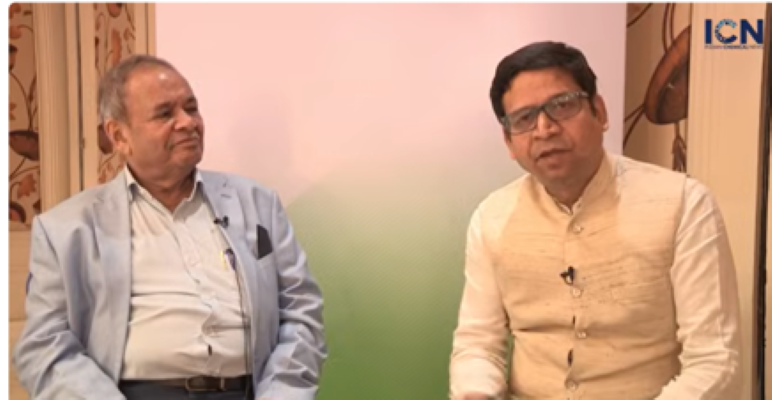
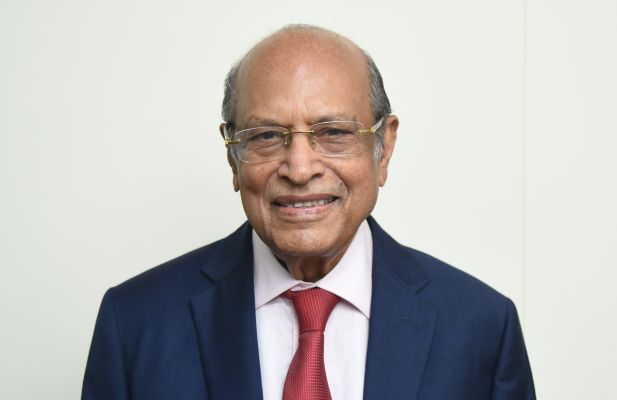
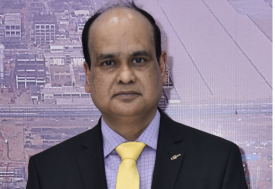
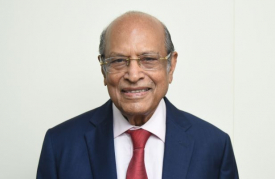
Vikram Handa, Managing Director, Epsilon Group
Epsilon Carbon has aggressively expanded its advanced battery materials and specialty carbon businesses over the past year. How has the company performed financially in FY2025-26 in terms of revenue growth, profitability, and contribution from new energy-related businesses?
FY2025-26 has been a strong year for us. Years of disciplined investment are finally showing up in numbers, and revenue has grown consistently across our business units. That gives me real confidence for sustained growth.
The diversification in specialty carbon with new products like anthraquinone, carbazole, and cresols, and Terrablack, our recovered carbon black in Carbon Black business will be contributing to that growth. Our battery materials of graphite anode and LFP cathode are in advanced stages of off takes. We’ve developed hard carbon anodes for sodium-ion batteries and is generating real commercial traction now.
The company aims to achieve 100% domestic value addition for anode materials and 60% for cathode materials in India. How transformative could this be for India's EV battery supply chain and import dependency?
Over 93 per cent of the world's graphite anode material still comes from China. When China restricted graphite exports in late 2023, the risk became impossible to ignore: if your EV supply chain runs entirely on imported anode material, you're really running it on one country's goodwill. It can turn into a national security issue.
We're building the answer to that. 100 per cent domestic value addition in anode materials means we process, shape, mill, coat, and finish everything here in India, on our own patented technology. For cathode, 60 per cent domestic value addition matters even more, because cathode is 40 to 50 percent of a cell's cost. Get that value addition onshore and the unit economics of an India made cell start to work. PLI targets stop being aspirational and start being achievable. And it gives India something real to offer global battery OEMs who are under pressure to move away from Chinese origin material.
Epsilon Advanced Materials is developing graphite-silicon composite anodes. How critical will advanced battery chemistries be in differentiating Epsilon globally?
Our silicon-graphite composite anode is a natural evolution of graphite anode for the next generation of EVs, defence drones & power tools that need more energy density.
Silicon has roughly ten times the theoretical capacity of graphite. The challenge has always been that it expands too much during charge and discharge, which is why it never scaled commercially on its own. Our composite approach is built around solving exactly that. The graphite matrix holds the structure together while silicon adds capacity, and because it’s drop-in compatible, cell makers don't need to redesign their lines to use it. In practical terms, that translates into 420 to 500 mAh/g of capacity, 20 to 30 percent more driving range on the same battery footprint, and charge rates of up to 5C.
This is quite significant for Epsilon's global differentiation in a market that will reach 4.2 TWh by 2030 at a 41 per cent CAGR, with EVs driving roughly two-thirds of that demand.
The company has announced a massive Rs. 15,350 crore investment in Karnataka for graphite anode, LFP cathode manufacturing, and EV battery R&D hub. What revenue potential and global market share aspirations do you have from these projects over the next five years?
The Karnataka announcement is the single largest commitment we have made as an organisation, and it comes from a clear conviction: India has a real, but time-bound window to become a major force in global battery materials. We have patented technology and the execution track record to actually scale this, not just announce it.
The investment covers three businesses: graphite anode manufacturing, LFP cathode manufacturing, and an EV battery R&D hub. Very few companies outside China can claim that kind of end-to-end capability.
Once these assets are fully running, we're looking at a materials business that's a multiple of where Epsilon stands today. But the number I care about more is market positioning of graphite anode, LFP cathode for the next-generation applications. Revenue follows technology that’s credible, latest and which has a supply chain trust. That's what we're building first.
Epsilon Carbon is simultaneously building battery material capabilities in India and the US, including the planned North Carolina graphite anode facility. How do you see geopolitical shifts and the China-plus-one strategy shaping global demand for Epsilon's products?
The Inflation Reduction Act & The Big Beautiful Bill changed the economics of battery manufacturing in the US by excluding Chinese-origin/ Prohibited Foreign Entity materials from EV tax credit eligibility. That created a real opening for non-Chinese anode manufacturers, and we were ready for it because we'd already spent years building this technology.
Our approach to the US market builds on technology developed in India and supply a non-PFE material to serve American cell makers and OEMs for their supply chains.
China+1 is a structural shift in global supply chains that will play out over the next decade. Epsilon is one of very few companies outside of China with own technology, patents and capability to co manufacture at scale.
The company is focusing heavily on import substitution for specialty carbon products such as Anthraquinone, Carbazole, and Cresols. How large is the domestic opportunity for these products, and how can India reduce import dependence in this segment?
India imports a lot of specialty coal tar chemicals, and most of that comes from China. Anthraquinone goes into dyes, pigments, and paper. Carbazole is used in pharmaceuticals, agrochemicals, and advanced materials. Cresols serve a wide range of industrial applications. Put together, the import bill runs into thousands of crores every year, concentrated in one country.
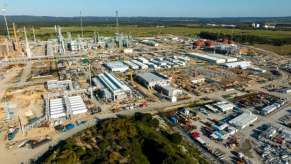
Our coal tar distillation business is going to change that with real capacity. We're expanding Vijayanagar by another 300,000 tons, taking it to 500,000 tons, and building out Jharsuguda at 300,000 tons. That makes us one of the largest specialty carbon manufacturers in India. Jharsuguda is purpose built to produce Anthraquinone, Carbazole, and Cresols at a scale India hasn't had before, with the feedstock security to support it.
Sustainability appears to be central to Epsilon's strategy, with initiatives ranging from Terrablack and tyre recycling to LNG & Electric powered logistics. How are customers responding to low-carbon and circular-economy-driven carbon products?
Conversations about Terrablack have changed completely over the last 12 to 18 months. Our portfolio holds up across key applications now, and the conversation has moved to sampling, supply commitment, volume, and pricing. That's exactly where you want to be with a new product.
Customers need sustainable materials, and Terrablack delivers. Backed by ISCC PLUS certification, this recovered carbon black offers European tyre makers verifiable proof that they can cut their carbon footprint by up to 50 per cent.
On logistics, our LNG and electric commercial vehicle fleet saved us 750 tons of CO2 in FY2025-26. That's the baseline we'll build on as the fleet grows. Sustainability credibility comes from evidence, not narrative.
Epsilon Carbon is targeting a significant increase in carbon black capacity, potentially doubling market share in India. How do you assess demand growth from automotive, EV, and specialty chemical sectors over the next decade?
India’s carbon black demand spans replacement tyres, OEMs, and EV/specialty segments. EVs require specialized, high-grade carbon black to handle heavier vehicle weights, instant high torque, and the need for improved rolling resistance, rather than standard tyre compounds.
Other than tyres, carbon black in conductive rubber compounds and specialty industrial uses is a demand base that keeps growing on its own. We're at 215,000 tons of carbon black capacity in FY26, and we're scaling toward a position where we're not just responding to the market, we're shaping it.
Epsilon Carbon's latest sustainability report highlighted a 90% reduction in Scope 2 emissions and significant energy efficiency gains. What additional ESG targets has the company set for FY2026-27 and beyond?
Our FY25 sustainability report tells you what Epsilon is becoming: a company anchored in carbon, but built around circularity. The 90 per cent cut in Scope 2 emissions was the result of many on-ground operational changes. Our waste heat recovery systems are now showing that Scope 1 reduction is possible too, through better engineering.
Looking ahead, ISCC PLUS and ISCC EU certification for Terrablack are the milestones that matter most in the near term, because they open up European circular economy supply chains. SA8000 shows where we stand on social sustainability. And we hold ourselves to these targets the same way we hold ourselves to financial ones, with clear accountability at the board level.
Through the DART digital transformation program, Epsilon is integrating SAP & predictive maintenance, and analytics into its operations. How is digitalization improving manufacturing efficiency, sustainability, and decision-making across the organization?
DART is about making Epsilon a data-driven company at every level, shop floor to boardroom. By bringing SAP and predictive maintenance into our operations, we've built a continuous loop between what's happening on the ground and the decisions we make above it.
The biggest win so far has been predictive maintenance. Sensors on critical equipment catch failure signs before they turn into breakdowns, which has cut unplanned downtime significantly. In carbon black production, an unplanned shutdown isn't just lost output. It affects quality consistency, energy efficiency, and safety.
The SAP backbone gives us real-time visibility into supply chain, inventory, and financial performance, things that used to be fragmented and dependent on manual reporting. Now I can ask about a specific plant's performance and get an answer from live data, not a report from three weeks ago.
Epsilon recently unveiled a Hard Carbon Anode material for Sodium-Ion batteries using coconut shell waste as feedstock. How significant could sodium-ion technology become alongside lithium-ion batteries, especially for grid-scale energy storage applications?
Sodium-ion has real commercial momentum from CATL, BYD, and a number of other major cell makers because sodium is abundant and widely available, and it doesn't carry supply vulnerabilities that lithium and cobalt do.
For grid-scale storage specifically, where cost per kWh and cycle life matters with more energy density, sodium-ion makes a lot of sense. India is targeting 500GW of renewable capacity by 2030, and that needs a matching scale of storage. A domestically made sodium-ion solution becomes more strategic and important.
We're still early in this work, but the feedstock choice is what excites me most. Coconut shell waste as a precursor for hard carbon gives us a circular value chain, that creates value for farmers and processors as much as for us. We're also exploring a pitch-based synthetic carbon route alongside it, so we're not locked into a single feedstock as this develops.
Your Gen III LFP cathode material developed in Germany is being positioned as a non-Chinese alternative for global EV markets. How important is localization and supply-chain diversification becoming for battery manufacturers worldwide?
LFP has made a decisive commercial comeback in global battery markets. It today represents roughly 40 per cent of global EV battery market share because of its real-world advantages in safety, cycle life, and cost. Critically, its supply chain does not depend on cobalt or nickel, which carry their own concentration and ethical sourcing challenges.
The differentiation we are building with our Gen III LFP is about its origin and patented technology. Markets across the US, Europe, and Southeast Asia are implementing frameworks in non-Chinese battery materials, and our Gen III LFP, developed in Moosburg, Germany and planned manufacturing at scale in Vijayanagar, Karnataka, is built for that demand.
The single country dependency on critical battery materials must be tackled strategically. The companies and countries that have built diversified IPs-led supply chains are the ones that will capture the next decade of battery demand growth. That is precisely what we are building in India.
India is aggressively pushing EV adoption and battery localization through policy support and PLI schemes. What additional policy interventions would accelerate India's ambition to become a global hub for advanced battery materials manufacturing?
Both government and industry are now looking at this more holistically. The conversation used to stop at the cell makers. The real opportunity is the entire chain, mining, material processing, cell manufacturing, and each stage needs its own incentives, whether through PLI or direct capex-linked schemes. India has the technical capability. Companies like ours have proven that. What we need now is policy that matches the full depth of what it takes to build a domestic supply chain, not just a cell capacity target.
The ACC PLI scheme cannot be successful on its own & needs the whole supply chain to complement. What actually moves capital for a company like Epsilon is a customer contract and reliable funding.
The bigger issue right now sits inside our own market. Indian cell makers still lean on cheaper imported material, sometimes priced below cost, because the short-term math looks better. I understand the logic, but it leaves the whole chain exposed the moment one country tightens its grip, and we are already seeing early signs of that in graphite and LFP cathode technology. A calibrated, phased tightening of import dependence would send a clear signal to Indian buyers to commit to domestic suppliers while there is still time.
Graphite anodes, cathode, electrolytes, separators, and foils all have different capex needs. One uniform PLI cannot serve all of them well. And the scale required is enormous: hitting India's 100 GWh battery target by 2030 needs roughly Rs 50,000 crore of investment over the next five years across these materials. That number should anchor the conversation, because it tells us how early we still are.
Subscribe to our newsletter & stay updated.