Industrial AI companies Seeq and Applied Computing have struck a commercial agreement to help energy operators turn complex industrial data into faster, more informed decisions, targeting measurable gains in efficiency, emissions and operational reliability.
The partnership combines Applied Computing’s Orbital, a foundation model built specifically for energy operations, with Seeq’s industrial intelligence platform. Orbital detects and diagnoses equipment and process issues across complex industrial systems, while Seeq enables teams to investigate findings, analyse operational data and identify the actions needed to improve plant performance.
The integrated offering is designed to strengthen anomaly detection and root cause analysis, giving operators deeper insight into equipment performance and the operational factors behind emerging problems. The goal is to translate AI-generated findings into actionable intelligence for day-to-day operations and longer-term strategic decisions.
The initial deployment will support INSITE, a digital platform developed by global science, technology and engineering solutions company KBR. Powered by Applied Computing’s Orbital foundation model, INSITE provides technical and advisory services to operating plants across the ammonia, petrochemical, liquefied natural gas (LNG), and oil and gas sectors.
Analysts at KBR’s Innovation Studio in Bengaluru will use Seeq to investigate anomalies flagged by Orbital and develop customer-facing reports and recommendations, bringing AI-driven detection closer to operational decision-making.
“By bringing together physics-based AI and advanced industrial analytics, Applied Computing and Seeq can help operations teams turn complex data into faster, more robust decisions,” said Lisa Graham, CEO of Seeq.
“Both companies are committed to building and supporting an industrial AI ecosystem for our customers, bringing the best innovations together to help the industries we serve adopt AI more productively and scale more quickly.”
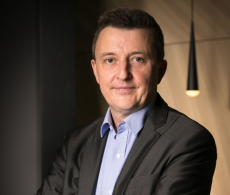
"Orbital was built to detect and diagnose issues in the world's most complex energy environments, and Seeq gives operations teams a powerful way to investigate, contextualize, and act on what it finds," said Dan Jeavons, President of Applied Computing.
'This partnership closes the loop between physics-grounded AI insight and the daily decisions that determine plant performance, and it reflects our shared commitment to an open industrial AI ecosystem."
Beyond the initial deployment, the companies plan to explore a bidirectional integration between Orbital and Seeq. The proposed integration would enable greater sharing of operational context and streamline AI-driven investigations, potentially strengthening the connection between automated issue detection, analysis and corrective action.
The agreement reflects a broader push to make industrial AI more practical at scale, connecting advanced detection models with the analytics tools and workflows operators need to turn insights into measurable operational improvements.