The microplastic crisis is not merely about visible litter, but rather the chemical burden carried by plastics and additives

By: Dr K Nagaiah, Srivatsa Gotety, Srikar Gotety and Phaniraj G
Constantly, we hear news regarding the growing microplastic crisis. Microplastics are everywhere from our rivers, soil, fishing nets, hospitals, roads, and our own kitchens. It is important to note that microplastics are not merely a polymer problem. Microplastics are also carriers of chemical and biological toxins, many of which are capable of altering ecological and biological processes. India’s current framework is focused on disposing, recycling, and reusing plastics. However, industry and government must place emphasis on the chemistry of plastic pollution.
The problem is not solely plastic fragments, but their role as vectors carrying toxins into food chains. They release additives into the water which can accumulate in aquatic life, move up the food chain, and end up in human tissue.
Understanding Microplastics
The term “microplastics” was coined in 2004 by Dr. Richard C. Thompson to describe plastic fragments smaller than 5 mm accumulating in aquatic environments. Microplastics can be categorized into primary and secondary microplastics. Primary microplastics are small plastics like microbeads, which are used for industrial and commercial applications. Secondary microplastics stem from usage of items, and are of two types. The first type originates from functional wear and tear of items such as textiles, car tires, and medical equipment such as IV tubing. The second type emerges from discarded plastics in landfills, such as toys, bags, and water bottles.
Microplastics as Chemical Vectors
Studies suggest that microplastics act through a ‘Trojan horse effect’, transporting toxic substances across environmental and biological systems. Plastics are hydrophobic and bind to other hydrophobic chemicals present in water.
Studies conducted along the Arabian Sea coast found microplastic fragments containing high concentrations of Polycyclic Aromatic Hydrocarbons (PAH), linked to petroleum-related compounds known for their carcinogenic properties. These compounds adsorb onto fragmented microplastics, allowing particles to enter aquatic ecosystems. Fish ingest not only the fragments but also the chemicals, which can lead to exposure to carcinogenic pollutants.
In agriculture, mulching films of PVC and polyethylene (PE) are widely used. For protection, additives including phenolic antioxidants, plasticizers like phthalates such as DEHP and DnBP, and UV blockers such as benzotriazoles and benzophenones (BP-3) are used. These microplastics leach into soil and are ingested by soil organisms and invertebrates which enter food chains. Studies suggest that these additives may be absorbed by plant root systems, raising concerns regarding transfer into food systems and potential human exposure.
Synthetic textiles made from polyester and polyamides, along with their respective additives, release millions of microfibers (which are not biodegradable) during washing and regular use, many of which enter sewage systems.
The Chemistry of Additives
Plastics should be seen more than polymers; they are a material combined with additives to improve durability, colour, and flame retardance. These additives are the main culprits of plastic toxicity. Several additives such as PFAS and Bisphenols are known endocrine disruptors while others are carcinogens. It is estimated that there are over 6000 known additives, 800 of which are widely used.
Phthalates and adipates are important additives used to soften PVC. Organophosphate and brominated compounds are important flame retardants. Tyres are associated with 6PPD, an antioxidant additive used for rubber durability. 6PPD degrades into 6PPD-quinone which can be detrimental to aquatic life. When plastic degrades, smaller particles with these additives are also released into waterways, soil and biological systems. Once inside the body, they may disrupt endocrine synthesis and lead to inflammation.
Concerns with Bioplastics
Bioplastics and compostable plastics like polylactic acid (PLA) are promoted as environmentally benign alternatives. These plastics require composting at high temperature and pressure. Research reports show that some compostable or bioplastics contain significant amounts of flame retardant and plasticizer additives.
In uncontrolled environments such as rivers or aquatic systems, these materials may fragment into persistent micro- and nano-scale particles. In some cases, additives within these materials may pose similar concerns as conventional plastics.
Rivers, Coasts, and Food Systems
A research team from the National Institute of Oceanography (CSIR-NIO) Goa, have detected microplastics in coastal areas and even in sea salt which is very alarming. Coastal sediments contain textile fibers, packaging shreds and nurdles (raw plastic pellets) with additives.
Another study by the CSIR-NIO and other institutions has identified microplastic contamination in the Ganga and Yamuna rivers. These rivers drain urban, industrial, and agricultural landscapes, carrying textile fibers, tyre particles, mulch fragments and packaging debris downstream. As particles move, they continue to leach contaminants, increasing toxin exposure and potentially harming waterways.
Nurdle Spill Crisis
The capsizing of the ship MSC ELSA 3 in Kochi on 25 May 2025 is a reminder of microplastic pollution escalating at a major scale. The ship carried containers loaded with billions of nurdles. After sinking, the pellets spread across roughly 120 km of Kerala’s coastline due to monsoon currents, even reaching Tamil Nadu and Sri Lanka.
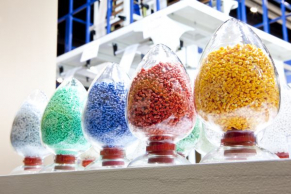
Scientific surveys along the Kanyakumari coast documented significant amounts of polyethylene and polypropylene pellets. Unlike conventional consumer waste, nurdles are primary microplastics directly entering into ecosystems. When released, they absorb pollutants and disperse through aquatic systems.
The economic consequences were severe. Fishermen reported damaged nets, clogged engines, and lower demand for fish and other seafood. Fish-vendors lost income and households dependent on fishing faced severe disruptions. This incident reveals why microplastics should be treated not merely as a waste problem, but as an industrial and environmental chemical accident.
Measuring Microplastic Contamination
Understanding microplastic risks requires identifying not only the number of particles, but also composition and chemical properties. Fourier Transform Infrared Spectroscopy (FTIR) is used to identify polymer types such as polyethylene, polypropylene and polystyrene in environmental samples. Other techniques including Raman spectroscopy, scanning electron microscopy, and pyrolysis-gas chromatography-mass spectrometry help detect additives and contaminants. These tools are increasingly essential for tracing pollution sources and assessing toxicological risk.
Human Health Implications
There is growing research showing correlation between microplastics and inflammation, cardiovascular risk, and hormonal disruptions, although evidence regarding long-term effects remains limited yet evolving. The health effects are theorized to derive from polymer particles, additives, and adsorbed contaminants.
Rethinking Regulation and Research
India’s current framework does not directly address microplastics. It treats plastic pollution as a reusing, disposal, and recycling issue. It is crucial that India changes its regulatory strategy towards plastics and microplastics.
We need detailed inspections assessing heavy metals, carcinogenic substances, and PAHs and persistent organic pollutants (POPs).. India needs protocols for producing, transporting, and storing nurdles. Despite the effective cleaning response in Kerala, it is essential that nurdle spills are dealt with similarly to oil spills.
Although India issued limitations on microbeads in the cosmetics industry, there is little to no discussion regarding medical equipment such as IV lines and catheters. Catheters and IV lines are typically made of material such as PVC and polycarbonate (PC) with additives, and therefore there may be concerns regarding the leaching of microplastics through such devices. Researchers have found that microplastics accumulate inside the plastic tubing attached to IV bags, and do so significantly higher in the first 12 mL of fluid infusion.
Further research into vitrimers may be needed. Vitrimers are an emerging class of polymers that combine properties of thermoplastics and thermosets. Compared to many conventional plastics which break down into highly toxic microplastics, vitrimers possess dynamic covalent bonding that improves durability and recyclability by potentially reducing breakdown into smaller particles. In plastics such as PVC, additives are frequently retained within polymer matrices through non-covalent intermolecular interactions, including Van der Waals forces, rather than dynamic covalent bonding. This can increase the likelihood of additive leaching during degradation and aging. Vitrimers also have self-healing and reforming properties when heated, making recycling and reusing easier. With further research and development, vitrimers can potentially contribute to the field of safe and sustainable polymer design.
Laws on disclosure of additives used in plastic manufacturing are needed on the lines of EU-REACH. Under EU-REACH regulation, plastic additives are treated as chemicals, and manufacturers must disclose compositions, manage risk, and report to the European Chemical Agency (ECHA). Furthermore, additives should be classified based on risk levels.
Rather than focusing solely on wastage and dumping, items such as tyres, paints and fishing nets should also be given importance, as these are silent contributors to microplastics. Stricter regulatory frameworks may be required for microbeads. Compostable bags must also be tested to assess the additives they contain.
Lastly, research needs to be conducted to assess the effects of microplastics and additive chemicals in various sectors especially with medical devices. Routine checkups need to be given to workers in fishing, tyre production, textile manufacturing, rag picking, and plastic recycling, as they are at risk of chronic illnesses due to frequent exposure to microplastics and additives.
Conclusion
The microplastic crisis is not merely about visible litter, but rather the chemical burden carried by plastics and additives. The MSC Elsa 3 incident demonstrates how industrial nurdles disperse along aquatic and coastal ecosystems. India’s plastic policy should evolve from a waste-management mechanism into a chemical safety framework that regulates additives, nurdles, tyre dust, textile fibers, medical microplastics, and leachates before they move through ecosystems and food chains.
(Dr K. Nagaiah is a Chief Scientist, CSIR-Indian Institute of Chemical Technology, Hyderabad. Srivatsa Gotety is a student of Chemical Engineering at University of Massachusetts, Amherst MA. Srikar Gotety is a student of Chemical Engineering at University of Massachusetts, Amherst MA. Phaniraj G is an IT professional based in Boston, USA.)
(Disclaimer: The views expressed in the articles are strictly those of the author and do not necessarily reflect the views of the Indian Chemical News.)
Subscribe to our newsletter & stay updated.