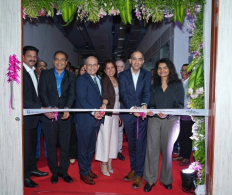
In a decisive push to capture surging demand for cleaner industrial heat, Alleima’s heating technology division Kanthal has opened a new service center in Concord—doubling down on electrification as manufacturers race to cut emissions.
The move comes as industries like electronics, glass, and steel rapidly shift away from fossil fuels. Kanthal’s high-performance Globar silicon carbide heating elements—capable of reaching temperatures up to 2,950°F—are at the center of that transition, offering a cleaner, more energy-efficient alternative to traditional combustion-based systems.
The stakes are high. According to the Congressional Budget Office, combustion emissions account for a staggering 573 million metric tons—roughly 75% of total manufacturing sector emissions. Electrification, companies like Kanthal argue, could dramatically slash that footprint.
To meet rising demand, Kanthal has not only launched the new US service hub but also expanded its global production network. The Concord facility strengthens local supply chains and cuts delivery times, while a parallel expansion at its Scotland plant boosts overall production capacity by about 40%.
“We have served the U.S. market since the 1930s. We are already supporting our customers from Concord with a broad portfolio, and adding Globar to the mix allows us to leverage existing infrastructure. The opening of our Concord service center is the next step in strengthening our local presence in the region which is experiencing a surge in advanced manufacturing,” says Robert Stål, President of Kanthal.
Backed by an $11 million investment, the expansion includes new manufacturing space, upgraded equipment, and enhanced logistics capabilities across both the US and Europe. The Concord site will now produce a range of advanced heating solutions, from metallic elements to high-temperature tubes, while also tailoring products to customer-specific furnace designs.
“This is not just a new service center. We have implemented technology improvements in Concord that allow us to adapt product configurations based on customer furnace setups and order cycles. The result is a more responsive operation, faster to quote, faster to ship, and better aligned with US customer needs,” says Simon Lile, President Business Unit Heating Systems.