We expect strong expansion in FY2026-27, driven by upgraded capacity, deeper export penetration, and revenue from new products

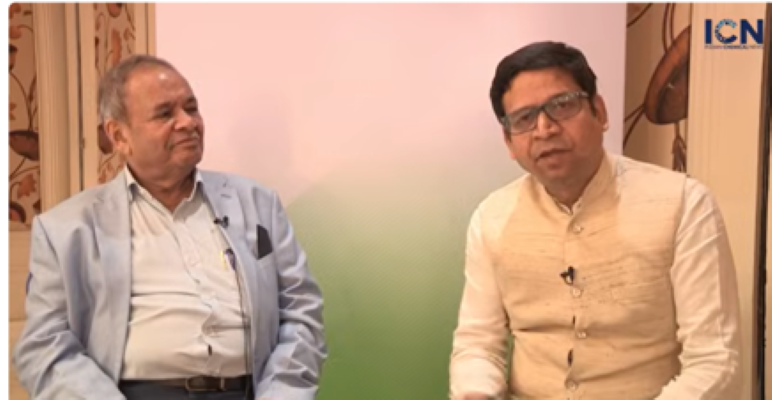
Rahul Gupta, Business Head, Jindal Speciality Chemicals
Product diversification will be a key focus for JSC over the next five years. Which specific specialty chemical segments or value chains are you prioritizing beyond Acetonitrile and what market gaps are you aiming to address?
At Jindal Speciality Chemicals (JSC) our vision is to evolve from being a leading Acetonitrile manufacturer to becoming a diversified specialty chemicals and ingredients company. While Acetonitrile remains a strong pillar of our business, we are actively expanding into high-value segments such as specialty solvents, pharmaceutical intermediates, food ingredients, nutraceuticals, and performance chemicals. One of the key opportunities we see is reducing India's dependence on imports for critical specialty products. Through indigenous technology development and strategic investments, we aim to bridge these gaps by offering reliable, high-quality alternatives manufactured in India. Our focus is on products where technology, quality, and supply security create long-term value for customers.
JSC has earmarked nearly Rs. 1,000 crore for greenfield investments. Could you break down how this capital will be allocated across capacity expansion, new product development, R&D, and sustainability initiatives?
Our planned investment reflects our long-term commitment to growth and innovation. A significant portion will be directed towards establishing new manufacturing facilities and expanding capacities for both existing and upcoming product lines. We are also investing substantially in R&D infrastructure, technology development, and pilot-scale capabilities to accelerate commercialization of new products.
Sustainability is equally important and the objective is to build future-ready facilities that are competitive, sustainable, and aligned with global customer expectations. Investments are being made in renewable energy integration, energy-efficient manufacturing systems, water conservation initiatives, and advanced environmental management technologies.
Company's financial performance during FY2025-26 and which segments drove the growth? Could you share your outlook for FY2026-27 in terms of revenue growth, export contribution, and contribution from newly launched products?
FY2025-26 was a positive year for us, supported by a strong demand from pharmaceutical and agrochemical customers, along with increasing export opportunities. Acetonitrile continued to be our primary growth driver, supported by operational efficiencies and strong customer relationships. Looking ahead, FY2026-27 is expected to be a year of further expansion. We anticipate healthy growth driven by capacity enhancements, export market penetration, and gradual contribution from newly introduced products. Over the next few years, we expect exports to form an increasingly important part of our revenue mix as we strengthen our presence in global markets.
Acetonitrile continues to be the biggest revenue driver. Given increasing competition and pricing pressure globally, how do you plan to protect margins and maintain differentiation?
Our strategy is centered around operational excellence, product quality, customer reliability, and scale. Today, customers are looking beyond price but they value consistency, regulatory compliance, supply assurance, and technical support. By investing in advanced manufacturing technologies and improving process efficiencies, the company aims to remain cost competitive while maintaining premium quality standards. Long-term customer partnerships and strong service capabilities will help us differentiate ourselves in an increasingly competitive market.
The company is adopting advanced production technologies for the Acetonitrile expansion in Gujarat. Could you elaborate on the innovations being implemented?
The new facility is being designed around modern process technologies that enhance efficiency, safety, and product consistency. Automation, advanced process control systems, real-time monitoring, and energy optimization solutions are being integrated from the design stage itself. These technologies will help improve operational reliability, reduce energy consumption, enhance product quality, and maintain high safety standards. The goal is to create a world-class manufacturing facility capable of meeting the expectations of global customers.
JSC is developing several products for the first time in India. Which of these projects could become transformational for the company?
Multiple projects have strong potential but we believe our Inulin initiative is particularly transformational. It represents our entry into the specialty ingredients and nutraceuticals space, opening access to entirely new customer segments and global markets. Beyond the commercial opportunity, it demonstrates our ability to develop indigenous technology and create products that reduce import dependence. We see this as an important milestone in our diversification journey.
The company’s Inulin project is positioned as India’s first indigenous technology-based manufacturing facility. What challenges did you face while developing this technology in-house?
Developing indigenous technology always comes with challenges. It requires significant research, process optimization, pilot-scale validation, and continuous learning. Since there was limited domestic expertise available, we had to build much of the knowledge base internally. However, these challenges have also become our strength. Developing technology in-house gives us greater control over quality, innovation, and future scalability. We strongly believe self-reliance is essential for building globally competitive manufacturing capabilities in India.
The planned c-GMP compliant Inulin facility targets export markets and global clients such as Nestle and Abbott. What steps are being taken to meet global expectations?
From the very beginning, the facility is being designed around global quality and compliance standards. We are implementing robust quality management systems, traceability mechanisms, food safety protocols, and internationally accepted manufacturing practices. Our objective is not just to meet regulatory requirements but to build customer confidence through consistent quality, reliability, and transparency. This approach is essential when serving leading global food, nutrition, and healthcare companies.
Customer expectations are evolving in terms of sustainability, traceability, and supply chain reliability. How are you responding?
Customers today expect much more than product supply. They want responsible manufacturing, transparent sourcing, reliable delivery, and measurable sustainability commitments. At JSC, we are strengthening our systems around traceability, quality assurance, environmental stewardship, and supply-chain resilience. These factors are becoming increasingly important in customer decision-making and are now integral to our business strategy.
How does JSC plan to compete globally against Chinese overcapacity and aggressive pricing?
Competing solely on price is not a sustainable strategy. Our focus is on creating value through quality, reliability, technology, compliance, and customer service. Global customers are increasingly seeking diversified supply chains and dependable partners. India's position within the China+1 strategy provides a significant opportunity and we believe companies that consistently deliver quality and reliability will be best positioned for long-term success.
Which international markets are the biggest opportunities for JSC?
We see strong opportunities across North America, Europe, Southeast Asia, the Middle East, and select regions of Latin America. These markets continue to seek reliable suppliers with strong quality credentials and diversified sourcing options.
Our export strategy focuses on building long-term customer relationships, expanding product offerings, and establishing JSC as a trusted global supplier across multiple industries.
Could you discuss some of the innovations currently under development at Expede-Tech Research & Development?
Expede-Tech plays a critical role in our innovation roadmap. The team is working on process intensification, greener chemistries, specialty intermediates, advanced ingredients, and technologies that improve manufacturing efficiency and sustainability. Our focus is not only on creating new products but also on developing more efficient and environmentally responsible manufacturing processes that enhance competitiveness.
Is JSC exploring additional integration opportunities?
Yes, backward integration remains an important strategic focus. Greater control over critical raw materials and value-chain elements improves supply security, cost competitiveness, and operational flexibility. As we expand our portfolio, we will continue evaluating integration opportunities that strengthen our market position and reduce dependence on external supply chains.
What measurable ESG or net-zero milestones has JSC set for the next five years?
Sustainability is embedded into our growth strategy. Over the next five years, we aim to significantly increase the share of renewable energy in our operations, improve energy efficiency, reduce emissions intensity, strengthen water conservation efforts, and enhance waste management practices. We are also focused on building sustainability metrics into our decision-making processes and ensuring that future growth aligns with responsible environmental stewardship.
How are digitalization, automation, and AI influencing manufacturing strategy?
Digitalization is becoming a key enabler of operational excellence. We are adopting automation and data-driven systems to improve process control, quality consistency, asset utilization, and safety performance. Advanced analytics and predictive maintenance capabilities help us reduce downtime, improve reliability, and optimize resource consumption. These technologies will play an increasingly important role as our operations scale.
Which sectors will emerge as the strongest long-term growth drivers?
We see strong opportunities across all our focus sectors, but specialty ingredients, nutraceuticals, and pharmaceutical-related applications are particularly promising due to rising global demand, evolving consumer preferences, and increasing emphasis on health and wellness. These sectors offer attractive growth potential and align well with our capabilities in technology-driven manufacturing.
What policy support is still needed for Indian specialty chemical manufacturers?
India has made a significant progress but continued support in infrastructure development, logistics efficiency, faster approvals, R&D incentives, and manufacturing-focused policies can further strengthen competitiveness. Encouraging innovation, reducing dependence on imports, and building integrated chemical manufacturing ecosystems will be critical for positioning India as a global specialty chemicals leader.
What key milestones should stakeholders watch for over the next 24–36 months?
The next few years will be transformational for JSC. Key milestones include: Commissioning of new manufacturing facilities; progress on Inulin project; commercialization of new specialty products; expansion of export markets; increased R&D-led product launches; and further integration of sustainability initiatives across operations. Our objective is to build a diversified, innovation-driven, globally respected specialty chemicals and ingredients company while creating long-term value for all stakeholders.
Subscribe to our newsletter & stay updated.