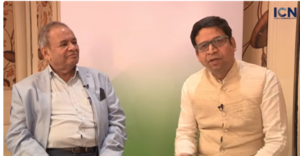
Integrating Agri Stack’s digital farmer records with ICAR’s validated package of practices can support more precise, need-based decisions at the field level
CropLife India, the leading association of 17 R&D-driven crop science companies, welcomes the Union Budget 2026–27 and the government’s continued focus on improving farmer incomes through higher productivity, sustainability and technology adoption.
The association welcomes the launch of ‘Bharat Vistaar’, a multilingual, AI-powered digital platform aimed at strengthening last-mile delivery of agricultural knowledge and the budget’s emphasis on high-value crops as an important avenue for income diversification.
However, CropLife India emphasises that these initiatives will translate into consistent farm-level outcomes only if they are supported by stronger on-ground extension systems and sustained investment in crop science research to help farmers manage climate stress, rising pest pressure and resistance.
Commenting on the Budget, Ankur Aggarwal, Chairman, CropLife India and Executive Chairman & Managing Director, Crystal Crop Protection Ltd. said, ‘Bharat Vistaar’ has the potential to significantly improve how scientific knowledge reaches farmers by strengthening last-mile extension. Integrating Agri Stack’s digital farmer records with ICAR’s validated package of practices can support more precise, need-based decisions at the field level. However, digital advisory delivers results only when it is backed by effective on-ground extension systems that ensure guidance reaches farmers in time and is applied correctly in local conditions.
Highlighting its relevance for global trade, Aggarwal said, “Farmers today operate in a far more complex risk environment. Climate variability is increasing uncertainty, pest pressures are changing and resistance is affecting the performance of older solutions. At the same time, farmers moving into high-value crops must meet stricter quality and food safety standards. Addressing these realities requires sustained investment in crop science R&D, faster access to newer and low-dose technologies, and policies that help farmers manage costs, protect yields and comply with Good Agricultural Practices and international standards such as Maximum Residue Limits (MRLs).”
CropLife India reiterates that improving farmer incomes in this evolving risk environment requires a supportive and predictable policy framework. In line with its long-standing position, the association urges the government to consider providing a 200 percent weighted deduction on R&D expenditure, reducing GST on agrochemicals from 18 percent to 5 percent, and retaining a stable and uniform basic customs duty of 10% for both technical raw materials and formulations to improve affordability and access for farmers. Equally important is a coordinated national push to strengthen agricultural extension services, backed by enabling frameworks, to scale good agricultural practices, improve residue management, enhance farmer safety and support responsible, effective adoption of modern crop protection solutions.
CropLife India reaffirms its commitment to working with policymakers, research institutions and extension agencies to advance science-based, farmer-centric solutions that strengthen productivity, sustainability, and long-term food security.
Subscribe to our newsletter & stay updated.