CropLife India, the leading association of 17 R&D-driven crop protection companies, has raised urgent concerns over the unchecked sale of unauthorised pesticides on e-commerce platforms, calling for stronger regulatory oversight, enforcement obligations, and accountability in the digital marketplace.
The warning comes as the Government of India reviews pesticide regulations through the Draft Pesticides Management Bill, 2025. CropLife India emphasized that emerging risks linked to online sales must be addressed “clearly and explicitly.”
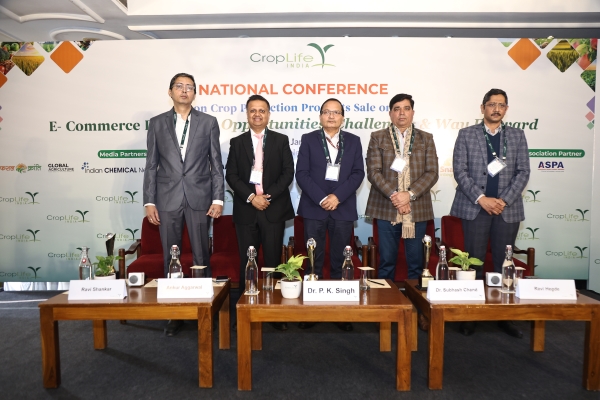
The issue was at the forefront during CropLife India’s National Conference on Crop Protection Products Sale on E-Commerce Platforms in New Delhi, which brought together policymakers, regulators, industry leaders, and other stakeholders to examine the rapid shift of agri-input sales to online platforms and the regulatory gaps it exposes.
PK Singh, Agriculture Commissioner, Ministry of Agriculture & Farmers Welfare, highlighted the limitations of current compliance checks, such as GST verification of sellers.
“Basic compliance checks by e-commerce platforms such as GST documents of sellers may not be sufficient when hazardous agri-inputs are sold online,” he said. He stressed the need for enhanced quality assurance, traceability, and supply-chain accountability, noting that these issues merit consideration under the Pesticides Management Bill.
Subhash Chand, Secretary, CIB&RC, warned that while digitisation and e-commerce expand rapidly in rural India, they also introduce new hazards. "Pesticides are hazardous products and responsibility for quality, compliance and farmer safety must be shared by platforms and manufacturers as online sales grow."
Ravi Shankar, Domain Lead – Agriculture, ONDC, called for better cataloguing, advisory support, and traceability to help farmers identify genuine products and reduce risks from spurious inputs.
Ankur Aggarwal, Chairman of CropLife India, clarified the association’s stance: “We are not against the sale of pesticides on e-commerce platforms. This engagement is about ensuring that regulatory and enforcement frameworks evolve with the realities of digital commerce.
"Tackling unauthorised products remains a shared priority for policymakers and the crop protection industry and is critical for farmer safety, food security and consumer trust. Today’s conference intends to engage all stakeholders and develop a framework that could effectively address existing gaps.”
CropLife India stressed that the Insecticides Act, 1968, and Insecticides Rules, 1971, tightly regulate pesticide sales, allowing only licensed sellers to sell authorised products within specific geographic areas and backed by valid Principal Certificates. Yet, e-commerce platforms currently face no licensing or statutory obligations to verify seller compliance, creating a loophole that allows unauthorised products to reach farmers.
The association also warned that both marketplace and inventory-based e-commerce models exacerbate the problem. In inventory-based systems, pesticides may be stored or dispatched from unlicensed warehouses, making inspection, sampling, and traceability significantly harder.
Rule 10E of the Insecticides Rules, introduced in 2022, permits online delivery but does not remove licence or authorisation requirements—a nuance often misinterpreted, CropLife said.
Aggarwal added that the Draft Pesticides Management Bill, 2025, while strengthening the regulatory framework, does not yet address several critical e-commerce gaps, including platform-level accountability, licensing obligations in inventory-based models, and digital traceability.
“Digital commerce is an important and growing channel,” he said. “The way forward is regulated enablement. As sale models evolve, regulatory and enforcement frameworks must evolve as well, so that farmers receive genuine, compliant products and confidence in the system is preserved.”