Syensqo is ramping up its drive towards carbon neutrality with a major state-backed investment to slash emissions at its historic Saint-Fons chemical site.
The project — selected under the French government’s “Major Industrial Decarbonization Projects” call for proposals as part of the France 2030 plan — is one of just seven industrial initiatives nationwide chosen to accelerate the decarbonization of key sites.
At the heart of the €20 million plan: a high-capacity electric boiler that will replace two natural gas units and generate low-carbon steam. The shift is expected to cut emissions by 22,000 tons of CO₂ per year.
The electrification project will be delivered in partnership with Dalkia, with commissioning slated for 2029. It will work alongside a biomass boiler already being installed at the site, which is set to begin producing low-carbon steam by the end of 2026 using primarily wood waste sourced from the Rhône-Alpes region. Together, the systems will allow the site to nearly eliminate fossil fuel use.
“Our decarbonization projects strengthen both our competitiveness and our energy autonomy at a time of high volatility in energy and carbon prices. This project highlights the importance of government support for industrial investments in this field, in order to reconcile the requirements of the sustainability transition with international competitiveness.
"It shows our ability to combine industrial performance with climate action, while securing the future of an innovative and resilient chemical industry in France," said Arnaud Douet, Industrial Director at Syensqo.
For energy partner Dalkia, the project signals a structural shift in French industry.
“Following the future commissioning of the biomass boiler at the end of 2026 in Saint-Fons, this electrification project marks a new milestone for the site. By creating this low-carbon energy mix with Syensqo, we are linking competitiveness and decarbonization over the long term. Together, we are demonstrating that the industry of tomorrow will either be sustainable or it will not exist," said Jérôme Aguesse, Regional Director at Dalkia.
The Saint-Fons transformation is part of Syensqo’s global One Planet roadmap, which targets a 42% reduction in Scope 1 and 2 emissions by 2030 and full carbon neutrality by 2040.
The initiative also reinforces broader decarbonization efforts across the Vallée de la Chimie industrial corridor, particularly through the low-carbon zone “DECLYC,” supported by France 2030.
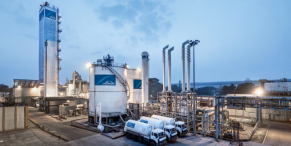
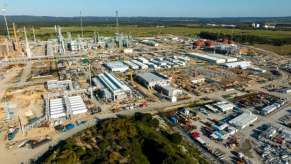
A historic pillar of France’s chemical industry, the Saint-Fons site produces vanillin for the food sector and supplies specialty solutions to agriculture, perfumery, pharmaceuticals, electronics and polymer markets. Now, it is positioning itself at the forefront of France’s industrial energy transition.