Clariant Oil Services has announced a breakthrough offshore deployment of its new hydrate management system, HYTREAT ECO, marking a significant step forward in subsea flow assurance technology for harsh North Sea environments.
Positioned as the first anti-agglomerant hydrate control technology to meet stringent OSPAR environmental requirements, HYTREAT ECO has already been successfully deployed in offshore fields in Norway and the United Kingdom, where it demonstrated stable performance under high-water-cut and challenging subsea operating conditions.
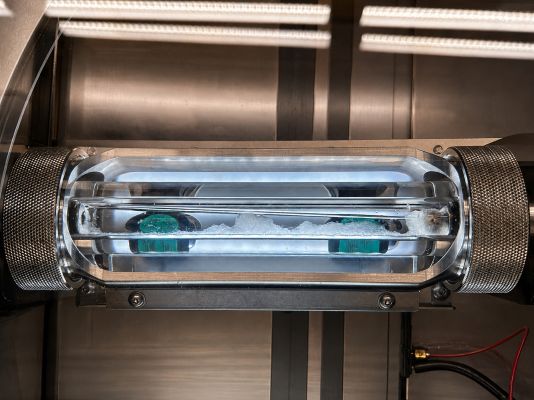
Gas hydrates remain one of the most persistent risks in offshore oil and gas production, capable of forming ice-like blockages that can halt output and threaten infrastructure integrity. Traditionally, operators have depended on large volumes of methanol or monoethylene glycol (MEG) to suppress hydrate formation — an approach that comes with heavy logistical demands and environmental cost.
Clariant’s new system takes a different approach, keeping hydrate particles dispersed and mobile through production systems while dramatically cutting chemical usage. In North Sea field trials, dosing ranged from less than 1% to 2% by volume on water — an order of magnitude lower than conventional methanol or MEG programs.
The company says the result is simpler offshore logistics, reduced chemical handling, and a smaller operational footprint, while still maintaining reliable hydrate control in deepwater conditions.
Fully aligned with OSPAR — the international framework protecting the marine environment of the North-East Atlantic — HYTREAT ECO is described as the first low-dosage hydrate management solution to achieve this level of environmental acceptance.
“As operators work to maximize production from existing offshore assets, technologies that improve both operational efficiency and environmental performance are becoming increasingly important,” said George Nunes, Head of Clariant Oil Services.
“Developed through years of research and close collaboration with our customers, including major North Sea operators, HYTREAT ECO demonstrates how innovation can help strengthen energy resilience while meeting the demanding environmental and operational standards of today’s offshore industry.”
Field results underscore the company’s claims.
In Norway, HYTREAT ECO supported hydrate control on a mature offshore asset facing rising water production and limited glycol regeneration capacity. During trials, operators successfully restarted a well after a 24-hour shut-in entirely within the hydrate stability zone — one of the most demanding scenarios in subsea production.
Produced water quality remained within overboard discharge limits throughout, according to field data. The performance led to a Technology Readiness Level of TRL7 on the internationally recognized 9-point scale.
In the United Kingdom, the system replaced subsea methanol injection in a gas condensate field operating under extreme subcooling conditions. Shut-in subcooling in the riser reached up to 25°C at pressures of 130 barg, among the most severe conditions recorded for any LDHI field deployment. HYTREAT ECO maintained effective hydrate control during both steady-state operations and cold restart events.
Clariant says the technology also reduces storage requirements, offshore handling risks, and emissions linked to chemical transport and deployment — benefits that are increasingly under scrutiny as operators push to improve environmental performance while extending the life of existing assets.
Against that backdrop, HYTREAT ECO is being positioned as a new benchmark in sustainable hydrate management for offshore oil and gas production.