Röhm has pushed its Bay City methyl methacrylate (MMA) facility into full industrial-scale production, marking the first global deployment of its proprietary LiMA technology at commercial scale.
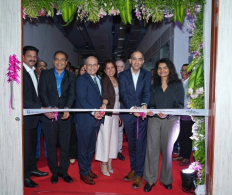
After a structured ramp-up following start-up, the plant has now been operating at sustained full capacity in recent months—an achievement the company is positioning as a major industrial and technological milestone. To mark the occasion, Röhm brought customers, partners, and local officials on site for a guided tour of the facility and its core processes.
LiMA—short for Leading in MethAcrylates—represents Röhm’s next-generation production approach for MMA, a key building block used across automotive, construction, electronics, medical, and manufacturing applications.
The Bay City site is also the first C2-based MMA production facility in North America, designed to strengthen domestic supply chains by relying on readily available feedstocks such as ethylene and natural gas while bringing production closer to key end markets.
At the event, Röhm CEO Hans Bohnen framed the project as central to the company’s global strategy: "As the only global producer of both methyl methacrylate and polymethyl methacrylate with production sites in the major regions of Europe, Asia, and North America, we are uniquely positioned to serve our customers worldwide - reliably, locally, and with leading technology."
The facility—staffed by around 90 employees—emphasizes safety, efficiency, and regional supply resilience.
"This reflects our long-term commitment to customers across the region, and Bay City’s strategic location allows us to efficiently serve both North American and global markets,” said Jack Chenault, President of Röhm Americas. The facility employs around 90 people and operates with a strong focus on safety. “Safety is our top priority,” emphasized Chenault.
Visitors at the event toured key production systems, including the reactor units and MMA distillation infrastructure—described by the company as the “heart of the technology”—to see LiMA operating at industrial scale.
The process was developed in Germany over several years before being transferred and scaled in the United States with backing from investor Advent International. The firm has invested roughly USD 1.6 billion (about EUR 1.5 billion) into Röhm to support innovation and expansion.
“LiMA technology does not only mark a technological quantum leap – it is a true game changer for the methacrylate industry,” said Ronald Ayles. “Bay City shows that this process can perform at industrial scale while delivering efficiency and environmentally friendly benefits.”
The Bay City plant has an annual capacity of 250,000 tons of MMA and is designed to maximize yield while cutting resource intensity. Compared with conventional methods, LiMA technology reduces energy and water consumption and lowers CO₂ emissions by up to 42%.
Environmental features extend beyond production. Constructed wetlands around the site support a near-closed water loop, treating process and cooling water in an integrated system.
Digitally, the plant runs with an advanced “digital twin” that mirrors operations in real time, enabling predictive maintenance, simulations, and performance optimization across systems updated daily.
The plant’s output—marketed under the MERACRYL brand—is distributed across North America through a multimodal logistics network using truck, rail, and inland waterways. The redesigned supply chain reduces long-haul trucking while improving reliability and export flexibility.
Röhm says the Bay City facility signals a broader shift toward localized, technology-driven chemical manufacturing with lower emissions and tighter integration into regional supply chains.
“We are sending a strong message to our customers: Röhm stands for reliability and quality and is investing sustainably in the future of the industry,” said Chenault.