PFE-compliant Gen III LFP cathode material targets US market
Epsilon CAM has achieved a major milestone in battery technology with its Gen III LFP cathode material, offering a rare non-Chinese, commercially scalable alternative for high-energy-density batteries.
Developed at Epsilon's Cathode Technology Centre in Moosburg in Germany, this new material delivers superior performance, featuring a discharge capacity of ≥159 mAh/g and an electrode density of≥2.51 g/cc, providing increased energy per cell for global EV manufacturers.
"This isn't just incremental," said Vikram Handa, Managing Director, Epsilon Group "With our Gen III LFP Cathode Material, we've engineered a formulation that gives EV makers genuine performance differentiation more energy per cell, denser electrode architecture, and the compliance pathway that matters most for the North American market: full PFE approval."
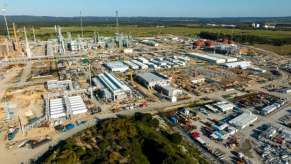
Epsilon is advancing its Gen III LFP Cathode Material for commercial deployment, with a 30,000 TPA production plant planned in India. Designed for high performance, this material meets PFE (Prohibited Foreign Entity) standards, allowing unrestricted entry into U.S. electric vehicle and battery supply chains.
In a market increasingly shaped by diversified mandates, this regulatory advantage is not a footnote, it's a competitive moat. For battery cell manufacturers, Gen III LFP Cathode Material optimizes the energy density and discharge capacity, while delivering 2X cycle life for extended battery pack longevity and proven high-temperature performance. For EV OEMs, the performance gains translate directly to lower total cost of ownership, reduced warranty exposure, and batteries built for real-world deployment.
Until now, OEMs seeking high-energy-density LFP at scale have had limited non-Chinese sourcing options — creating supply chain concentration risk and growing geopolitical exposure.
Epsilon's Gen-III LFP Cathode Material, backed by Moosburg R&D and India-based manufacturing, offers OEMs three simultaneous
advantages: performance parity with Chinese alternatives, supply chain diversification, and regulatory compliance with North American frameworks. India is no longer just a cost-competitive manufacturing destination but a credible alternative to Chinese dominance in the global battery materials supply chain. With the Gen III LFP Cathode Material, Epsilon is staking its claim as a materials innovation destination.
Epsilon's Cathode Technology Centre in Moosburg will continue to serve as the global R&D and product development hub, housing the materials science team behind the 145+ patent portfolio and driving successive development cycles of the higher generation of LFP Cathode Material.
Subscribe to our newsletter & stay updated.