Chemical giant BASF closed out 2025 under pressure, grappling with a volatile global market that dragged down earnings across its core businesses — even as the company pushed forward with sweeping restructuring, cost cuts and shareholder payouts.
“In the 2025 business year, the BASF Group faced an uncertain and very volatile global market environment with considerable headwinds. ‘We therefore mainly focused on the things we can control within the framework of our ‘Winning Ways’ strategy,’” said BASF CEO Markus Kamieth.
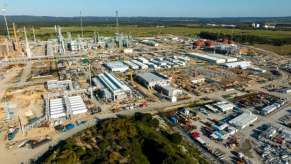
The German chemicals giant pointed to major strategic milestones: the launch of key plants at its new Verbund site in Zhanjiang, faster cost reductions, a leaner organization and progress on portfolio changes. “We successfully started up the major plants at our new Verbund site in Zhanjiang. We also accelerated our cost savings programs and significantly streamlined BASF’s organization. Moreover, we progressed swiftly and successfully with the announced portfolio measures,” Kamieth added.
But the numbers tell a tougher story.
EBITDA before special items fell by €686 million to €6.6 billion, hit by sharply lower contribution margins in Chemicals, Industrial Solutions, Materials, and Nutrition & Care. Slightly higher fixed costs also weighed on Materials.
Surface Technologies and Agricultural Solutions offered some relief. Surface Technologies improved earnings, driven by lower fixed costs and a strong performance in its Environmental Catalyst and Metal Solutions division. Agricultural Solutions also posted gains on improved margins.
Sales slipped to €59.7 billion from €61.4 billion, dented by currency headwinds — particularly a weaker U.S. dollar, Chinese renminbi and Brazilian real.
EBITDA declined to €5.6 billion from €6.2 billion, while restructuring charges and other special items totaled minus €936 million. Nearly all of that — €937 million — was tied to cost-saving programs, especially at the Ludwigshafen site.
EBIT fell to €1.6 billion. Yet net income rose to €1.6 billion from €1.3 billion, boosted by higher earnings from shareholdings and €1.3 billion in net special income, largely linked to reimbursements to Wintershall Dea stemming from federal guarantees for expropriated Russian assets.
Operating cash flow dropped to €5.6 billion, €1.3 billion lower year on year, partly due to higher noncash and reclassification items and a significant tie-up of funds in precious metal trading positions.
But lower capital spending provided relief. Investment cash outflows improved to minus €3.2 billion from minus €5.1 billion, as spending on property, plant and equipment fell to €4.3 billion from €6.2 billion.
Free cash flow jumped to €1.3 billion, up from €748 million.
BASF is maintaining its shareholder focus. From 2025 to 2028, the company aims to distribute at least €12 billion through dividends and share buybacks. It proposed a dividend of €2.25 per share for 2025, unchanged from the prior year.
In October 2025, BASF also launched an earlier-than-planned share buyback of up to €1.5 billion, part of a broader €4 billion program running through 2028.
CFO Dirk Elvermann emphasized balance sheet discipline. “By year-end 2025, we had reduced our net debt to €18.3 billion. In 2026, we will use a substantial part of the cash proceeds from our portfolio measures to further strengthen our balance sheet,” he said. He added that bond maturities would allow BASF to cut net debt further in 2026 and support its single-A credit rating.
Cost-cutting efforts are accelerating. By the end of 2025, BASF achieved an annual cost reduction run rate of €1.7 billion — €100 million above its original target. By the end of 2026, annual savings are now expected to reach €2.3 billion, up from the prior €2.1 billion goal. Total one-time costs are forecast at €1.9 billion.
Between December 2023 and December 2025, the company cut senior executive positions by 11 percent and reduced its workforce by around 4,800 employees, excluding roughly 1,000 hires at the new China Verbund site.
For 2026, BASF forecasts EBITDA before special items between €6.2 billion and €7.0 billion. Chemicals and Nutrition & Care are expected to post significant earnings gains, while Industrial Solutions anticipates a slight uptick. Materials and Agricultural Solutions may see slightly lower earnings due to currency effects. Surface Technologies is projected to decline significantly after one-off gains in 2025.
Free cash flow is expected to range between €1.5 billion and €2.3 billion.
CO₂ emissions are projected to rise to between 17.2 million and 18.2 million metric tons, largely due to the ramp-up of the Zhanjiang site. BASF says it will counterbalance the increase with efficiency measures and a continued shift toward renewable electricity.
The company’s outlook assumes global GDP growth of 2.7 percent, industrial production growth of 2.3 percent, chemical production growth of 2.4 percent, an average euro/dollar rate of $1.20, and Brent crude at $65 per barrel.
After a bruising year, BASF is betting that tighter costs, disciplined capital spending and strategic execution will steady the ship — even as global headwinds persist.