Milliken leader outlines how consumer expectations and high-speed conversion trends are reshaping additive innovation
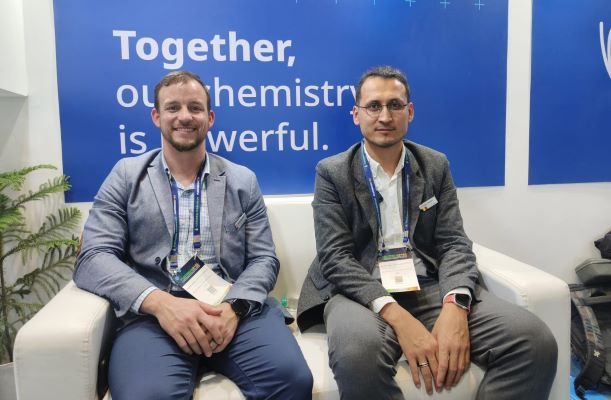
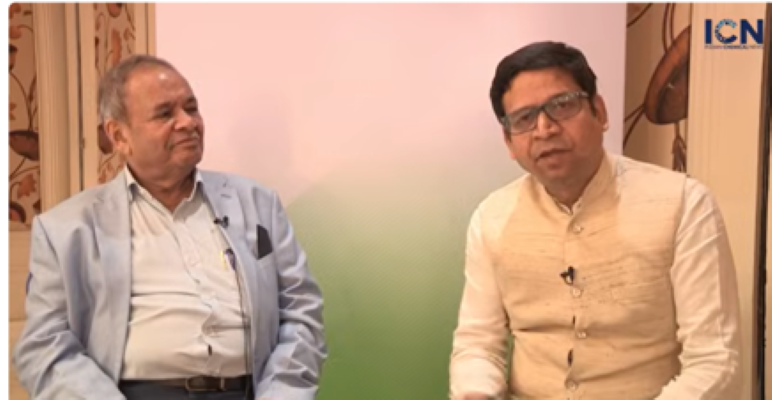
L-R: Allan Randall, Sr. Global Product Line Manager at Milliken’s Chemical Division and Pazula Namaiti, Global Product Line Manager at Milliken’s Chemical Division
As packaging evolves under the twin pressures of performance and sustainability, additive technologies are quietly becoming central to the plastics value chain. High-speed manufacturing, growing recycled content mandates, and rising consumer expectations are reshaping how materials are designed and processed.
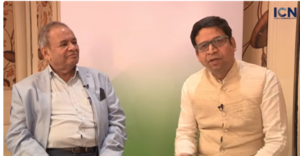
Against this backdrop, leaders from Milliken & Company outlined how innovation in nucleation and plastic additives is addressing these shifts. Pazula Namaiti, Global Product Line Manager, Plastic Additives Business, Milliken, in an exclusive conversation with Murari Mohan Jha, Editor, Indian Chemical News, shared their perspectives on market trends, sustainability, and technology adoption.
“Out of the six divisions within Milliken, we represent the plastic additives business in India through a few key product lines. Our Hyperform nucleating agents are playing an important role in enhancing polypropylene (PP) performance for the country’s rapidly expanding packaging sector including ICP, battery case applications, single-wall injection moulding applications, food packaging as well as general injection moulding applications,” said Pazula Namaiti.
“The thin wall injection molding homopolymer PP food packaging was initially developed in Malaysia and later gained strong momentum in China, largely due to advanced technical capabilities. Today, the Indian market is reaching a similar level of readiness. Indian resin producers now have the capacity to manufacture high-flow resins, and converters are increasingly equipped with high-speed injection moulding capabilities. On the demand side, the rapid growth of food delivery services is further driving the need for efficient and high-performance packaging solutions. With these factors converging, the market is entering a new phase of development, creating opportunities to introduce and develop more advanced products and specialized grades,” informed Namaiti.
Pazula Namaiti explained how Milliken’s additives portfolio supports high-volume packaging manufacturers operating at increasingly high injection-moulding speeds. “Nucleators are typically used at very low levels, usually around 0.04–0.05% of the formulation. Even at such small concentrations, they play a critical role in ensuring consistent performance,” he noted.
Namaiti emphasized that converters today require materials that deliver consistency, reliability, and efficiency without compromising product aesthetics. According to him, the growing need for performance stability in high-speed manufacturing is one of the key reasons the company has emerged as a leader in nucleating technologies.
Speaking about the company’s success, Namaiti explained that Milliken follows a unique business model built on close engagement with brand owners.
“By understanding how brands think about their end consumers, the company is able to develop solutions that address real-world challenges rather than relying solely on theoretical performance metrics. Clarity is particularly important, because without proper nucleation or clarification, polypropylene lacks transparency, making the packaging less visually appealing to consumers. Similarly, parameters such as heat distortion temperature are critical from the consumer’s perspective, as packaging must maintain its shape and performance under real-use conditions,” he said.
Namaiti underlined that sustainability is no longer optional but has become central to innovation at Milliken. He noted that the company has received a Gold rating from EcoVadis, placing it among the top 5 percent of companies evaluated globally. From a plastic additives perspective, he explained, sustainability-driven solutions are already delivering practical results. Citing one example, he referred to a Hyperform HPN 600ei nucleating product, which provides a subtle blue tone to improve the visual appeal of recycled plastics. He also highlighted the use of nucleators in fully post-consumer recycled (PCR) transparent polypropylene packaging.
“Recycled polypropylene often develops a yellowish tint, which diminishes visual appeal. Our nucleating technology helps reduce haze and counteract the yellowish effect, improving clarity and making recycled packaging more acceptable to consumers,” he said.
Namaiti further pointed out that customers are steadily increasing the percentage of PCR content in their formulations. However, higher recycled content can create processing and mechanical performance challenges. High-performance nucleators, he explained, enable better crystallization, improved stiffness-impact balance, and smoother conversion, thereby allowing manufacturers to push recycled content levels higher.
On the technology front, Namaiti acknowledged the growing role of artificial intelligence. He elaborated: “Global leadership at Milliken is encouraging the integration of AI into operational and development processes. We have access to large language models that are being used in various ways, not just limited to R&D but also product development and marketing. While AI will not solve every challenge, the company is actively exploring relevant use cases and closely monitoring technological advancements to improve efficiency and innovation outcomes.”
Speaking about product development, Namaiti highlighted the recent launch of a new generation of nucleating molecules for thermoforming applications that reduce haze to new levels without losing performance in isotropic and enhance overall mechanical performance. In the thin wall injection molding market, we have iterated several versions of new products. Continuous upgrades across the portfolio, from earlier versions to advanced variants, are focused on improving stiffness and impact resistance to address evolving customer needs.”
Namaiti described India as a strategic growth market. He believes that along with China, India is expected to account for a significant share of new capacity additions over the next three to five years.
“While China has strong production capacity, India continues to demonstrate robust domestic demand, with several segments still dependent on imports. With expanding manufacturing capabilities and GDP growth exceeding 7 percent, the country presents a major opportunity for long-term growth. Milliken has been present in India since 2007, initially establishing laboratory operations. Although the scale of operations here may not yet match some larger regional markets, the company has developed a strong local team along with multiple manufacturing facilities. Our strategy is based on an ‘India for India’ approach, producing locally to serve domestic customers and support sustained growth. Looking ahead, we see significant demand potential for our products in the Indian market.”
Subscribe to our newsletter & stay updated.