A new report from Redseer Strategy Consultants signals a structural shake-up in the global specialty chemicals industry—one where control is shifting away from manufacturing scale and toward orchestration, formulation ownership, and deep customer integration.
Titled “The Next Battleground in Specialty Chemicals”, the report argues that the sector—now approaching a USD 1 trillion global market—is no longer defined by who produces the most chemicals, but by who can best coordinate increasingly complex ecosystems of suppliers, labs, and end-users.
According to Redseer, an estimated USD 130–150 billion of the specialty chemicals market in CY2025 already sits in segments where orchestration-led models can create meaningful value. That opportunity is projected to expand sharply to USD 200–250 billion by CY2030, driven by rising formulation intensity, fragmented supply chains, and tighter customer requirements.
The industry itself is fragmenting into hundreds of tightly defined micro-markets, each shaped by regulatory complexity, qualification hurdles, and highly specific end-use demands. In this environment, coordination is no longer a back-office function—it is becoming a source of competitive advantage.
This shift is enabling a new breed of players positioned between manufacturers, suppliers, and end customers. Instead of owning large-scale production assets, these firms are building strength in managing qualification workflows, integrating fragmented supply bases, supporting formulation development, and ensuring multi-geography supply reliability.
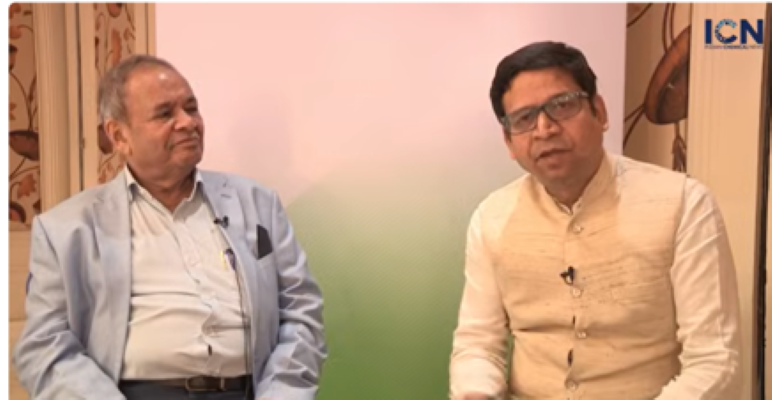
“Specialty chemicals have historically been viewed as a manufacturing-led industry, but that equation is changing rapidly. Today, the real challenge for customers is no longer just sourcing chemicals, but managing fragmented suppliers, qualification timelines, formulation complexity, and supply reliability across markets,” said Mukesh Kumar, Associate Partner, Redseer Strategy Consultants.
“As these pressures are reaching their crescendo, companies that can simplify coordination and integrate deeply with customer requirements are starting to occupy a far more strategic position in the value chain. India’s strength in process chemistry, formulation capabilities, and execution scale places it in a very strong position to participate in this shift.”
Geographically, the value chain is also splitting by function: the US and Europe continue to lead innovation and applied R&D, China remains dominant in intermediates and large-scale manufacturing, while India is strengthening its position in formulation-led production, process engineering, and execution at scale.
The report’s key findings underline the scale and speed of change:
1. The global specialty chemicals market is nearing USD 1 trillion
2. USD 130–150 billion is already aligned with orchestration-led operating models
3. The addressable opportunity could reach USD 200–250 billion by CY2030
4. EBITDA margins in trading-led models typically sit at 3–5%, while R&D-driven models can exceed 10%
5. Pharma, nutraceuticals, food ingredients, agrochemicals, and personal care are emerging as key orchestration-heavy categories due to high switching costs and formulation complexity
6. AI is compressing R&D timelines through molecule discovery, retrosynthesis prediction, and formulation modelling
7. Supplier qualification data and formulation performance history are becoming critical competitive assets.
A widening performance gap is also emerging.
Trading-heavy players are scaling through distribution and aggregation, but remain exposed to thin margins and limited differentiation. By contrast, companies that own formulations and specifications are gaining stronger pricing power, deeper customer stickiness, and more durable profitability.
The direction of travel is clear: the next generation of leaders in specialty chemicals is likely to look less like commodity traders and more like R&D-intensive orchestrators—anchored in formulation ownership, embedded customer relationships, and control over specifications.
As global supply chains continue to diversify under China+1 strategies and customers increasingly prioritise reliability, speed, and qualification depth over pure cost, orchestration-led models are set to play an increasingly central role in shaping the industry’s next decade.