GMM Pfaudler Limited, a global leader in corrosion-resistant technologies, systems, and services, has reported a mixed but broadly steady performance for Q4 and FY26 ended March 31, 2026, with strong growth in India offsetting pressure in international markets.
For Q4 FY26, the company posted revenue of Rs. 944 crore, EBITDA of Rs. 75 crore with an 8.0% margin, and PAT of Rs. 15 crore (margin 1.6%), while earnings per share stood at Rs. 3.82. Order intake came in at Rs. 871 crore, with backlog at Rs. 2,194 crore.
For the full year FY26, consolidated revenue stood at Rs. 3,524 crore, EBITDA at Rs. 403 crore (11.4% margin), and PAT at Rs. 52 crore, with EPS of Rs. 12.86. Annual order intake reached Rs. 3,714 crore, while backlog remained strong at Rs. 2,194 crore.
The company highlighted that revenue rose 10% year-to-date and 17% year-on-year in Q4 FY26, while order intake surged 20% for the year and 32% in the quarter. Backlog increased 34% year-on-year, reinforcing revenue visibility for the coming period.
India continued to be the standout performer. Revenue rose to Rs. 1,034 crore, up 12% YTD, while Q4 revenue stood at Rs. 289 crore, up 15% year-on-year. EBITDA for India reached Rs. 135 crore, up 22% YTD, though Q4 EBITDA declined 24% year-on-year to Rs. 26 crore. PAT rose sharply to Rs. 59 crore, up 40% YTD, with Q4 PAT at Rs. 16 crore, up 8% year-on-year. Order intake in India remained largely flat at Rs. 967 crore.
Management said growth was achieved despite “a challenging global environment marked by geopolitical uncertainty, macroeconomic headwinds, and subdued demand in our international business, particularly in European.” India, however, “continues to stand out” with strong revenue, EBITDA, and profit growth.
In Europe, the company implemented major restructuring steps, including the closure of its UK facility and right-sizing operations across Germany, France, and Switzerland. It also began operations at a new Poland manufacturing facility, positioned as a low-cost production hub to improve long-term competitiveness.
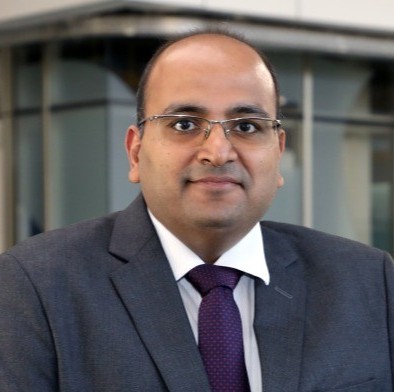
Commenting on performance, Managing Director Tarak Patel said, “The company delivered steady performance this year, achieving 10% revenue growth and 11% EBITDA growth despite a challenging global environment marked by geopolitical uncertainty, macroeconomic headwinds, and subdued demand in our international business, particularly in European.
"India continues to stand out, with 12% revenue growth, 22% EBITDA growth, and a 40% increase in profit after tax. In Europe, we have implemented decisive cost measures, including the closure of our UK facility and right-sizing operations in Germany, France, and Switzerland.
"We also commenced operations in our new Poland manufacturing facility, which will serve as a low-cost production hub for the region and enhance our long-term competitiveness. In Q4, strong operational execution was offset by margin pressure resulting from geopolitical tensions in West Asia and broader macroeconomic uncertainty”
He further added, “Order intake during the year improved by 20%, driven by non-traditional markets such as Defence, Oil & Gas and Nuclear, which further reinforces our diversification strategy.
"Opening backlog stands at Rs. 2,194 crores a 34% increase over previous year giving us strong revenue visibility for the coming year. However, global economic conditions and geopolitical risks continue to create a challenging environment.
"As part of our ongoing global transformation, we have appointed Mr. Gregory Gelhaus as Group CEO and Mr. Ankit Nayyar as Deputy CFO. These appointments will accelerate the execution of our strategic vision and will be instrumental in shaping the organization’s next phase of growth”.
GMM Pfaudler said it continues to position itself for long-term growth through restructuring, capacity expansion in Europe, and diversification into defence, oil & gas, and nuclear markets, even as global macroeconomic and geopolitical uncertainty persists.