The future chemical ecosystem will increasingly be shaped by collaborative and integrated business models that combine innovation, manufacturing excellence, and market access
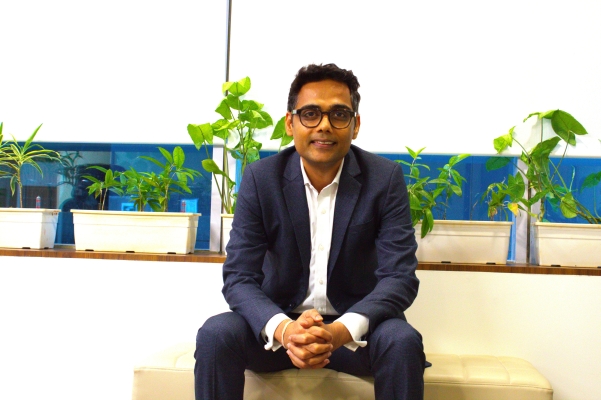
Suyog Kotecha, CEO and Executive Director, Aarti Industries
Aarti Industries Ltd. (AIL) reported FY 2025-26 revenue growth of 12% to Rs. 9,018 crore despite geopolitical disruptions and volatile raw material markets. Biggest operational and strategic levers that helped Aarti maintain resilience and improve EBITDA margins?
FY2025-26 remained a year in which resilience, execution discipline, and portfolio balance played key roles in navigating a dynamic global environment. Despite continued volatility in raw material markets and uneven demand in certain end-user industries, Aarti Industries delivered a steady growth supported by volume expansion, improved operational efficiencies, enhanced market reach/penetration, addition of new customers and the strength of its diversified business model.
One of the key operational levers was our continued focus on volume-led growth through improved capacity utilisation across integrated value chains, including chlorobenzenes, ethylation, polymer additives, and downstream specialty intermediates. Our diversified product portfolio and balanced presence across multiple end-user industries helped us navigate sector-specific volatility more effectively. Improved asset utilisation, process optimisation, and greater manufacturing integration contributed positively towards operational efficiencies and margin improvement during the year.
Another important factor was our continued emphasis on long-term customer partnerships. Increasingly, customers are prioritising reliability, sustainability, integration, and execution capabilities over pricing considerations. AIL’s integrated manufacturing platform and consistent execution helped strengthen our positioning in this environment. For us, FY26 was not just about managing volatility but about strengthening quality, resilience, and sustainability of growth while continuing to build future-ready capabilities.
Aarti Industries has recently secured a multi-year US $150 million contract with a global agrochemical major without requiring significant incremental Capex. How important is such asset-light, long-term agreements in strengthening earnings visibility and improving return ratios?
Long-term agreements of this nature are strategically important because they reflect the strength and scalability of our existing manufacturing ecosystem, customer relationships, and chemistry capabilities. The ability to secure meaningful business growth without requiring significant incremental capital deployment highlights the flexibility of integrated manufacturing platforms and depth of our chemistry capabilities. These contracts improve earnings visibility, strengthen asset utilisation, and enhance capital efficiency while supporting better return ratios over the medium term. They also provide greater predictability in planning, manufacturing, and supply chain management. More importantly, such partnerships reflect growing customer confidence in AIL’s ability to deliver quality, reliability, sustainability, and execution consistency at a global scale.
Aarti Industries has increasingly focused on downstream integration and high-value chemistries. How is this strategy helping company's transition from volume-led growth to a more knowledge-driven specialty chemical portfolio?
Specialty chemical industry is increasingly moving towards solution-oriented and application-driven chemistries, where value creation is shaped as much by technical capability and innovation as much by manufacturing scale. At Aarti Industries, our focus on downstream integration is helping us move closer to higher-value applications and deepen engagement with customers across multiple specialty segments.
Over the years, we have steadily expanded our presence across advanced intermediates, specialty derivatives, polymer additives, energy-application-related chemistries, and customer-specific platforms that require stronger process understanding and differentiated chemical capabilities. This transition is also supported by investments in R&D, process innovation, manufacturing integration, and application development. Our objective is to build integrated, difficult-to-replicate chemistry platforms that deliver long-term value through innovation, reliability, and technical expertise.
While scale remains important, the future of specialty chemicals will increasingly be driven by knowledge intensity, sustainability, speed of execution, and customer collaboration. Our strategy is aligned with this long-term direction and reflects our continued shift towards a more differentiated and innovation-led portfolio. The specialty chemical industry is steadily moving from scale-led manufacturing towards knowledge-led differentiation, and our strategy is aligned with this long-term transition.
Could you elaborate on the key projects being commissioned at Jhagadia Zone IV and expected contribution to revenue and profitability over the next 2-3 years?
Over the years, we have steadily expanded our presence across advanced intermediates, specialty derivatives, polymer additives, energy-application-related chemistries, and customer-specific platforms that require stronger process understanding and differentiated chemical capabilities. This transition is also supported by investments in R&D, process innovation, manufacturing integration, and application development.
Our objective is to build integrated, difficult-to-replicate chemistry platforms that deliver long-term value through innovation, reliability, and technical expertise. Pilot operations have already commenced for certain projects, while additional assets across multipurpose manufacturing and downstream platforms are progressing towards phased commissioning.
The strategic advantage of Zone IV lies in its flexibility, integration potential, infrastructure readiness, and ability to support multiple chemistries and customer requirements. This will help us accelerate commercialisation timelines and improve operational agility over the long term.
Over the next two to three years, we expect Zone IV to gradually become an important contributor to growth, product diversification, and margin improvement as capacities stabilise and scale up. More importantly, it strengthens our ability to participate in future specialty chemical opportunities aligned with evolving global demand trends.
Zone IV is being developed not only as a manufacturing expansion platform, but as an integrated growth ecosystem capable of supporting AIL’s next phase of specialty chemical opportunities.
Aarti Industries is expanding its footprint across Europe, Africa, and the Middle East amid tariff pressures in the US market. How is the company rebalancing its export strategy to reduce geographic concentration risks?
Geographic diversification is becoming increasingly important in the current global environment. While the US and Europe remain important markets for us, we are also strengthening our presence in emerging and developing regions to build a more balanced and resilient global portfolio. Interestingly, we are also witnessing increasing business traction in China across select product categories. This reflects AIL’s growing positioning as a reliable, quality-focused, and cost-efficient supplier even in one of the world’s most competitive and strategically important chemical markets.
We believe this demonstrates the strength of our manufacturing integration, process capabilities, and long-term customer value proposition. Global customers today are redesigning supply chains not only for efficiency, but also for resilience, reliability, and long-term strategic partnerships.
The JV with UPL for downstream amine derivatives is expected to generate annual revenues of Rs. 400-500 crore over the next few years. What synergies does this collaboration unlock and could similar partnerships become a larger part of AIL’s future growth model?
The partnership with Superform Chemistries through Augene Chemical represents a strong strategic alignment of complimentary capabilities. AIL brings deep chemistry expertise, raw material backward integration, and process innovation strengths while Superform contributes strong market understanding and downstream application opportunities. The collaboration enables both companies to jointly build differentiated specialty chemical platforms with stronger market relevance and operational synergies. It also supports faster commercialisation and improves the ability to address evolving customer requirements globally.
Strategic partnerships can play an important role in accelerating growth, particularly in areas where collaboration can unlock access to technology, expand market reach, enable downstream integration, or provide application expertise. We believe the future chemical ecosystem will increasingly be shaped by collaborative and integrated business models that combine innovation, manufacturing excellence, and market access.
How are Data Analytics, Artificial Intelligence (AI), and Machine Learning (ML) helping Aarti Industries enhance manufacturing efficiency, operational reliability, and sustainability across its operations?
Digitalisation is becoming an increasingly important enabler for operational excellence in the chemical industry. At Aarti Industries, we are progressively leveraging data analytics, AI, and automation tools across manufacturing, energy management, process optimisation, and operational monitoring. These technologies are helping improve process efficiency, predictive maintenance, energy optimisation, quality consistency, and operational reliability across manufacturing locations.
Data-driven insights also support better decision-making, improved asset utilisation, and reduced process variability. We are also increasingly using digital tools to improve process stability, predictive maintenance, energy efficiency, and manufacturing reliability across key operations. From a sustainability perspective, digital systems are helping optimise resource consumption, improve energy efficiency, and strengthen environmental monitoring capabilities.
Aarti Industries continues to invest heavily in R&D with over 50 products reportedly in development pipeline. How are these investments shaping the company’s future portfolio and which emerging chemistries or end-user industries do you see as key long-term growth drivers?
Innovation and R&D remain central to AIL’s long-term growth strategy. Our focus is not only on developing new molecules, but also on building differentiated chemistry platforms aligned with evolving customer requirements and future industry trends.
Our R&D pipeline spans advanced intermediates, specialty derivatives, polymer additives, chemistries for electronic and energy applications, and customer-specific products across multiple end-user industries. We continue to see significant long-term opportunities in sectors such as pharmaceuticals, advanced materials, polymers, energy applications, electronic chemicals, and sustainability-linked chemistries.
Customers globally are increasingly seeking innovation-led solutions supported by reliability, sustainability, and technical collaboration. Our investments in R&D and process innovation are helping strengthen AIL’s transition towards a more differentiated and knowledge-intensive specialty chemicals portfolio with higher entry barriers and stronger long-term value creation potential.
The company has announced multiple Capex programs over the years, including investments in chlorination, ethylation, and specialty chemical capacities. What is the Capex outlook for FY 2026-27 and how are you balancing aggressive expansion with disciplined capital allocation in a cyclical chemical environment?
Our approach towards capital allocation remains disciplined, strategic, and focused on long-term value creation. Over the last few years, we have invested significantly in integrated value chains, downstream capabilities, manufacturing infrastructure, and future-ready speciality chemical platforms. For FY 2026-27, our capital expenditure plans will continue to remain aligned with strategic growth priorities, customer-linked opportunities, downstream integration, and future specialty chemical platforms. At the same time, we remain conscious of the need to maintain capital efficiency and prudent balance sheet management.
In a cyclical and volatile industry environment, disciplined capital allocation becomes extremely important. Therefore, our investments are closely linked to long-term structural opportunities, differentiated chemistries, integration benefits, and visibility of future demand. Our objective is not simply expansion for scale but building integrated and sustainable manufacturing capabilities that strengthen competitiveness, improve asset productivity, and support long-term profitable growth.
Sustainability and circularity are becoming increasingly important in global chemicals industry. How does plastic recycling JV with Re Sustainability align with Aarti Industries’ long-term ESG and circular economy ambitions?
The plastic recycling initiative through Aarti Circularity reflects our broader commitment towards sustainability, circularity, and responsible manufacturing practices. The project focuses on addressing hard-to-recycle plastic waste streams through advanced recycling technologies to recover value from waste while supporting circular economy objectives. Increasingly, sustainability in the chemical industry is moving beyond compliance and becoming integral to long-term competitiveness, customer engagement, and responsible growth. We believe circularity-linked initiatives will play an important role in the industry's future evolution.
This initiative aligns with our broader ESG philosophy of improving resource efficiency, reducing environmental impact, supporting sustainable innovation, and contributing meaningfully towards circular economy solutions. Our sustainability efforts have also received strong global recognition, including EcoVadis Platinum rating, CDP ‘A’ ratings, and inclusion in the S&P Sustainability Yearbook, which further reinforces our long-term commitment towards responsible growth.
Export revenue contributes around 45% in FY 2025-26 supported by strong demand from the US and Europe. How do you see global supply chain diversification trends benefiting Aarti Industries over the next decade?
Exports for FY2025-26 were upwards of 55% and not 45%. Global supply chains are undergoing a structural transformation, presenting a significant long-term opportunity for Indian speciality chemical manufacturers. Customers worldwide are increasingly seeking to diversify sourcing relationships, improve supply chain resilience, and build partnerships with dependable manufacturing companies that consistently deliver quality, sustainability, integration, and innovation.
India today is moving beyond being viewed solely as a cost-competitive manufacturing destination and is increasingly emerging as a strategic partner in cost efficient chemistry and innovation globally.
Companies with strong process chemistry capabilities, integrated manufacturing ecosystems, sustainability credentials, and reliable execution are likely to benefit most from this transition. We believe AIL is well-positioned in this environment because of our diversified chemistry portfolio, integrated value chains, global customer relationships, and long-standing manufacturing expertise. Over the next decade, we expect supply chain diversification, sustainability-led sourcing, and innovation-driven partnerships to continue reshaping the global speciality chemical landscape.
Agrochemical intermediates and polymer additives remain key business segments for Aarti Industries. What is your outlook on demand recovery and pricing trends across these segments in FY 2026-27?
We are seeing a gradual improvement in demand conditions across several global chemical segments, although recovery trends may remain uneven across markets and applications. In agrochemical intermediates, inventory correction pressures have moderated compared to earlier periods, and customer offtake trends are gradually improving. However, pricing conditions may continue to remain competitive in the near term as global markets stabilise. In polymer additives and selected specialty segments, we continue to see encouraging long-term opportunities supported by demand from performance materials, industrial applications, and advanced material requirements.
Overall, we remain cautiously optimistic about FY 2026-27. As demand conditions gradually improve and utilisation levels strengthen, we believe integrated and diversified manufacturers with strong customer relationships and differentiated capabilities will be better positioned to benefit from the recovery cycle.
With demand conditions gradually improving across global chemical markets, what is Aarti Industries’ outlook for FY2026-27 in terms of revenue growth, margin expansion, and capacity utilisation?
While the global environment may continue to remain dynamic in the near term, we are seeing a gradual improvement in demand conditions across several customer segments and geographies. Our focus for FY2026-27 will remain on improving capacity utilisation, commercialising recently commissioned assets, strengthening operational efficiency, and deepening customer engagement across key markets. We also expect progressive contribution from downstream specialty platforms, integrated value chains, and future growth chemistries as projects stabilise and scale up.
At the same time, we remain focused on disciplined execution, prudent capital allocation, sustainability-led manufacturing, and strengthening long-term competitiveness. Overall, we remain cautiously optimistic about the medium- to long-term outlook for the specialty chemicals sector and believe companies with integrated manufacturing capabilities, diversified portfolios, strong customer partnerships, and innovation-led growth platforms will be well positioned for sustainable growth.
Subscribe to our newsletter & stay updated.