Our key efficiency levers include energy optimisation across manufacturing units, ongoing process improvements to enhance yields, deployment of automation and real-time monitoring systems
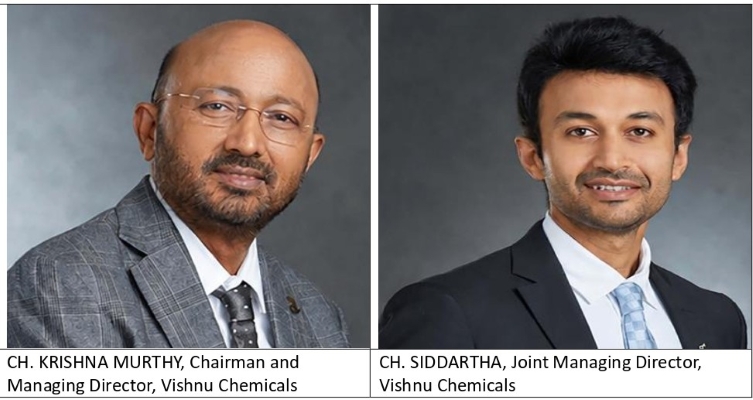
Overall performance of Vishnu Chemicals in FY2025-26 and your expectation from FY 2026-27?
FY 2025–26 has been a year of resilience and consistent performance for Vishnu Chemicals despite global macroeconomic challenges and supply chain disruptions. The company delivered steady growth supported by operational efficiencies, strong demand, and disciplined financial management. Our continued focus on cost optimization and cash flow generation has further strengthened our balance sheet.
As we move into FY 2026–27, we are entering a new phase of growth driven by capacity expansion, backward integration, and diversification into new chemistries. The next phase of growth will be shaped by three key factors mainly stronger contribution from value-added and specialty products, which will help improve our overall margin profile; gradual improvement in realisations as market conditions stabilize and demand strengthens across key geographies; and focus on maintaining margin resilience through cost optimization, operational efficiency, and better integration across value chain.
As a global player in chromium and barium chemicals, how do you maintain a competitive edge against international rivals from regions like Turkey and the USA?
Our competitive positioning varies by geography, but it is anchored in a structurally efficient operating model and consistent execution.
In markets like Turkey, where players benefit from proximity to Europe, we compete effectively through cost efficiency, scale, and reliability. Our optimized manufacturing processes, backward integration, basket of products, and ability to deliver consistent quality at competitive pricing enable us to remain a preferred supplier, even in price-sensitive segments.
In the case of the USA, where customers prioritize quality, compliance, and supply reliability, our strength lies in deep process expertise, stringent quality standards, and long-standing relationships with global customers. We have built a reputation as a dependable partner capable of meeting high-performance and regulatory expectations.
The company focused on optimizing manufacturing through forward and backward integration. What further steps are being taken to reduce conversion costs while raw material costs fluctuate?
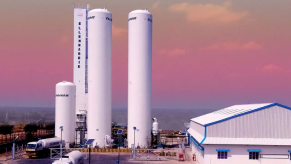
Our key efficiency levers include energy optimisation across manufacturing units, ongoing process improvements to enhance yields, deployment of automation and real-time monitoring systems, and a strong focus on waste reduction and recycling—collectively driving disciplined cost management and operational excellence. Further strengthening our operational capabilities, the company has installed a new oxygen plant to meet increasing consumption requirements and new boilers to support higher production volumes. These investments have enhanced operational efficiency and enabled an increase in downstream derivative manufacturing capacity. In addition, we are exploring the installation of a solar power plant for captive consumption, which is expected to improve energy sustainability, reduce power costs, and support our long-term operational efficiency objectives.
How does acquisition of Ramadas Minerals specifically strengthen backward integration and raw material security for Barium Carbonate production?
The acquisition significantly strengthens our control over critical raw materials required for Barium Carbonate production, enhancing the overall resilience of our value chain. By securing access to key inputs, it reduces supply chain risks and mitigates exposure to external disruptions. In addition, this integration improves cost predictability and enables better planning across operations while ensuring consistent availability and quality of raw materials.
Our backward integration strategy creates significant value by allowing us to manufacture key raw materials in-house at a lower cost, thereby reducing procurement expenses and enhancing overall cost competitiveness. Collectively, these advantages reinforce our ability to maintain stable production, deliver reliably to customers, and sustain operational efficiency over the long term.
You have launched Blanc Fixe. How does this specialty chemical diversify your portfolio?
Blanc Fixe represents a clear shift in our company’s strategic direction. While we have built a strong foundation in bulk chemicals, we are now progressively moving toward specialty products that offer higher value, greater differentiation, and improved earnings stability. This transition reflects a deliberate effort to evolve from volume-driven growth to value-driven growth. Blanc Fixe, with its relevance across coatings, plastics, and a range of industrial applications, aligns well with this approach and serves as a key step in building a more specialized and diversified product portfolio. Furthermore, the Blanc Fixe segment is witnessing annual growth of approximately 10 per cent, and our early entry into this market positions us well to capitalize on the expanding demand and establish a strong competitive presence.
What are your long-term Capex goals for FY27 and beyond and how do you prioritize them to maintain a low debt-to-equity ratio?
Growth remains a priority for the company but it is being pursued with a clear sense of discipline and strategic focus. We continue to invest in areas that strengthen our core capabilities and enhance long-term competitiveness, while ensuring that our balance sheet remains robust and well-managed. At the same time, there is a conscious effort to avoid over-leverage, with a clear recognition of the cyclical nature of the chemical industry and the need to maintain financial flexibility.
Our investment approach is therefore anchored in selective and high-impact areas. This includes capacity expansion in key product segments to support demand, strengthening integration to enhance control over inputs and cost structures, scaling our specialty chemical capabilities to move up the value chain, and continuously upgrading processes to drive efficiency and productivity.
Together, these priorities reflect a balanced strategy—supporting growth while maintaining financial prudence and operational resilience. Importantly, our capital expenditure decisions are guided by a strong focus on enhancing EBITDA margins rather than merely pursuing top-line growth. This disciplined approach is expected to strengthen cash generation, support sustainable profitability, and ensure comfortable debt-servicing capability.
With 57 countries currently serviced, what are your top three target markets for expansion in 2026–2027?
The company’s expansion strategy is increasingly aligned with emerging demand patterns rather than historical market concentrations. This reflects a forward-looking approach that closely tracks structural shifts in global markets and positions the company to capitalize on new growth opportunities.
Currently, Brazil, Europe, and Southeast Asia constitute our key markets. Europe remains a strategic focus area, driven by sustained cost pressures and supply-side constraints that create opportunities for competitive and reliable suppliers. Southeast Asia continues to offer strong growth potential, supported by ongoing industrialization, infrastructure development, and rising consumption levels. Looking ahead, North America is expected to become an increasingly important market. With the reduction in duties and a favorable demand environment, we are intensifying our efforts to expand our presence in the region. Given its scale, stability, and consistent demand dynamics, we expect North America to emerge as one of our top three markets over time.
Together, these markets form the cornerstone of our geographic expansion strategy, enabling revenue diversification, reducing dependence on any single region, and ensuring closer alignment with evolving global demand trends.
Vishnu Chemicals emphasizes "performance-enhancing chemistry." Which emerging industries or applications are you currently targeting with your R&D efforts?
The company’s R&D efforts are increasingly aligned with industries that are expected to shape future demand, particularly those where performance, precision, and material innovation play a critical role. This reflects a strategic shift toward developing capabilities that go beyond traditional applications and position the company at the forefront of evolving industrial requirements.
Key focus areas include pharmaceuticals and electroplating applications, which require stringent quality standards and process reliability; high-performance pigments and anti-corrosive paints, where innovation directly enhances durability, protection, and performance characteristics; and performance coatings, where product advancement directly influences end-use efficiency and longevity. In addition, the company is directing significant R&D efforts toward performance chemicals, electronic chemicals and battery chemicals, which are expected to be key drivers of future growth.
How are you integrating digitalisation and automation in your operations to achieve excellence?
Digitalisation is quietly transforming our company’s operations by enabling greater visibility, faster decision-making, and improved efficiency across manufacturing processes. In practice, this transformation is reflected through real-time process tracking that enhances operational transparency, predictive maintenance that minimizes downtime and improves asset reliability, and data-led production planning that supports more accurate and responsive decision-making.
Our manufacturing facilities are predominantly DCS-controlled, with manual intervention largely limited to quality control activities and exceptional situations such as equipment breakdowns. Further, we are reducing maintenance-related interface through condition-monitoring systems integrated with the DCS platform, enabling early detection of equipment issues and supporting proactive maintenance. Together, these initiatives are enhancing operational control, improving process consistency, and positioning the company for more efficient and agile execution.
With soaring energy prices in Europe creating demand in North America and Europe, how is Vishnu Chemicals positioning its logistics to capture these shifting market shares?
As markets evolve and customer expectations become more dynamic, logistics is emerging as a key differentiator. The ability to deliver efficiently and reliably across geographies is now as critical as manufacturing. Recognising this, we are strengthening our logistics framework to ensure faster response times, improved delivery reliability, and greater alignment with shifting demand patterns.
Our approach is focused on building a more agile and resilient supply chain. This includes optimising shipping routes to enhance transit efficiency and reduce costs, developing stronger partnerships with freight providers and port operators to ensure smoother movement of goods, and creating more flexible and responsive supply chain structures. The development of Kerala as a major transshipment hub has further strengthened our logistics capabilities by improving connectivity, reducing transit complexities, and enhancing overall supply chain efficiency.
How is Vishnu Chemicals integrating sustainable practices or 'green chemistry' into manufacturing processes of Chromium and Barium product lines?
Aligned with our ‘Go Green’ philosophy, we continue to adopt practical and innovative initiatives to minimise environmental impact. This includes expanding green cover across our operational sites through the plantation reinforcing our commitment to ecological balance. We have also installed a rooftop solar power system at our administrative office to reduce reliance on conventional energy sources and lower our carbon footprint. In addition, the procurement of electric vehicles marks a step toward greener mobility and reduced emissions, further strengthening our commitment to sustainable operations.
A key aspect of our sustainability approach is resource circularity and waste minimisation. We ensure that solid waste generated from our operations is utilized as a raw material by other industries, thereby reducing environmental impact and promoting efficient resource utilization. Further, process water is treated, filtered, and reused wherever feasible, supporting water conservation. Collectively, these initiatives ensure that our sustainability efforts remain practical, scalable, and aligned with long-term operational efficiency and environmental stewardship, supporting a responsible and future-ready growth trajectory.
How are you integrating renewable energy and waste reduction into heavy chemical manufacturing processes?
The company adheres to stringent environmental standards, with a clear commitment to zero discharge of untreated water or waste into public domains. At the corporate office level, no toxic waste is generated, and all solid waste is systematically managed through municipal collection mechanisms. This integrated approach underscores the company’s focus on responsible waste management and sustainable industrial practices. The company is steadily increasing the use of renewable energy across its operational sites while strengthening systems for enhancing waste water recycling to minimise environmental impact. Collectively, these efforts demonstrate a pragmatic and performance-driven approach to sustainability, aligned with long-term operational excellence.
Where do you see Vishnu Chemicals in 2030 in terms product and operational diversifications, geographical expansion, revenue and market positioning in the chemical ecosystem?
Our 2030 vision is anchored in building a stronger specialty chemicals portfolio, expanding our global footprint across key markets, increasing the share of value-added products in our overall product mix, and continuously enhancing our sustainability performance.
As part of this vision, we aim to introduce at least two new products every year through 2030, strengthening our innovation pipeline and broadening our participation in high-growth and high-value segments. We also aspire to transform the company into a fully integrated performance chemicals enterprise, leveraging our technical expertise, backward integration capabilities, and customer-centric approach, while strengthening domestic manufacturing capabilities to reduce import dependency.
Together, these priorities position the company for sustainable, competitive, and future-ready growth. Our vision for 2030 is to build a globally competitive, sustainability-driven performance chemicals company anchored in value-added growth and operational excellence.
Subscribe to our newsletter & stay updated.