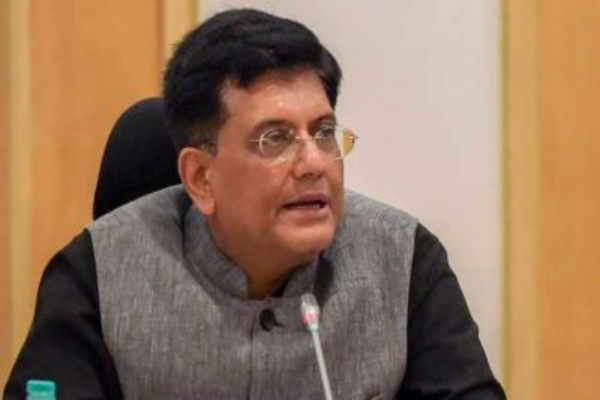
Union Commerce and Industry Minister Piyush Goyal has set an aggressive tone for India’s export ambitions, chairing a high-level review of the action plan to achieve a $2 trillion export target by 2030–31 and assessing the rollout of the Export Promotion Mission (EPM).
India’s export roadmap envisions a balanced $1 trillion each from merchandise and services exports.
To drive this, the Department of Commerce has put in place a sector-wise Export Monitoring Framework spanning engineering goods, textiles, electronics, pharmaceuticals, chemicals, and services, designed to convert national goals into measurable action.
Goyal stressed that delivery will rest on three pillars: clearly defined, time-bound actions assigned to nodal officers; strong inter-ministerial coordination to resolve exporter bottlenecks; and a digital monitoring system to track progress in real time with escalation mechanisms up to the Secretary and Minister level.
He also called for identifying key sectors where import substitution can run in parallel with export expansion, ensuring a more resilient trade ecosystem.
A major focus of the review was the Export Promotion Mission, aimed at strengthening MSMEs and removing structural barriers to export growth. The initiative operates through two sub-schemes—“Niryat Protsahan” for trade finance access and “Niryat Disha” for market access.
Officials informed that ten components are already operational, including interest subvention, export factoring, e-commerce credit support, collateral backing for export credit, risk-sharing for new markets, testing and certification support, warehousing and logistics assistance, inland transport support, and trade facilitation intelligence.
A relief scheme for exporters impacted by the West Asia crisis was also noted.
Goyal emphasised that benefits must reach exporters on the ground, especially first-time exporters and MSMEs. He pushed for stronger outreach through Export Promotion Councils, Commodity Boards, and DGFT regional offices.
He further flagged the need to prioritise agricultural exports, MSMEs, overseas warehousing, and certification systems as critical levers for global competitiveness.
The minister also called for expanded market access support beyond traditional export bodies and proposed a structured three-year calendar of trade fairs, buyer-seller meets, and trade delegations to give exporters greater predictability.
Reinforcing the branding push, Goyal underlined the importance of strengthening “Brand India” as the central identity of India’s global export strategy.
Concluding the review, he said the $2 trillion target is achievable with disciplined execution, real-time monitoring, and tight coordination across departments, ensuring that policy translates into tangible support in finance, logistics, compliance, and market access.