India has unveiled a massive push to reshape its energy and chemical security.
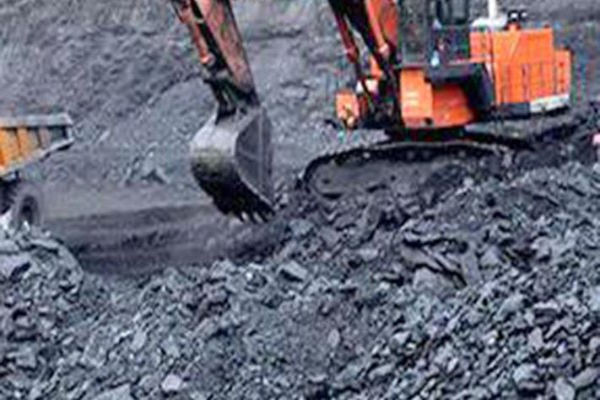
The Union Cabinet has approved a Rs. 37,500 crore scheme to promote surface coal and lignite gasification projects—one of the country’s biggest bets yet on converting coal into cleaner industrial feedstocks.
Chaired by Prime Minister Narendra Modi, the “Scheme for Promotion of Surface Coal/Lignite Gasification Projects,” aims at accelerating India’s target of gasifying 100 million tonnes of coal by 2030.
The move is designed to cut import dependence on critical inputs such as LNG, urea, ammonia, methanol and other high-value chemicals that currently leave the economy exposed to global price swings and supply disruptions.
At its core, the scheme seeks to turn India’s vast coal and lignite reserves into synthesis gas (syngas), which can then be used to produce fuels and chemicals domestically—reshaping how key industrial inputs are sourced.
A parallel policy reform extends coal linkage tenure up to 30 years for the “Production of Syngas leading to Coal Gasification” category under the non-regulated sector auction framework, giving investors long-term certainty in a capital-heavy sector.
Under the scheme’s structure, the government will provide financial incentives covering up to 20% of plant and machinery costs.
Support will be distributed in four milestone-linked instalments, with strict caps: up to Rs. 5,000 crore per project, Rs. 9,000 crore per product category (excluding synthetic natural gas and urea), and Rs. 12,000 crore per corporate group across all projects. Selection will be competitive and cost-benchmarked, with a technology-neutral approach that also encourages indigenous solutions.
Officials expect the policy to trigger investments worth Rs. 2.5–3 lakh crore across about 25 projects, concentrated in coal-bearing regions. The rollout is projected to generate roughly 50,000 direct and indirect jobs while boosting revenues for governments through coal utilisation and downstream taxation.
The Centre estimates annual revenue of about Rs. 6,300 crore from the gasification of 75 million tonnes of coal, alongside additional GST and levy collections from downstream industries.
India holds among the world’s largest coal reserves, and coal still accounts for more than half of the country’s energy mix.
The government argues that gasification will help convert this domestic resource advantage into industrial resilience, reducing reliance on imports that, in FY2025 alone, were valued at around Rs. 2.77 lakh crore for substitutable products such as LNG, methanol, ammonia and coking coal.
The new scheme builds on earlier efforts, including the National Coal Gasification Mission (2021) and a Rs. 8,500 crore support package cleared in 2024, under which multiple projects are already underway.
The latest push significantly scales up both funding and ambition, signalling a sharper shift toward coal-to-chemicals as a strategic pillar of India’s energy and industrial policy.