Government funding is rising, but risk aversion, weak collaboration, and fragmented R&D threaten to keep India behind global competitors
Despite growing government support, increased funding, and rising demand for eco-friendly solutions, nearly two-thirds of academic research still fails to reach the market. The missing link, experts agree, is trust between researchers who generate ideas and industries that must commercialize them.
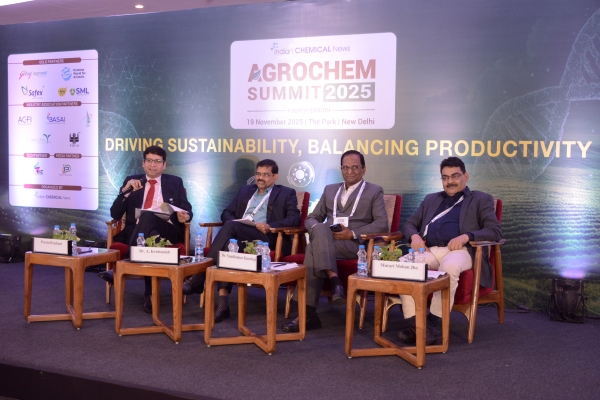
The topic was discussed threadbare at the fifth session of AgroChem Summit 2025 organised by the Indian Chemical News (ICN) on November 17, 2025, in New Delhi.
The panel discussion titled “Role of Academia Industry Collaboration in Advancing Eco-friendly Agrochemicals” was moderated by Pravin Prashant, Executive Editor, ICN.
Dr. Nandkumar Kunchge, Director, K.J. Somaiya Institute of Applied Agricultural Research highlighted that academia, industry, and government operate with different priorities, and real innovation happens only when these three align.
“Globally and in India, academia and industry operate with very different mindsets—academia focuses on basic science, research publications, and degree completion, while industry focuses on entrepreneurship, business value, and impact. Synergy is needed to bring these worlds together. Government policy plays a major enabling role as well. This is why the ‘triple helix’ model of academia–industry–government is so important. When all three align, innovation accelerates. India has made good progress, but achieving full synergy is still a long journey. Both sectors must leverage their strengths and bridge gaps. Industry increasingly values academic partnerships for their innovation potential as a positive sign. Yet our technology commercialization rate is still low with only 0.4% of patents translating into commercial technologies, compared to 5% globally. This shows the need to better align academic research with practical, well-defined problem statements. Academia must design more targeted courses and modules, while industry and universities should adopt transparent MoUs to ensure fair and healthy benefit-sharing. Strengthening these partnerships will create a win–win pathway for both,” said Dr Kunchge.
“The Indian innovation ecosystem has taken important steps, but sharper efforts are needed to unlock its full potential. Government initiatives like CIBRI, BIRAC, and various PPP programs are making progress, but industry must also show trust. Even if only one successful outcome comes from two or three collaborations, that is still meaningful progress. Within our own organization, we identify problem statements from the chemical industry and our biorefinery operations, and then take them to academic partners who have the expertise. We sometimes share the investment risk and also jointly submit projects to government bodies. Out of four or five such initiatives, if one technology succeeds, it creates value. We have already initiated some IPR-based technologies and are making steady progress,” Dr Kunchge added further.
Dr. A. Krishnaiah, Chief Scientist, CSIR - Indian Institute of Chemical Technology, Hyderabad emphasized that partnering with national research institutions offers far greater value than relying only on in-house R&D. He stressed that early industry collaboration can dramatically shorten development timelines.
“At CSIR–IICT Hyderabad, our team develops process technologies for a wide range of molecules, many of which are approaching patent expiry. With around 47 molecules expected to go off-patent by 2026, we have already taken up nearly 80% of that list for process development at IICT. Being a national laboratory, and with government support, CSIR has launched several mission-mode projects across 37 laboratories. Significant investments—running into hundreds of crores—are being made to develop process technologies for these molecules so they can be transferred to industry. For example, out of 20 molecules we are currently working on, around 50% are herbicides and 20–30% are fungicides and insecticides. This aligns with global trends, where herbicides dominate. If industry partners with us early, the process can be accelerated significantly. What typically takes two to three years to develop can reach full-scale readiness much faster through co-development,” opined Dr Krishnaiah.
“We continue working on a molecule once we take it up, but we must also be answerable to our management. If industry does not come forward, the question arises: what happens to the work we have already invested in? That is why even a minimal commitment from industry, showing trust and willingness to collaborate, can make a major difference. The Government of India is already funding a significant portion of the research. We begin the early-stage work with this support, but we still need industry validation. Industry interest signals that there is a market demand and ensures that the technologies we develop actually reach farmers. Sometimes we hear: that if the technology is ready, we will take it but readiness requires joint responsibility. Even government labs must demonstrate accountability in terms of revenue and return on public investment. If technologies are expected to be transferred at extremely low, unsustainable prices, that becomes a challenge. These are the concerns we frequently hear from the industry,” Dr Krishnaiah added further.
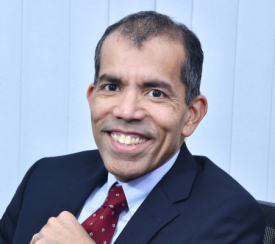
Murari Mohan Jha, Editor, Indian Chemical News noted observed that several barriers inhibit early collaboration between industry and academia: a lack of trust, lengthy regulatory review processes, ambiguous partnership roles, and anxiety over unpredictable market performance.
“India's innovation relies on government, academia, and industry, but struggles to commercialize research; universities often can't bridge the lab-to-market gap, partly due to low industry R&D investment (around 0.62% in chemicals) and mismatched expectations, a challenge the new Rs. 1 lakh crore RDI Fund aims to address by boosting private investment and fostering trust, but requires a fundamental mindset change for shared success,” remarked Jha.
“While a small number of multinational corporations (MNCs) and certain Indian specialty chemical firms are making strides in R&D, most established players with robust balance sheets remain hesitant to make meaningful commitments [1]. A significant deterrent is the protracted regulatory approval process, which often spans two to four years [1]. The fear is that by the time a product is ready for market launch, competitors may have introduced similar formulations, thus discouraging early investment,” Jha added further.
Summing up the discussion, Pravin Prashant, Executive Editor, ICN commented: “Globally too, there is no plug-and-play solution. No R&D centre simply hands over a fully commercial-ready technology. Pilot studies, kilo-scale trials, and pre-commercial validation must be done jointly. Without a foundation of trust, that journey becomes impossible. We often say there are no new molecules. But on the other hand, we also say we don’t have enough budget. As the data shows, R&D spend is barely 1%. This contradiction needs to be addressed. Policies such as data protection, IP ownership, and SOPs for collaboration must be clearly defined in terms of who does what, ownership of results, and responsibility sharing. Trust cannot be built on day one; it grows gradually, like a plant. Once trust develops, both sides develop confidence in the partnership.”
The AgroChem Summit 2025 themed ‘Driving Sustainability, Balancing Productivity’ was supported as Gold Partners by Humane World for Animals, Godrej Agrovet, Safex, and SML.
The industry association partners included BASAI, PMFAI, ACFI, CCFI, and Croplife India.
Subscribe to our newsletter & stay updated.