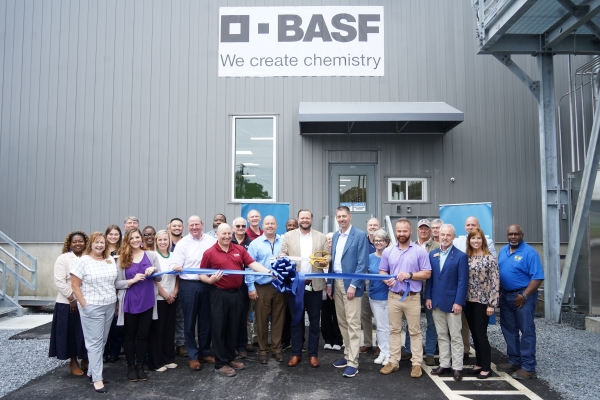
BASF has launched a new state-of-the-art research and development center dedicated to advancing refinery catalysts, strategically located at its largest global production site in Attapulgus, Georgia.
The co-location of R&D, process engineering, and operations is designed to tighten the loop between laboratory discovery and industrial scale-up.
By embedding research directly within a major manufacturing site, BASF aims to accelerate innovation cycles, improve testing under real-world conditions, and bring advanced catalyst solutions to market more quickly.
The facility also functions as a hub for operational and analytical excellence, supported by modern quality assurance and quality control laboratories.
At the heart of the center’s work are product development and advanced Fluid Catalytic Cracking (FCC) testing—key technologies that help refineries convert heavy feedstocks into higher-value fuels and chemicals.
FCC processes enable more efficient use of existing refinery infrastructure while supporting improved yields and energy efficiency.
By positioning scientists closer to production realities and customer requirements, BASF is betting on faster customization and stronger alignment between innovation and industrial demand.
“We are grateful for the dedication and expertise of our refinery catalyst team, and our broader engineering and R&D community, whose relentless commitment to best-in-class innovation has made this new R&D center a reality,” said Marius Vaarkamp, Global R&D Director Refinery Catalysts at BASF.
“As an extension of BASF’s R&D Verbund, Attapulgus will harness world-class knowledge and capabilities, paired with advanced digital tools, to address the needs of the global customer base of BASF’s refinery catalysts business.
"The proximity of the R&D Center to our operational teams will ensure that we continue to deliver solutions that drive refinery performance and create lasting value for our partners globally.”
FCC remains a core refining technology, using heat and catalysts to transform heavy oil and alternative feedstocks into lighter, high-value products including gasoline, LPG, and olefins—while enabling better energy efficiency and support for lower-carbon, circular feedstocks.





,_Aditya_A__Shriram_(President).JPG)