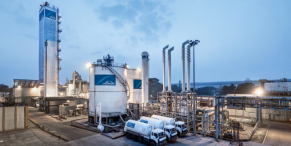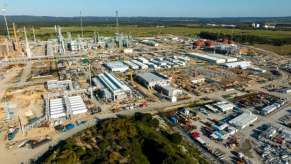
The Nobel Committee showcased MOF compound CALF-20, produced by BASF in Seneca, South Carolina
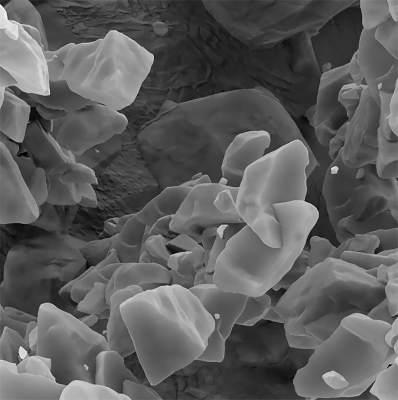
BASF has scaled-up and produced MOFs on industrial scale. With their crystalline, three-dimensional structures, MOFs offer a high capacity for the storage of a wide range of molecules including carbon dioxide (CO?), and water (H?O). Photo: BASF
Chemicals powerhouse BASF is making waves with its industrial-scale production of metal-organic frameworks (MOFs), nanostructures capable of absorbing enormous quantities of molecules — and now the world is taking notice.
The Royal Swedish Academy of Sciences in Stockholm will award this year’s Nobel Prize in Chemistry on December 10, 2025, to the pioneering materials researchers behind these groundbreaking structures: Prof Omar M Yaghi, University of California, USA; Prof Susumu Kitagawa, Kyoto University, Japan; and Prof Richard Robson, University of Melbourne, Australia.
At the prize announcement in October, the Nobel Committee showcased MOF compound CALF-20, produced by BASF in Seneca, South Carolina. Canadian company Svante Technologies is already using CALF-20 to separate CO₂ from gas streams.
MOFs are sponge-like crystalline structures built from metals and organic molecules. Their nanoporous cavities offer up to 10,000 square meters of internal surface area per gram — bigger than a football pitch — making them ideal for storing and selectively capturing molecules such as CO₂ and water. They can also catalyze chemical reactions, a versatility that has captured global attention.
“Our MOFs are already being used in commercial applications to capture CO₂ and to recover water from the air. We are very pleased that the Nobel Prize Committee recognizes the significance of these materials and at the same time is highlighting further fields of application, which we aim to develop together with our partners,” said Dr Detlef Ruff, Senior Vice President Chemical Catalysts and Adsorbents at BASF.
Subscribe to our newsletter & stay updated.