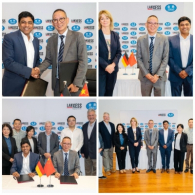
Alfa Laval has signed a landmark 1.1 BSEK (102 MEUR) contract to supply Hydrotreated Vegetable Oil (HVO) pre-treatment technology for Acelen’s new biorefinery project in Brazil, marking the company’s largest order ever.
The order will be delivered in phases through to 2029, when the facility is expected to begin operations.
The project is designed to produce more than 17,230 barrels per day of mainly sustainable aviation fuel (SAF) using the HVO process, drawing on feedstocks including soybean oil, used cooking oil (UCO), and macaúba, a native Brazilian crop seen as a promising biofuel source.
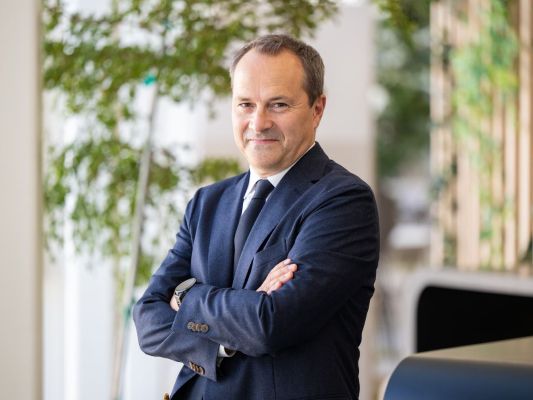
"New projects in the biofuels sector play an important role in expanding production capacity and accelerating energy security. Alfa Laval is committed to support this growth by contributing to the new biorefinery of Acelen,” says Tom Erixon, President & CEO, Alfa Laval. “This is a testament to the importance of this field, and to the crucial role our reliable, efficient technology plays for our customers and for society as a whole.”
Biofuels are increasingly viewed as a cornerstone of global decarbonization efforts, particularly in hard-to-abate sectors such as aviation and shipping. Alfa Laval says its technology is already deployed in hundreds of biofuel facilities worldwide, supporting yield optimization, energy efficiency, and sustainability compliance.
Under the Acelen agreement, Alfa Laval will deliver HVO pre-treatment systems including heat exchangers, separators, and engineered components used across key stages of processing.
The scope includes clarification systems for removing solids from used cooking oils, degumming and absorption units, and wastewater treatment systems designed to improve overall process sustainability and profitability.
The company’s broader portfolio spans feedstock pre-treatment, fermentation, separation, purification, and heat recovery—positioning it across the full biofuel value chain.
Acelen Renewables, owned by Mubadala Capital, is developing the biorefinery as part of a wider renewable fuel ecosystem in Brazil. The project, valued at close to 30 BSEK (2.7 BEUR), is expected to strengthen Brazil’s position as a global leader in sustainable aviation and transport fuels while enhancing energy security.





,_Aditya_A__Shriram_(President).JPG)