We started up six major projects, enabling production to finish above full-year guidance and delivering underlying growth of 4%
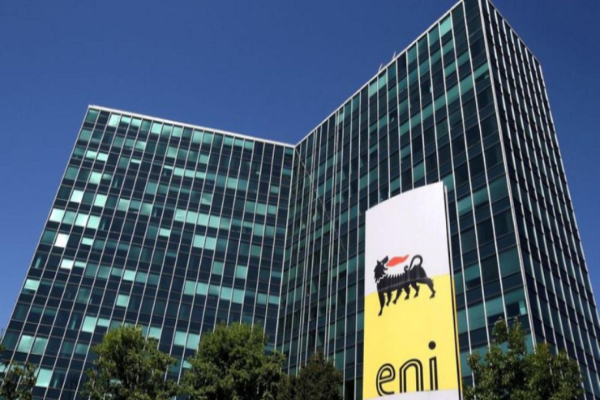
Global energy leader Eni has delivered one of its strongest performances in years, posting resilient 2025 results marked by production growth, disciplined spending and rising shareholder returns — despite volatile markets and weaker oil prices.
The board, chaired by Giuseppe Zafarana, approved the unaudited fourth-quarter and full-year results, capping what CEO Claudio Descalzi called a defining year for the group.
“In 2025 we proved that the consistent execution of our strategy, developed in the most recent years, is delivering a resilient business with structurally stronger earnings power. We delivered strong operational performance, brought key projects on stream on schedule, and continued to reduce debt while increasing returns to our investors. Exploration & Production results were outstanding, driven by accretive production growth and disciplined costs.
"We started up six major projects, enabling production to finish above full-year guidance and delivering underlying growth of 4%. We also strengthened the pipeline, taking FIDs on four major projects reinforcing our medium-term outlook. In parallel, we created a new growth platform through our largest business combination with Petronas in Indonesia and Malaysia focused on LNG."
He added: "Our Transition businesses delivered material growth and value creation, further diversifying and strengthening earnings. In a challenging market for renewables, we confirmed the resilience of our integrated models, and we highlighted over €23 bln of enterprise value with the transactions we completed with private equity investors.
"Our strategic progress translated into exceptional financial delivery: 2025 CFFO reached €12.5 bln, well ahead of plan on a scenario-adjusted basis, and pro-forma gearing ended the year at 14%. With leverage reduced, we increased shareholder distributions, raising the share buy-back by 20%, combining balance sheet strength with enhanced returns. Overall, despite volatile markets, 2025 demonstrated our ability to deliver competitive production growth, disciplined capital allocation and debt reduction coupled with attractive shareholder returns.”
As per the company, production has beaten guidance. Fourth-quarter oil and gas output jumped more than 7% year-on-year to 1.84 million barrels of oil equivalent per day, while full-year production reached 1.73 million boe/d — 4% underlying growth versus 2024 and ahead of guidance.
Reserve replacement hit an industry-leading 167% on an organic basis. Among the standout discoveries was the Konta gas find in Indonesia’s Kutei Basin, with potential exceeding 1 trillion cubic feet and located near existing infrastructure for rapid development.
Eni also deepened its strategic alliance with Petronas, signing a binding agreement to create a jointly controlled upstream satellite across Indonesia and Malaysia. The combined gas portfolio will start at more than 300,000 boe/d and is expected to ramp up to over 500,000 boe/d, with operations beginning by mid-2026.
Major projects continued to advance at pace. Phase 2 of the Congo FLNG project started ahead of schedule, lifting capacity to 3 million tonnes per annum. In Angola, Azule inaugurated the country’s first non-associated gas project feeding the Angola LNG plant, with first gas reached in February 2026. In Argentina, partners signed a Joint Development Agreement for the 12 MTPA Argentina LNG project, moving it closer to final investment decision.
After year-end, Eni agreed to sell a further 10% stake in the Baleine oilfield in Côte d'Ivoire to Socar, while Global Gas & LNG signed 1.2 MTPA of long-term LNG contracts in Thailand and Turkey.
Plenitude signed a binding deal to acquire Acea Energia in December, accelerating its retail growth to 11 million European customers — three years ahead of plan. The unit also closed the acquisition of Neoen assets in France, lifting installed renewable capacity above 5.8 GW, with a development pipeline targeting 10 GW by 2028.
Construction began on the Pengerang biorefinery in Malaysia, a joint venture with Petronas and Euglena, designed to process 650,000 tonnes per year of renewable feedstock as part of plans to triple biofuel capacity by 2030.
Private capital continued to validate Eni’s satellite model. Ares Management completed a €2 billion investment for a 20% stake in Plenitude, implying an enterprise value above €12 billion. Meanwhile, Global Infrastructure Partners took a 49.99% stake in Eni’s carbon capture and storage business.
Profits for the company have also risen. Fourth-quarter proforma adjusted EBIT reached €2.87 billion — higher than a year earlier — even as crude prices fell 15% and the euro strengthened 9% against the dollar. Adjusted net profit climbed 35% year-on-year to €1.2 billion.
Exploration & Production delivered €2.80 billion in adjusted EBIT, offsetting weaker crude realizations with higher volumes and cost discipline. Enilive more than tripled earnings year-on-year as biofuel margins recovered, while refining swung back to profit. Chemicals remained in loss amid a prolonged European downturn.
Full-year cash flow from operations reached €12.5 billion. Adjusted cash flow in the fourth quarter stood at €3.01 billion, comfortably covering €2.62 billion in gross capex. Portfolio transactions generated €1.73 billion in net proceeds.
Net borrowings fell to €9.4 billion by year-end, cutting gearing to 15% — or 14% on a proforma basis including agreed transactions.
With leverage down, Eni boosted shareholder returns, increasing its share buyback by 20%. Cash distributions in the quarter totalled €1.4 billion, including dividends and repurchases.
Subscribe to our newsletter & stay updated.