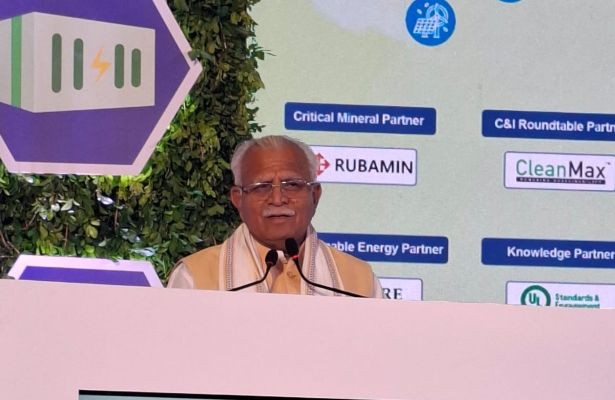
India’s electricity demand is entering a new phase, with peak power requirement expected to touch 300 GW next year, driven by the rapid growth of data centres, artificial intelligence, electric vehicles, and accelerating electrification, Union Power Minister Manohar Lal has said.
Addressing the 12th India Energy Storage Week (IESW) 2026, the Minister said India has already crossed a peak demand level of 271 GW and has built sufficient capacity to meet rising requirements. He stressed that energy storage will be critical as the country moves towards a more renewable-powered grid.
"According to estimates, we have already reached 271 GW and projections suggest the peak may rise even further this year. Our available capacity has grown up to 284 GW, which enables us to meet all types of demand.
"But with the accelerating pace of electrification, we must prepare for 300 GW peak demand next year. Our installed power generation capacity has grown from 249 GW in 2014 to 445 GW today, with solar capacity surging fifty-fold in twelve years to 137 GW. As our needs rise, energy storage becomes a national imperative, ensuring the power generated can be used whenever and wherever it’s needed,” he noted.
Highlighting the transformation of India’s energy landscape, the Minister said the role of power is evolving from instant generation-and-consumption to flexible energy management enabled by storage technologies.
"Energy is constant, but today, the principle is evolving, energy can be stored. While earlier, consumption happened instantly upon generation, now, through advanced storage and grid solutions, we can shift and utilize energy according to our needs.”
He pointed to India’s long history of pumped storage development since 1923 and underlined the growing importance of storage solutions to balance renewable energy generation with round-the-clock electricity demand.
The Minister also reiterated India’s commitment to achieving net-zero carbon emissions by 2070, noting the rapid expansion of non-fossil fuel capacity over the past decade. He highlighted the country’s renewable energy growth, particularly in solar power.
“Solar, which was just 3 GW twelve years ago, is now at 137 GW, a 50x growth. But as much as solar has grown, we must invest in storage to truly harness its potential, targeting peak hours and ensuring energy is available 24/7,” he said.
Calling for greater domestic manufacturing and self-reliance in the power sector, Manohar Lal said India must strengthen local production capabilities in critical clean energy technologies, including solar cells, batteries, and containers.
“Nothing is greater than the country. Even if domestic products cost more initially, they belong to India. By manufacturing within our borders, we reduce imports, lower costs over time, and secure our nation against global uncertainties. ‘Vocal for Local’ and ‘Make in India’ are crucial for our power sector, especially in solar cells, batteries, and containers.”
The Minister also highlighted India’s global clean energy ambitions under the ‘One Sun, One World, One Grid’ initiative, pointing to plans for cross-border green energy corridors. These include a proposed 1,600-kilometre undersea power cable link to the UAE, estimated at Rs. 40,000 crore, along with future connectivity possibilities with Sri Lanka, Singapore, and Europe.
'As the world moves to green energy, India’s leadership in storage, manufacturing, and R&D will benefit not just the nation, but the world.”
He further highlighted government measures aimed at accelerating renewable energy adoption, including the ISTS charges waiver, simplified building guidelines, Time of Day tariffs, and green open access rules to expand market access and improve consumer benefits.
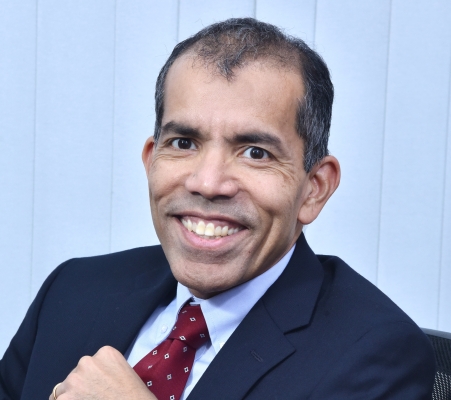
Vinayak Walimbe, Managing Director, Customized Energy Solutions, said India’s battery storage ecosystem is scaling at an unprecedented pace.
"The scale and speed of India’s battery storage expansion is truly remarkable. This year alone, we’ve seen an 11-fold jump in installed BESS capacity and manufacturing announcements at levels that rival global leaders. The collaboration and vision on display at IESW 2026 confirm India’s emergence as a powerhouse for energy storage innovation and deployment.”
Organised by the India Energy Storage Alliance, the three-day IESW 2026 brings together more than 200 exhibitors and over 10,000 industry leaders for discussions on policy, technology, and investment opportunities shaping India’s clean energy transition.
Ghanshyam Prasad, Chairperson, Central Electricity Authority (CEA), said India is preparing for a massive expansion of energy storage capacity to support renewable integration.
“India is targeting around 160 GW of storage by 2035, with clear roadmaps for both battery and pumped hydro storage. With robust infrastructure, strong private sector participation, and a renewed focus on domestic content and standardisation, we are laying the foundation for reliable, round-the-clock renewable energy. The stage is set; it’s time for the industry to deliver solutions for India’s clean energy future.”
With demand rising and renewable capacity expanding rapidly, IESW 2026 underscores the central role of energy storage in India’s clean energy transformation, strengthening the country’s ambitions for energy security, technological leadership, and Atmanirbhar Bharat.