Syngenta Group strengthened profitability in the first half of 2026 despite lower sales, as tighter cost controls, business restructuring and a sharper focus on higher-quality earnings helped lift margins across all of its business units.
The world’s largest agricultural technology company by revenue reported first-half sales of $12.2 billion, down 2% year-on-year, or 7% at constant exchange rates (CER). The decline was largely driven by the restructuring of its China operations, including a reduction in the low-margin grain trading business.
Despite the weaker top line, EBITDA climbed 2% to $2.4 billion, rising 3% at CER. The group’s EBITDA margin widened to 19.5% from 18.6% a year earlier, a 0.9-percentage-point improvement.
Syngenta said margins expanded across every business unit in the first half, reflecting a deliberate shift toward higher-quality earnings.
The pressure on sales was more pronounced in the second quarter. Revenue fell 7% year-on-year to $5.7 billion, or 10% at CER. Second-quarter EBITDA declined 2% on a reported basis but increased 4% at constant exchange rates to $1.0 billion.
Alongside the financial improvement, Syngenta is stepping up its push into artificial intelligence, investing in partnerships and projects designed to turn AI capabilities into measurable operational and strategic gains.
The group said it remains focused on speeding up innovation and expanding its digital capabilities while maintaining tight cost discipline amid a volatile macroeconomic and geopolitical environment.
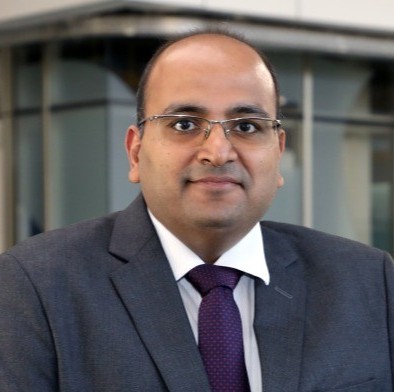
The strategy comes as Syngenta enters a new leadership phase under Hengde Qin, who took over as CEO on 1 August 2026.
The company’s first-half performance underscores a clear priority: sacrificing lower-quality revenue where necessary to build stronger margins and more profitable growth, while using innovation and AI to sharpen its competitive edge.