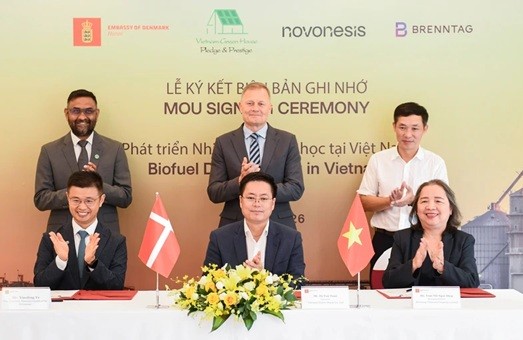
A new Danish–Vietnamese partnership has been sealed in Hanoi, marking a fresh push to accelerate Vietnam’s domestic biofuel ambitions as the country deepens its energy transition.
The agreement was signed at the Embassy of Denmark in Hanoi and witnessed by Ambassador Nicolai Prytz, underscoring growing cooperation between the two countries on sustainable energy and industrial innovation.
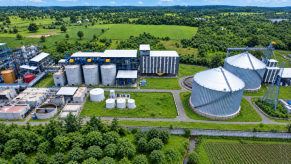
The Memorandum of Understanding brings together Danish biosolutions leader Novonesis and Vietnamese producer Nhà Xanh Viet Nam, aiming to boost the efficiency, output, and competitiveness of domestic ethanol production using corn- and cassava-based feedstocks.
As Vietnam expands its rollout of ethanol-blended fuels (E10), the focus is increasingly shifting toward scaling local production. The partnership is designed to strengthen production capacity, reduce reliance on imported fossil fuels, and unlock greater value from domestic agricultural resources.
At the same time, the initiative could ripple beyond the energy sector, potentially increasing demand for cassava and corn grown by Vietnamese farmers and improving the utilization of agricultural output across supply chains.
Under the MoU, the two companies will explore ways to improve ethanol yields, reduce production costs, and enhance overall competitiveness by applying Novonesis’ technical expertise in industrial biofuel processes.
Speaking on the collaboration, Đỗ Văn Tuấn, Chairman of Nhà Xanh Viet Nam, said: “As Viet Nam expands the use of biofuels, we believe domestic production will play an increasingly important role in strengthening energy security and reducing dependence on fossil fuels.
"Through our partnership with Novonesis, we are combining international biosolutions expertise with our production capabilities, building on our experience in applying yeast and enzyme solutions throughout the production process. We expect this collaboration to improve efficiency, strengthen supply autonomy, and increase the availability of domestic ethanol in support of Viet Nam's biofuel transition."
From the Danish side, Novonesis highlighted the broader economic and environmental potential of scaling biofuel innovation in Vietnam.
“Viet Nam has everything it needs to build a strong biofuels industry and reduce its dependence on fossil fuels. With our biosolutions, biofuel producers can achieve more with less: higher yields from the same feedstock, lower energy consumption, and reduced production costs.
"A more diversified energy mix will not only strengthen Viet Nam’s energy security but also support a more resilient and competitive economy. We're excited to take this step with Nha Xanh Viet Nam to help advance Viet Nam’s energy transition,” says Xiaofeng Ye, Vice President of Planetary Health Biosolutions APAC, at Novonesis.
Denmark’s Ambassador to Viet Nam, Nicolai Prytz, said the deal reflects the strength of Danish industrial expertise being applied in support of Vietnam’s development priorities.
“Denmark is home to the world's leading biosolutions company, Novonesis. And today it is particularly encouraging to see their expertise being applied in partnership with Vietnamese industry. By advancing domestic biofuel production and creating greater value from agricultural resources, this collaboration supports our shared priorities that are becoming increasingly important for Viet Nam: energy security, resource efficiency, and sustainable growth."
The Embassy of Denmark in Viet Nam said the partnership reflects its broader mission of strengthening cooperation across energy, green growth, sustainable food systems, and innovation.
Industry data underscores the stakes: biosolutions are estimated to have the potential to cut global CO₂ emissions by around 4,300 million tons by 2030—roughly 8% of current global emissions. Novonesis’ biofuel technologies alone reportedly saved 80 million tonnes of CO₂e in 2025, equivalent to removing about 30 million gasoline cars from the road.