IEW 2026: India and Canada eye $500 billion energy opportunity in renewed strategic push

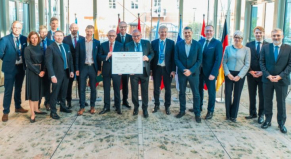
At the invitation of the Minister of Petroleum and Natural Gas of India, Hardeep Singh Puri, the Minister of Energy and Natural Resources of Canada, Timothy Hodgson, participated in India Energy Week 2026 (IEW’26) in Goa, marking the first high-level participation of a Canadian Cabinet Minister at IEW. On the sidelines of the event, the two Ministers held a bilateral meeting and launched the renewed India-Canada Ministerial Energy Dialogue. During this meeting, the Ministers affirmed the immense importance that energy security and diversity of supply has in the safety, wellbeing, and economic vitality of both countries.
This meeting is a follow up to the direction provided by the Prime Minister(s) of India and Canada during their interaction on the sidelines of the G7 Summit, held in June 2025 in Kananaskis, Canada, wherein both leaders underscored the importance of restarting senior ministerial, as well as working-level engagements.
Canada has stated its goal of becoming an energy superpower in clean and conventional energy, with export diversification as a priority while India, as the epicenter of global energy landscape, offers a natural and symbiotic partnership grounded in scale, stability, and long-term opportunity. Canada has current and emerging liquefied natural gas (LNG) projects, is increasing production and exports of crude oil to markets in Asia via the Trans Mountain Expansion (TMX) Pipeline and is advancing liquefied petroleum gas (LPG) exports to Asia via the west coast of Canada.
At the same time, India being the world’s third largest oil consumer, fourth largest LNG importer, third largest LPG consumer, and having fourth largest refining capacity, is projected to remain at the center of the global energy landscape, accounting for over one-third of the growth in global energy demand over the next two decades, largest contribution by any country.
Even efforts are underway in India to substantially scale up domestic oil production, significantly expand refining capacity, increase use of natural gas in the energy mix. Thus, India and Canada have significant potential to emerge strong collaborators in area of energy fuels.
In this context, the Ministers affirm to deepen bilateral energy trade including supply of Canadian LNG, LPG, and crude oil to India, and supply of refined petroleum products from India to Canada.
The Ministers also recognized the importance of climate-related objectives. This includes efforts to reduce emissions in conventional energy value chains, including through carbon capture utilization and storage, and support for the development and deployment of cleaner technologies as energy demand grows. Recognizing that there exists a huge potential for cooperation in clean energy value chains, the Ministers noted the opportunities for collaboration in renewable energy, including hydrogen, biofuels and sustainable aviation fuel; battery storage; critical minerals; clean technologies; electricity systems; energy supply chain resilience, and the application of artificial intelligence in the energy sector.
The Ministers noted the ongoing collaborative efforts to advance the global energy transition via the global development and deployment of biofuels through Global Biofuels Alliance (GBA), where Canada is an observer.
Subscribe to our newsletter & stay updated.