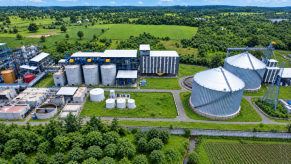
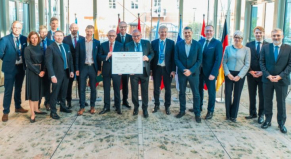
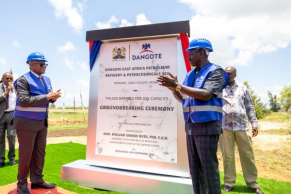
A major step toward greener aviation took shape in Delfzijl as KLM and SkyNRG officially marked the start of construction on the Netherlands’ first facility fully dedicated to sustainable aviation fuel (SAF).
The milestone launch signals the beginning of work on a plant that is expected to start producing SAF in 2028, marking a significant push to scale up low-carbon aviation fuel production in the country.
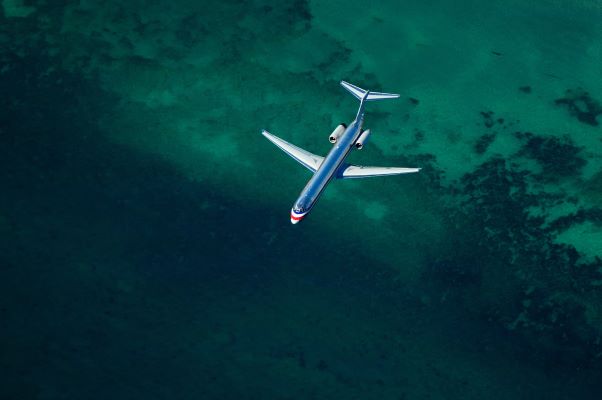
KLM, a co-founder of SkyNRG in 2009, has been deeply involved in building the SAF market from the ground up. The airline has committed to purchasing at least 75,000 tons of SAF annually—around 75% of the plant’s total output—backing the project with a long-term commitment valued at nearly €3 billion.
The fuel is seen as one of aviation’s most immediate tools for cutting emissions. While SAF still produces CO₂ during flight, its overall lifecycle emissions are substantially lower than conventional jet fuel, with reductions ranging from at least 65% to more than 90%.
Speaking at the ceremony, Marjan Rintel, CEO of KLM, said: "As the first airline in the world, our long-term offtake agreement directly contributes to the financing and realization of this facility. Today, together with SkyNRG and other invited guests, we mark a milestone by celebrating the start of construction, making this project finally tangible.
"I am proud that KLM, as a co-founder of SkyNRG and the largest purchaser of the fuel, is taking an important step in scaling up SAF production in the Netherlands and further advancing the sustainability of aviation."
From SkyNRG, CEO Maarten van Dijk highlighted the broader significance of the project: "Today’s milestone in Delfzijl shows that large-scale SAF production in the Netherlands is becoming a reality. We are proud to take this step together with KLM and our partners, whose long-term commitment has helped make this project possible. DSL-01 is an important step toward scaling SAF production and accelerating the transition to more sustainable aviation."
Despite the progress, industry leaders acknowledge SAF remains significantly more expensive than fossil kerosene—currently estimated at three to four times the cost. KLM is urging stronger government support to accelerate production and improve affordability, including proposals such as a national SAF fund referenced in the Wennink report “The Route to Future Prosperity.”
The DSL-01 project is being framed as both a breakthrough and a warning: while it proves large-scale SAF production is now within reach, more projects will be needed if the Netherlands is to meet its 2030 target of a 14% SAF blending mandate.