R&D
Tohoku University scientists unlock fullerene’s battery potential
The team developed a covalently bridged fullerene framework, Mg₄C₆₀, demonstrating that carbon can store lithium in a completely new and far more stable way
-
By ICN Bureau | January 05, 2026
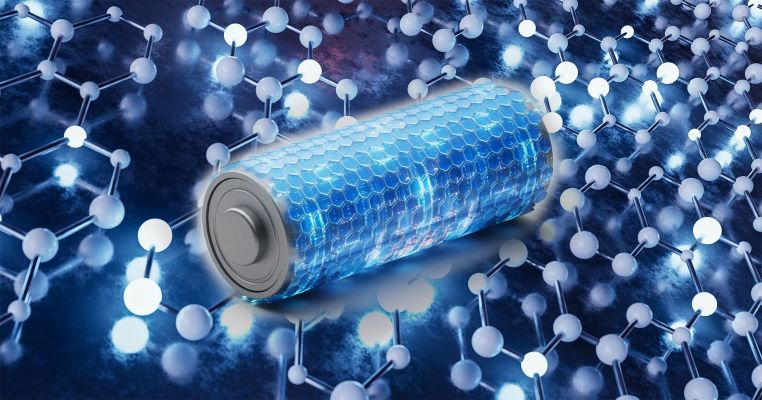
Breakthrough in Carbon-Based Battery Materials Improves Safety, Durability, and Power. Image: Tohoku University
Researchers at Tohoku University have overcome a major hurdle in battery technology by stabilizing fullerene, a unique carbon molecule long considered too fragile for practical use.
The team developed a covalently bridged fullerene framework, Mg₄C₆₀, demonstrating that carbon can store lithium in a completely new and far more stable way. This approach prevents the structural collapse and loss of active material that have long plagued fullerene anodes, opening the door to safer, fast-charging batteries with higher energy density and longer lifetimes.
"Our next steps are to expand this covalent-bridging strategy to a broader range of fullerene and carbon frameworks, with the goal of creating a family of stable, high-capacity anode materials suitable for fast-charging batteries," said Distinguished Professor Hao Li of the Advanced Institute for Materials Research (WPI-AIMR).
The researchers also plan to collaborate with industry partners to test scalability and integrate these materials into real-world battery cells. Achieving practical application, they say, is key to paving the way for more efficient, clean-energy technologies.