Covestro has stepped to the forefront of Europe’s push to decarbonise industrial chemistry, launching Bio4PURConti (Bio-Based Continuous Production for Sustainable Polyurethane Industry) as coordinator of a major EU-funded initiative aimed at reinventing how a key chemical building block is made.
At the centre of the project is an ambitious target: developing the world’s first continuous production process for bio-based aniline, a critical raw material for the plastics and chemicals sector and a key precursor for MDI (methylene diphenyl diisocyanate), widely used in polyurethane production.
Today, most aniline production remains fossil-based and carbon intensive, generating roughly 20 million tonnes of CO₂ emissions globally each year. Covestro’s approach replaces this dependency with a bio-based pathway that starts with plant-derived sugars.
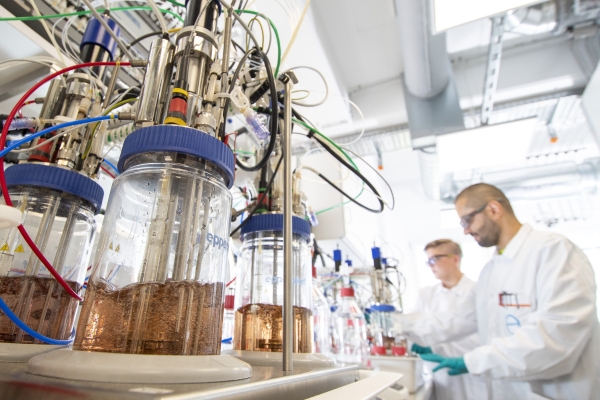
Using a tailored microorganism, these sugars are fermented into an intermediate product, which is then converted through chemical catalysis into aniline with “100% plant-based carbon”.
The breakthrough ambition of Bio4PURConti lies in moving beyond conventional batch processing. Instead of adding feedstock and harvesting product in stages, the project is pioneering a continuous fermentation process—an industrial-scale shift designed to improve efficiency, yield, and sustainability.
The system will use renewable feedstocks such as hardwood biomass-derived sugars and is designed to integrate cell recycling, real-time analytics, and downstream processing.
The process is being scaled from laboratory development to a 1.5 m³ semi-industrial demonstration at the Bio Base Europe Pilot Plant in Ghent and Covestro’s facilities in Leverkusen.
The goal is not only higher space-time yields but also a significant reduction in the product’s carbon footprint, while ensuring the resulting bio-based aniline is fully “drop-in compatible” with existing polyurethane value chains, including MDI specifications.
“Bio4PURConti is a landmark project – not just for Covestro or the aniline market, but for the entire field of industrial biotechnology,” says Markus Dugal, Head of Process Technology at Covestro.
“Demonstrating continuous fermentation at semi-industrial scale for a high-volume raw material like aniline will set a new benchmark for what biotech processes can achieve in the chemical industry. Biology and engineering, when combined at scale, can fundamentally reshape how we produce the materials the world depends on.”
The initiative brings together a 10-partner consortium across seven countries, including Covestro Deutschland AG, Fibenol Imavere OÜ, University of Stuttgart, Bio Base Europe Pilot Plant VZW, ZEDO Dortmund e.V., NTNU, Axel’One, VTT, CLIB, and AEIMIS.