The upgraded lineup gives packaging manufacturers and brand owners far more control over performance and end-of-life pathways
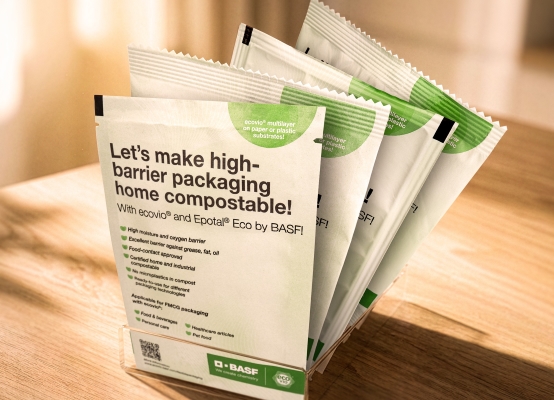
The certified home-compostable biopolymer ecovio can now be used to manufacture different barrier structures based on paper or plastic substrates for flexible packaging. Photo: BASF 2026
BASF is ramping up its push into sustainable packaging with a major expansion of its certified compostable ecovio portfolio, unveiling new material grades designed to meet rising demands for recyclable and flexible high-barrier packaging.
The upgraded lineup gives packaging manufacturers and brand owners far more control over performance and end-of-life pathways, allowing them to fine-tune barrier properties while aligning with different recycling systems—whether organic, paper-based, or other regional regulatory frameworks.
The certified home-compostable ecovio materials can also be combined to build layered structures on paper or plastic substrates, aiming to match the performance of conventional packaging while significantly improving sustainability outcomes.
At the core of the expansion is a new “toolbox” approach: ready-to-use ecovio solutions engineered for different packaging technologies.
These materials can deliver adjustable protection against grease, oil, waxes, and liquids, alongside strong oxygen and moisture barriers, while also functioning as sealing layers. Importantly, they are designed to run on existing production lines, compatible with extrusion coating, film and sheet extrusion, and multiple lamination methods in mono- or multilayer formats.
The innovation also opens the door to ultra-thin biaxially stretched films, enabling a new category of home-compostable packaging with food-contact approval and strong mechanical performance, high transparency, and improved optical quality.
“With the new ecovio portfolio, we offer manufacturers of flexible packaging a modular material toolbox that gives them greater design freedom: They can adapt barrier performance, processing technology and recycling possibilities to their specific application needs and sustainability goals,” says Michael Bernhard Schick from global business management Biopolymers at BASF.
“This supports converters and brand owners in developing high-performing packaging solutions while addressing end-of-life options already in the product development phase.
"We are happy to show visitors at the Interpack trade fair the many possibilities of how they can design high-barrier flexible packaging items with ecovio - and making them home compostable, too: Real-life samples of established applications for the different value chains plastic and paper are on display.”
Depending on design and substrate, ecovio enables multiple disposal pathways. Paper and board structures can enter conventional recycling streams with high fiber recovery, or be organically recycled when contaminated with food.
Flexible plastic formats made with ecovio can be composted in industrial or home systems without leaving persistent microplastics. Depending on formulation, the material contains up to 80% bio-based content or is available as biomass-balanced variants.
The expanded grades target a wide range of fast-moving consumer goods, from food and beverages to personal care, healthcare, and pet food packaging.
Applications span pouches, sachets, trays, and boxes for products ranging from coffee, snacks, cereals, chocolate, and sauces to dairy, meat, and even cosmetics like shampoos and lotions—signaling BASF’s clear intent to push compostable materials deeper into mainstream packaging.
Subscribe to our newsletter & stay updated.