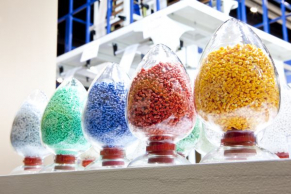
By completing the entire hydrotreating process in one reactor rather than the multiple units used in alternative approaches, this solution cuts capital requirements and operational complexity substantially
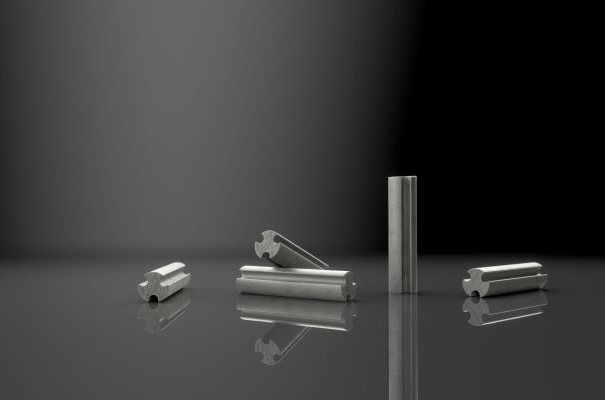
HDMax: Enabling the circular economy through proven pyoil upgading technology. © Clariant
Clariant, in collaboration with Borealis and SINTEF, successfully piloted a new pyrolysis oil (pyoil) upgrading technology, marking a major milestone for plastic circularity. Using Clariant's HDMax catalysts, the project transformed plastic waste-derived pyoil into high-quality feedstock, validating a streamlined, efficient, and sustainable process.
The collaboration centered on upgrading pyoil derived from plastic waste to steam cracker-compatible feedstock that fully meets cracker-grade quality specifications. Using Clariant's proprietary HDMax catalysts, the pilot-scale testing conducted at SINTEF's research facility in Norway delivered excellent results, successfully transforming plastic waste-derived pyoil into high-quality feedstock suitable for virgin polyolefin production.
The HDMax catalyst achieved full conversion across all critical parameters: complete saturation of dienes without gum formation — a crucial requirement for downstream processing — along with complete conversion of contaminants like oxygenates, nitrogenates, and halogenides. All product quality specifications were met, validating the technology's readiness for industrial application.
"This successful collaboration proves that closed-loop plastic recycling can work effectively on an industrial scale," said Gene Mueller, VP and Head of Ethylene at Clariant Catalysts. "Our HDMax catalyst technology enables plastic waste to be converted back into feedstock that meets the stringent quality requirements of steam crackers, creating a true circular pathway for plastics.”
A key differentiator of Clariant's HDMax technology is its ability to achieve all required specifications in a single multi-layer hydrotreating reactor, compared to alternative technologies that require three to four reactors. This streamlined process significantly reduces capital investment, operational complexity, and energy consumption. Additionally, the technology enables subsequent hydrocracking to produce naphtha-like hydrocarbon fractions, further enhancing process efficiency and product flexibility.
The three-party partnership leveraged the unique strengths of each organization:
Clariant provided a tailored catalyst design and commercial samples of its specialized catalysts: HDMax catalyst for pyoil upgrading and HYDEX™ for hydrocracking.
Borealis defined the required target quality of the pyoil and contributed industry expertise as a leading European polyolefin producer offering chemically recycled polyolefin solutions under the Borcycle™ C portfolio.
SINTEF conducted comprehensive pilot-scale testing and validation at their state-of-the-art research facility in Norway
The successful demonstration validates a proven pathway for reintegrating recycled plastic-derived materials into industrial production of high-quality materials. By converting plastic waste back into high-quality feedstock, this technology supports the transition to a more circular economy where plastic materials can be recycled without compromising on quality. This pilot-scale validation demonstrates how strategic collaboration accelerates innovative circular plastics solutions. The partners' combined expertise in specialty chemicals, research capabilities, and industrial production knowledge has created a foundation for further development and potential commercial implementation.
Subscribe to our newsletter & stay updated.