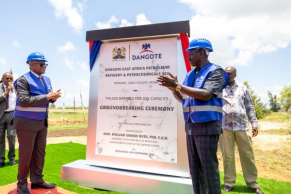
Solenis, a global provider of water and hygiene solutions, has officially broken ground on a new 60,000-tonne-per-year production facility in Beihai, Guangxi Province—signalling a major expansion push across the Asia Pacific region.
The RMB 250 million (USD $35 million) investment marks a strategic move by the company to deepen its presence in one of the fastest-growing industrial corridors for pulp and paper manufacturing, particularly across Western China and Southeast Asia.
The plant is scheduled to begin operations in Q2 2027 and will manufacture a range of key papermaking inputs, including polymers, defoamers, silica, and other functional and process chemistries designed to meet rising regional demand.
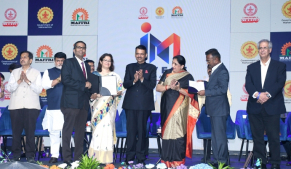
Senior leaders including Solenis Vice President of Operations and Supply Chain Eurasia Avin Krishnan and Vice President and General Manager of Consumer Solutions across Europe, Middle East, Africa and Asia Ted Kelly attended the groundbreaking ceremony, alongside local chambers of commerce, partners, and customers.
"Establishing a major production presence in Guangxi reinforces our long-term commitment to the region and brings us closer to customers at a time of significant market expansion," said Krishnan. "With this investment, we are strengthening our ability to deliver high-quality, reliable solutions that help customers grow while achieving their sustainability goals."
Once operational, the Beihai site will become Solenis’ second-largest facility in Asia Pacific after its Zhuhai plant—and the first large-scale U.S. papermaking chemicals investment in Guangxi, China’s largest papermaking hub.
The region has rapidly expanded its pulp and paper capacity, making it a key strategic base for local supply.
Solenis said the new plant will help: significantly shorten the distance to customers, reducing carbon emissions; improve service and response time for customers across Western China and Southeast Asia; localize production of high-tech products, replace imports and reduce supply chain risk for customers.
Together with existing sites in Zhuhai and Shanghai, the Beihai facility will form a three-site regional supply network aimed at strengthening resilience and sustainability across the company’s operations.
Beyond production capacity, the investment is also positioned as a broader industrial and economic boost—supporting supply chain independence, advancing China’s Western Region Development Strategy, and contributing to local job creation, tax revenue, and industrial upgrading.